
This post is part of my London Neighbourhood Guides series. Fancy visiting another area of London? Check out my other guides here.
And so, we fling ourselves towards the far eastern reaches of the Borough of Hackney. This is not one neatly contained neighbourhood, but a sweep through some of the borough’s most varied landscapes: historic Homerton, the streets and cafés north of Victoria Park, the residential neighbourhoods around King’s Park, the enormous expanse of Hackney Marshes and, finally, the canals, converted warehouses and colourful street art of Hackney Wick.
The four wards of Homerton, Victoria, King’s Park and Hackney Wick are highlighted in orange below. Neighbourhoods rarely end as neatly as council boundaries suggest, so I have also included a couple of places just beyond the highlighted area that are inseparable from Hackney Wick itself.

Homerton
South of Clapton is Homerton, which has been a neighbourhood for a long, long time. Its name was first recorded in the 14th century, although archaeological findings indicate that people had settled here much earlier. During the medieval period, the area was predominantly rural, with arable crops, fruit and vegetables grown for London’s markets. Sheep and cattle grazed in its fields, while milk and cheese were supplied to the growing city. By the Tudor period, Homerton had become a rather desirable place to live, and wealthy Londoners built estates and grand houses among the fields.
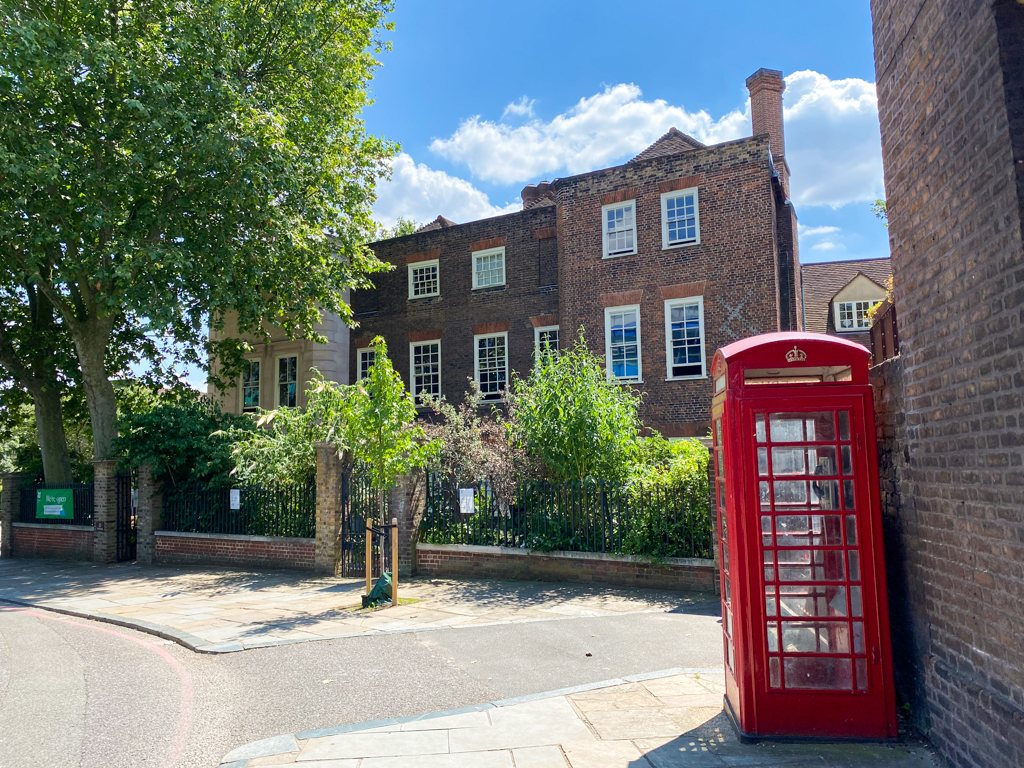
The finest surviving example is Sutton House, located just off Homerton High Street. The house was built in 1535 as the family home of Sir Ralph Sadleir, an aide to Thomas Cromwell, who later became Secretary of State to Henry VIII. Over the centuries, it has served as a school, a church institute and a trade union office, and was even occupied by squatters during the 1980s. Now cared for by the National Trust, it is one of London’s last surviving Tudor houses and the oldest house in Hackney.
Of course, most of Homerton looks quite a bit different today. The neighbourhood now has plenty of cafés, pubs and food spots dotted around its high street and residential back roads.
Nearby is Dark Arts Coffee, my favourite coffee roaster in London. They are tucked away in a little alley off Homerton High Street, but I promise you that drifting away from the main road to find them is completely worth it.
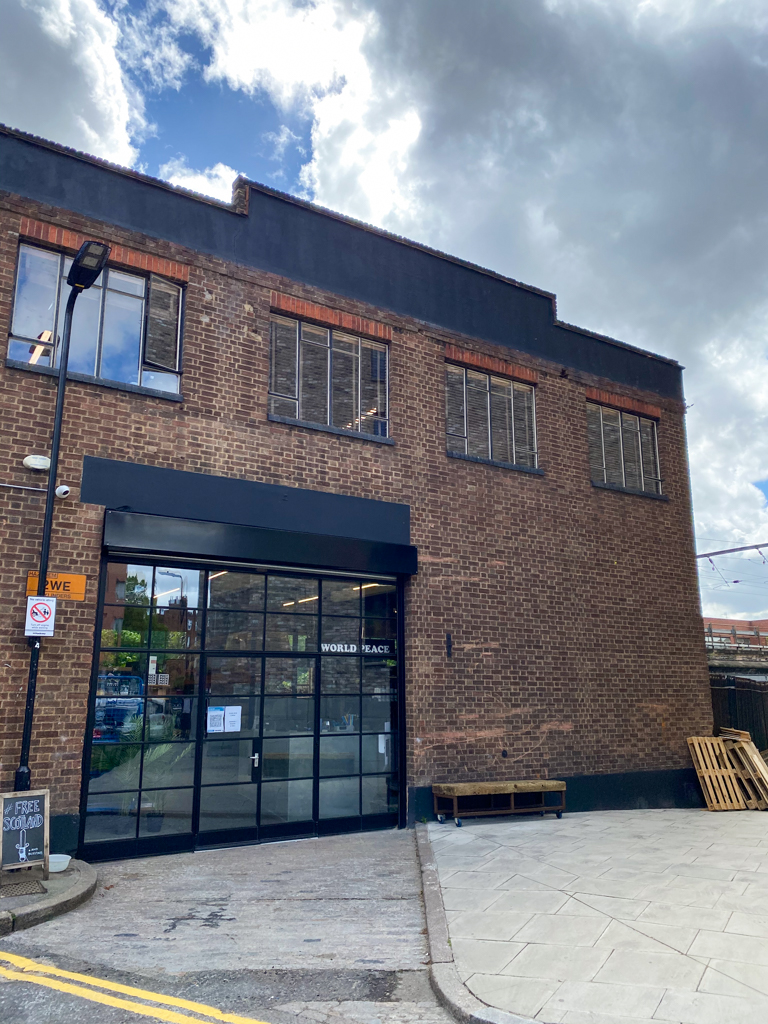
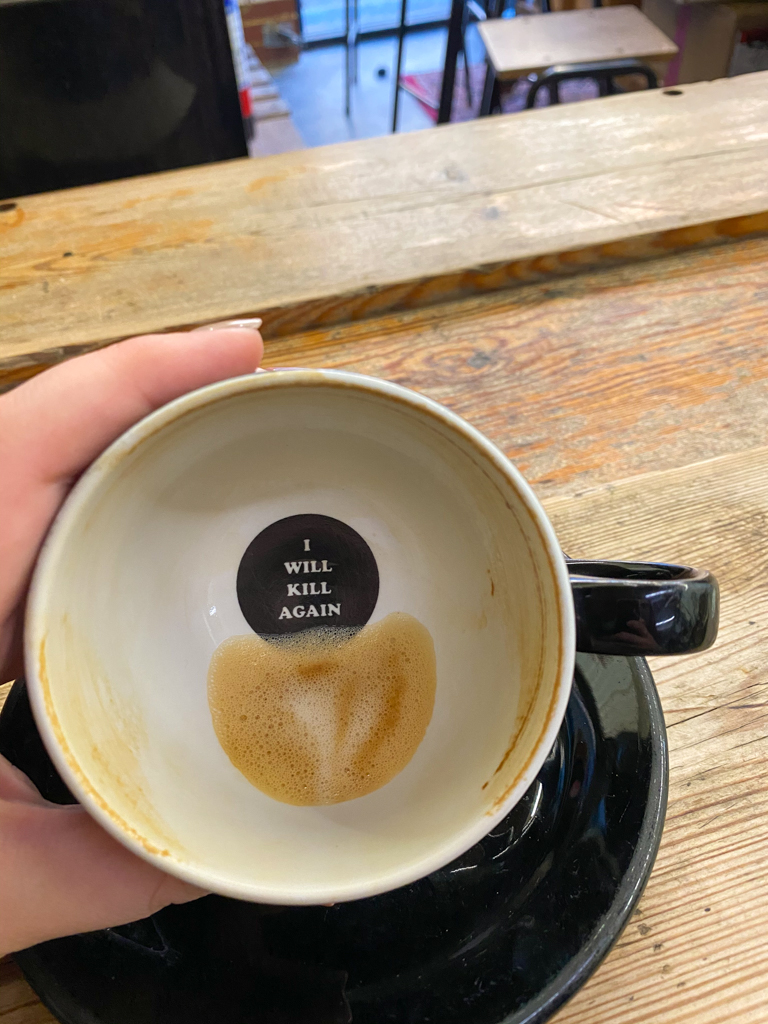
There are also a couple of great pubs in Homerton. The Adam and Eve is a lively local with a beer garden and pool table, while The Spread Eagle is London’s first fully vegan pub. Everything served behind the bar and from the kitchen is plant-based, right down to the drinks and garnishes.
The first Yard Sale Pizza branch is up the road in Clapton. It is takeaway and delivery only, but there is somewhere much nicer to eat your pizza than on the pavement: the Chesham Arms in Homerton. Yard Sale’s pizzas are thin, generously topped and charred around the edges, with plenty of vegetarian and vegan options. They also regularly work with chefs and restaurants on collaboration pizzas, so it is always worth checking what is on the menu.
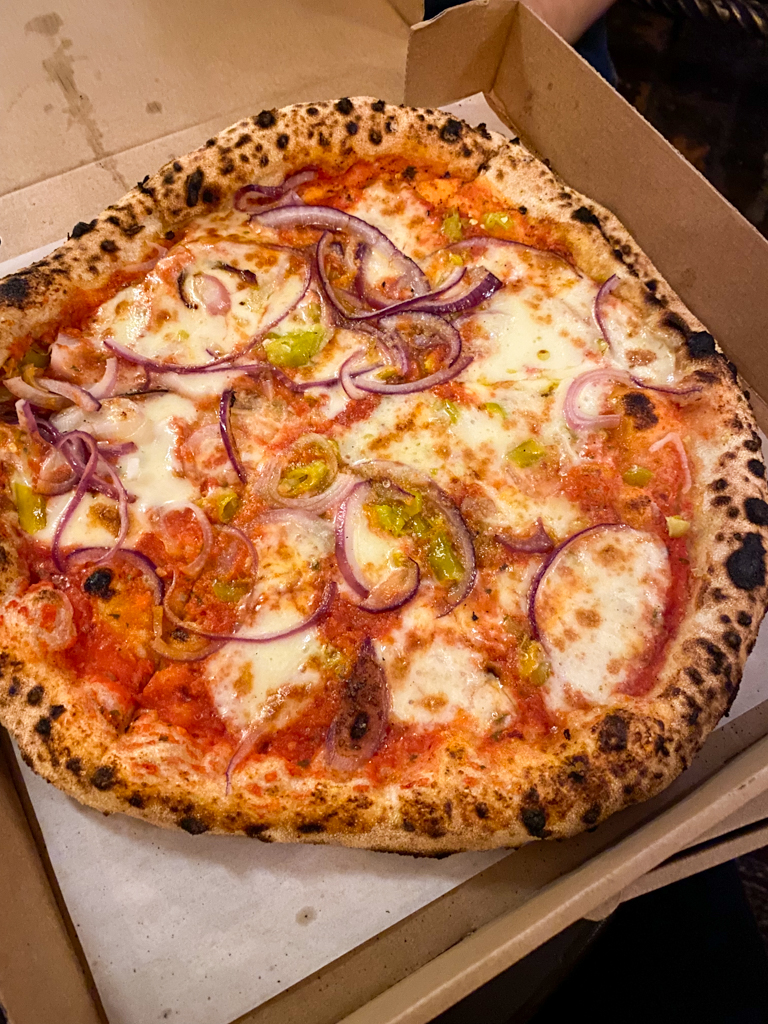
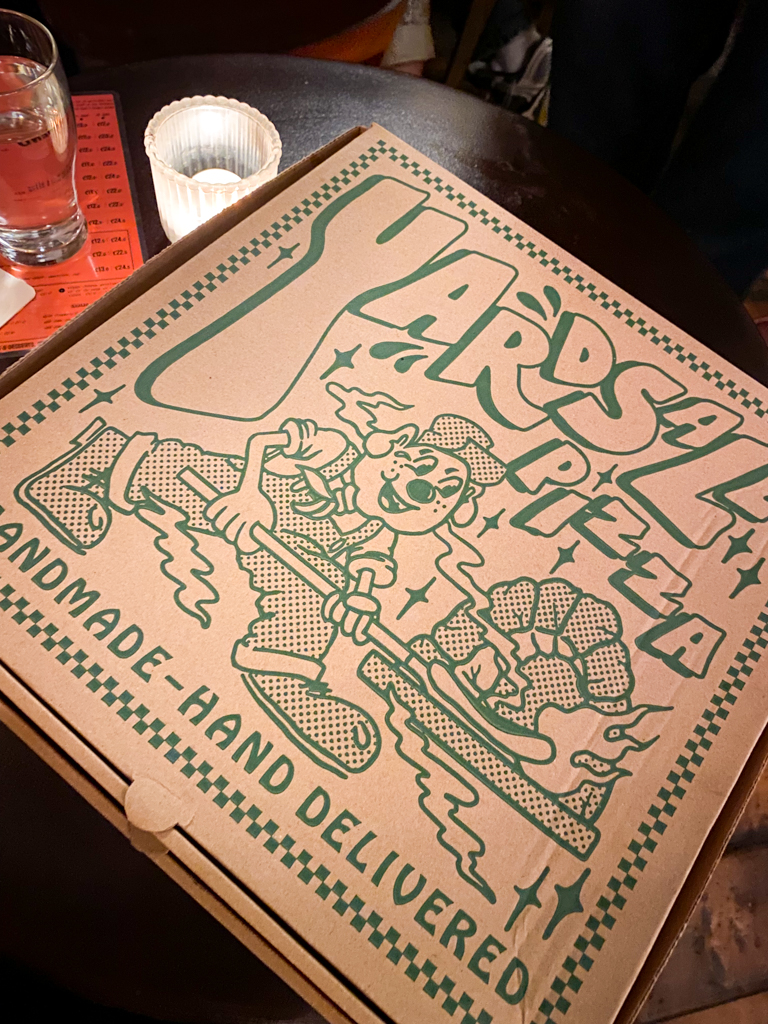
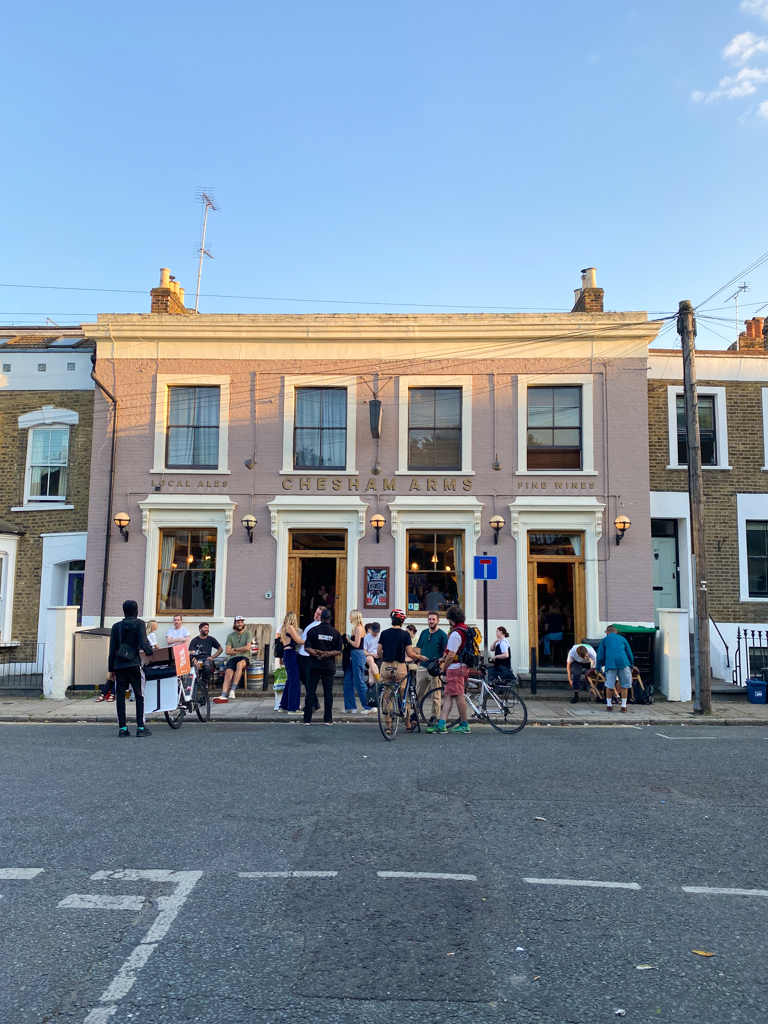
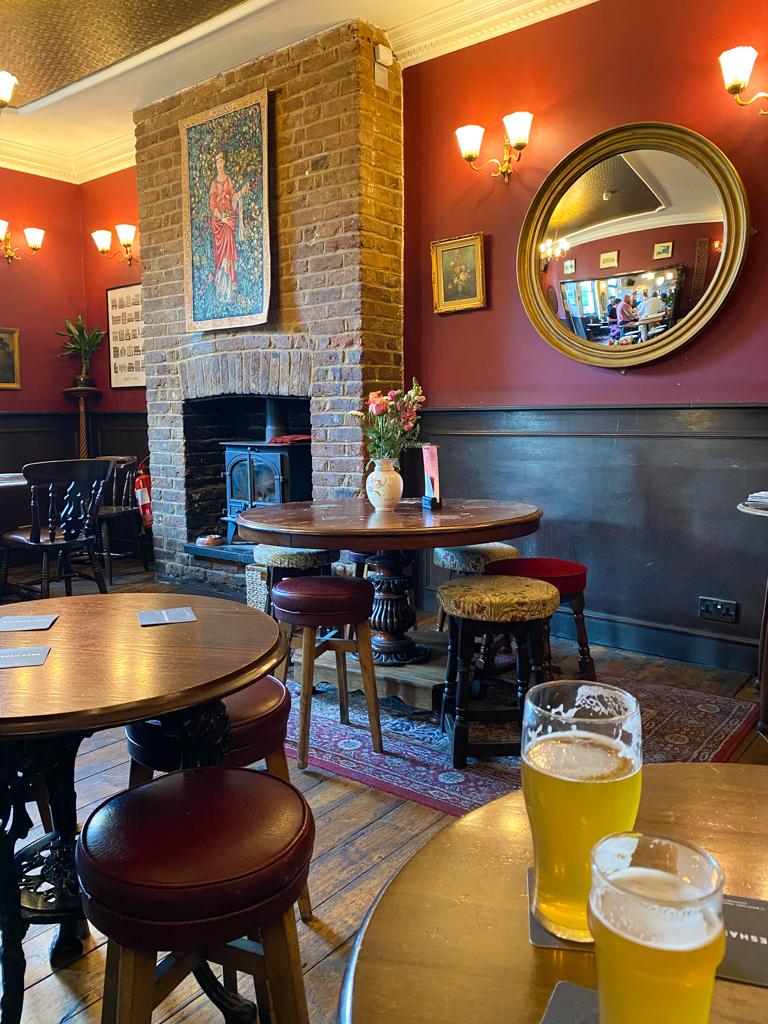
Once you have collected your order, or arranged for it to be delivered, you can settle in at the Chesham Arms with a pint. The pub actively encourages customers to order from Yard Sale, making the combination a rather excellent Homerton dinner.
The Chesham Arms is a lovely community pub, particularly on lively Friday and Saturday evenings, but it very nearly disappeared. It closed in October 2012 after being sold to an owner who wanted to convert the building into flats. Residents formed the Save the Chesham group and campaigned to protect the building, which became Hackney’s first Asset of Community Value. Following a lengthy legal and planning battle, a lease was secured to refurbish the pub, and it reopened in June 2015. Only six months later, it was named the East London and City CAMRA Pub of the Year. I mean, doesn’t knowing all that make you love it even more?
Well Street & Victoria Park Village
South of Homerton, the Victoria ward stretches towards the northern edge of Victoria Park. The park itself lies largely within the neighbouring Borough of Tower Hamlets, so this guide concentrates on the Hackney streets above it: Well Street, Well Street Common and the cluster of cafés, restaurants and independent shops generally known as Victoria Park Village.
Well Street has served as a local shopping street for centuries and still feels like the everyday centre of the neighbourhood. It is lively and slightly scruffy around the edges, with independent businesses sitting alongside takeaways, grocers and long-established local shops. Nearby, Well Street Common provides a welcome patch of green between Homerton and Victoria Park. It is much smaller and quieter than the People’s Park below it, but its open lawns, mature trees and playground make it an important neighbourhood space.


One of the most distinctive places to eat around Well Street is Shankeys, an Indian-Irish restaurant housed in a former betting shop. Indian and Irish food might not sound like the most obvious combination, but the two cuisines come together remarkably well. Expect bold spices, excellent sauces and plenty of potato, alongside cocktails and drinks that carry on the Irish theme.
Shankeys feels warm, intimate and entirely individual, the kind of neighbourhood restaurant that could not simply be lifted and placed somewhere else without losing part of its charm.


Closer to the park, the streets become leafier and increasingly polished. The area around Lauriston Road is commonly known as Victoria Park Village, although it is not an officially defined neighbourhood. Pretty Victorian terraces surround a compact collection of cafés, pubs, restaurants and independent shops, with Victoria Park providing a leafy backdrop just to the south.
Pophams Victoria Park is one of the best places to stop. Pophams began in Islington before expanding into East London, and its Lauriston Road bakery occupies a bright corner site overlooking the surrounding streets.


The bakery is best known for its beautifully laminated pastries, including excellent croissants and inventive seasonal creations filled with everything from fruit and custard to cheese and savoury vegetables. There is often a queue at weekends, but it usually moves quickly, and the pastries are worth waiting for.
Although this guide does not venture properly into Victoria Park, it is difficult to visit the neighbourhood without at least crossing the road for a wander. Known as the People’s Park, it remains one of East London’s loveliest green spaces, with broad paths, lakes, gardens and enormous lawns filled with runners, cyclists, families and seemingly every dog in Hackney.

From here, you can continue east through the residential streets towards Mabley Green and Hackney Marshes, where the neat terraces and busy cafés gradually give way to playing fields, waterways and open sky.
King’s Park and Hackney Marshes
East of Homerton is King’s Park. This is more of an administrative ward than a neighbourhood name that most Londoners would use in conversation, and it is largely residential, encompassing the Kingsmead and Clapton Park estates. However, the area serves as an important transition between the dense residential streets of Homerton and the vast green landscape of Hackney Marshes. Daubeney Fields and Mabley Green create an ecological link between suburban Homerton and the River Lea, with walking and cycling routes gradually drawing you towards the water.
Mabley Green is particularly associated with sport, with grass and all-weather football pitches continuing the area’s long relationship with the game. Beyond it, the landscape opens out dramatically into Hackney Marshes.


Hackney Marshes is the largest open space in the borough and is internationally known as the spiritual home of Sunday league football. Across North Marsh, South Marsh and Mabley Green, there are more than 80 football, rugby and cricket pitches. On weekend mornings, the grass is filled with players, coaches and spectators, but wander slightly further away and the marshes can feel surprisingly peaceful.
There is much more here than football. Paths run through grassland and along the River Lea, while wooded edges, wildflower areas and conservation spaces provide habitats for birds and other wildlife. Depending on which direction you take, you can continue north towards the Middlesex Filter Beds and Walthamstow Marshes, or south towards Hackney Wick and the Olympic Park.


The Lee Navigation towpath is particularly lovely for walking or cycling. Narrowboats sit along the water, rowers occasionally pass by, and the surrounding city seems to retreat behind the trees.
After a fun but tiring day exploring the marshes, a great spot to rest and relax is The Princess of Wales. Situated beside the River Lea on Lea Bridge Road, the pub has a large waterside garden and plenty of space to settle in with a drink. It is an especially good stop on a warm summer evening, when you can sit overlooking the river and enjoy something from the pub’s burger-focused menu.


Hackney Wick
South of the marshes, the open landscape gradually gives way to railway arches, former factories and colourfully painted warehouses. This is Hackney Wick, one of East London’s most distinctive creative neighbourhoods.
Hackney Wick developed as an industrial district, with factories and workshops clustering around its railways and waterways. As manufacturing declined, artists and makers moved into the area’s relatively inexpensive warehouses, transforming old industrial buildings into studios, workshops and performance spaces. Today, Hackney Wick remains home to a significant creative community, although new apartment blocks and large-scale developments are rapidly changing the surrounding neighbourhood.

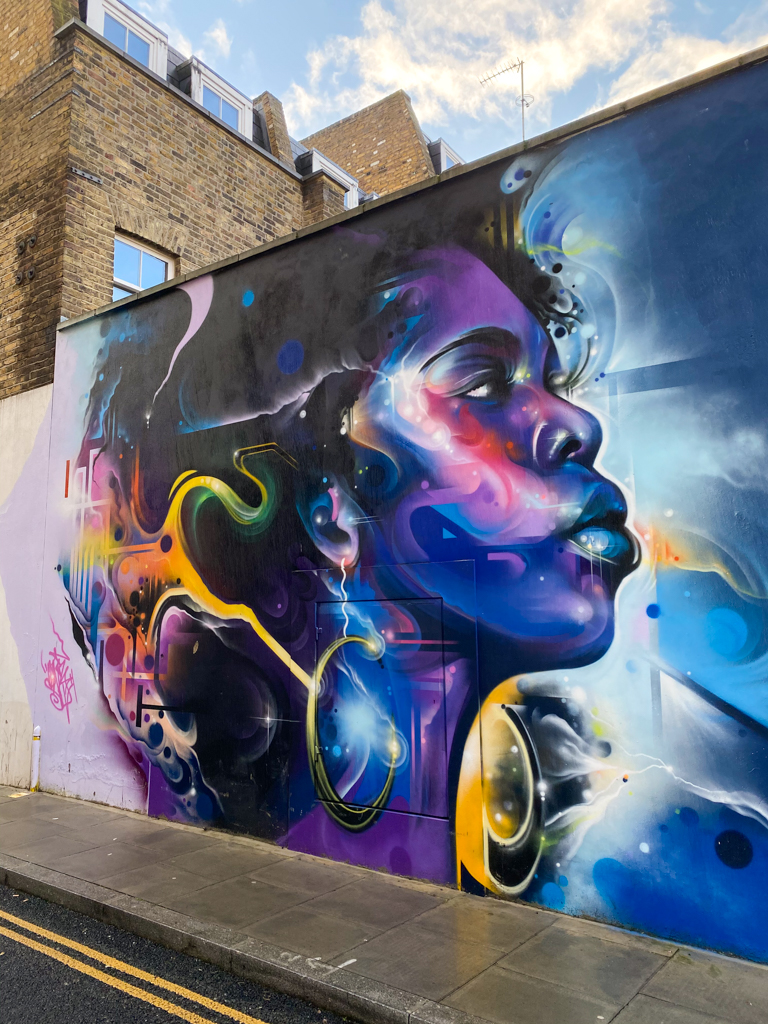
Its industrial past is still visible in the old brick buildings lining Wallis Road and White Post Lane, but many of their walls and shutters are now covered in murals and graffiti. The street art changes constantly: pieces disappear beneath new developments or are painted over, only to be replaced by something entirely different.
The best way to explore Hackney Wick is simply to wander. Start near the station, follow the railway arches and painted walls around Wallis Road and then make your way towards Queen’s Yard.


CRATE Brewery occupies a converted industrial building beside the Lee Navigation. It was established here in 2012 and has become particularly popular for its canalside tables, craft beer and stone-baked pizzas. On a sunny afternoon, the terrace is almost always busy, with drinkers spilling out towards the water.


Around the corner is Howling Hops, a large and lively taproom where beer is poured directly from ten enormous tanks behind the bar. Long communal tables fill the former warehouse space, making it an easy place to settle in for an afternoon even when you arrive as part of a larger group.


From Queen’s Yard, follow the Lee Navigation north, and the warehouses gradually begin to recede. Before long, you reach Wick Woodland, an unexpectedly wild pocket of greenery between the water, the A12 and Hackney Marshes.
The woodland was planted in 1997 and has since developed into an important habitat for local wildlife. It provides a lovely contrast to the breweries and colourful industrial buildings only a short walk away, with informal paths winding beneath the trees and connecting Hackney Wick with the wider marshes landscape.


Continue beside the water and cross the Lee Navigation towards Here East. This enormous complex occupies the former London 2012 Media Centre. It is now home to offices, studios, restaurants and one of the most exciting recent additions to East London: the V&A East Storehouse.
Unlike a conventional museum, the Storehouse allows visitors to explore the V&A’s collections within something resembling a working museum store. Its four levels contain more than 250,000 objects, along with hundreds of thousands of books and archives, with open walkways providing views into storage and conservation areas.


Among its largest exhibits are a two-storey section of the demolished Robin Hood Gardens estate, the only complete Frank Lloyd Wright interior outside the United States and an enormous gilded ceiling from a 15th-century palace in Toledo. Visitors can also book through the Order an Object service to see certain pieces from the collection up close. General admission to the Storehouse is free.
It is a fitting place to finish exploring Hackney Wick. In only a short distance, you move from painted warehouses and busy breweries into woodland and waterways before ending inside a vast new cultural space. That constant contrast between industry, creativity and nature is precisely what makes this far eastern corner of Hackney so interesting.
Final Thoughts
Far East Hackney is not one neatly defined neighbourhood, and that is exactly what makes it so interesting. Across a relatively small part of the borough, you can move from the Tudor history of Homerton to the cafés of Well Street, cross the vast playing fields of Hackney Marshes and finish among the warehouses, waterways and creative spaces of Hackney Wick.

It is also a part of London that rewards wandering. Some of its best places are hidden down alleys, beneath railway arches or beside stretches of canal that feel unexpectedly quiet. The neighbourhoods do not always have clear boundaries, but they flow naturally into one another, with green space and water linking everything together.
Whether you come for pastries and pizza, a long walk through the marshes, a few drinks beside the canal or an afternoon exploring the V&A East Storehouse, this far eastern corner of Hackney shows just how varied the borough can be.
Have you explored this side of Hackney? Let me know your favourite places in Homerton, Hackney Marshes and Hackney Wick, or anywhere I have missed, in the comments below.


No Comments