
Every summer, we try to celebrate our anniversary with a little weekend getaway somewhere in the UK. We moved to London to be together, so it’s particularly fitting to explore this beautiful country as we celebrate another year together. We usually choose somewhere neither of us has visited before, and for 2026, we decided on Norwich.
With its medieval streets, independent shops, beautiful architecture and thriving food scene, Norwich seemed like the perfect place for a weekend away. We caught an early train from London on Saturday morning, ready for two days of wandering, eating and discovering somewhere new.
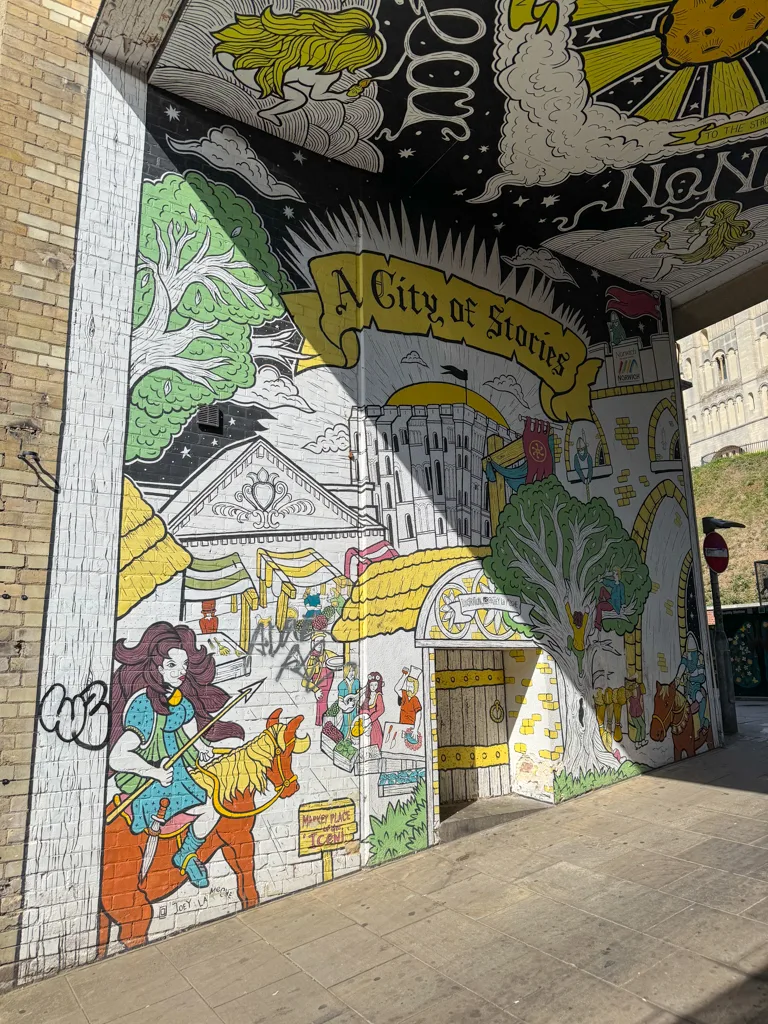
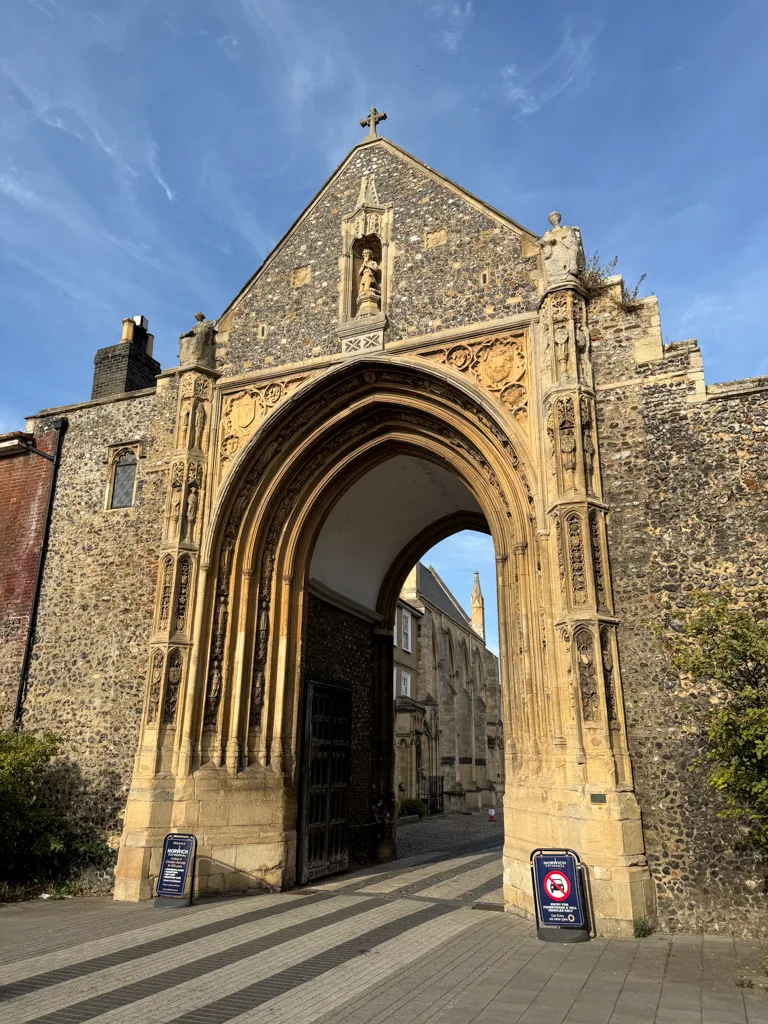
Exploring Norwich’s Lanes and Market
After arriving in Norwich, we dropped our bags at our hotel, 38 St Giles, and headed straight out to explore.
We started in Norwich Lanes, a maze of narrow streets filled with independent shops, cafés and historic buildings. One of the first things that struck me was just how many genuinely small, local businesses there were. At a time when so many British high streets are increasingly dominated by the same fast-food outlets and big-name chains, it was refreshing to find somewhere with so much individuality and character.
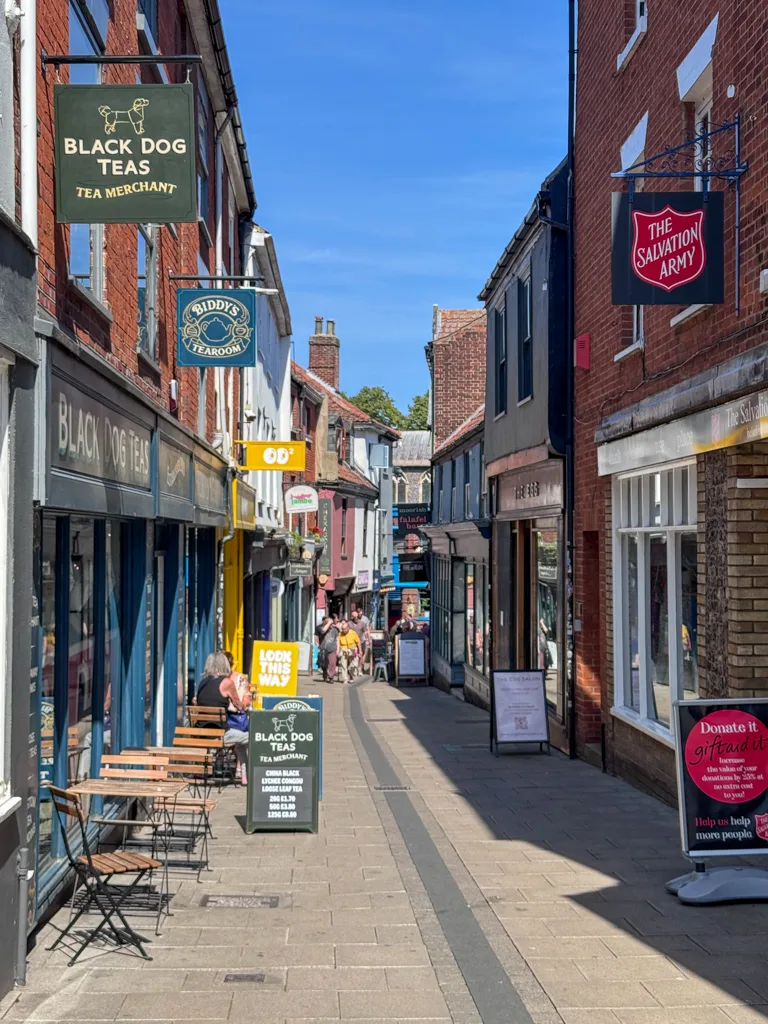
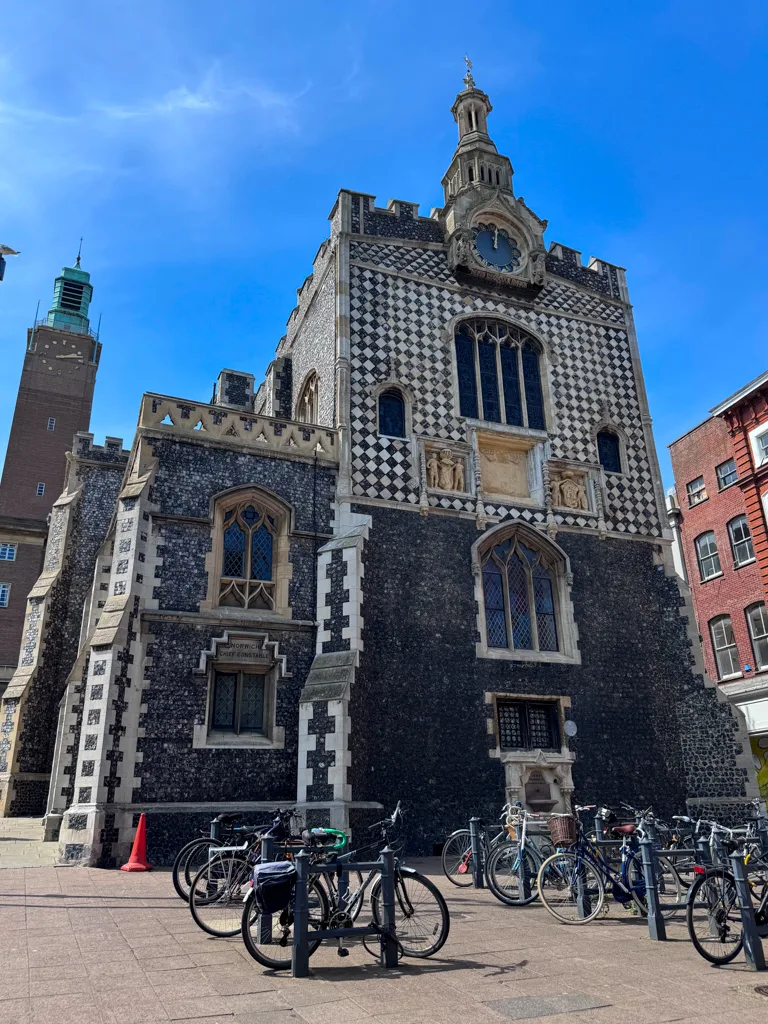
We spent some time browsing the little shops selling everything from plants and homewares to gifts, trinkets and sweet treats before making our way to Norwich Market. With its colourful striped awnings and seemingly endless assortment of stalls, the market has been at the heart of the city for centuries. Today, it’s a wonderful mix of independent traders, street food and everyday essentials.
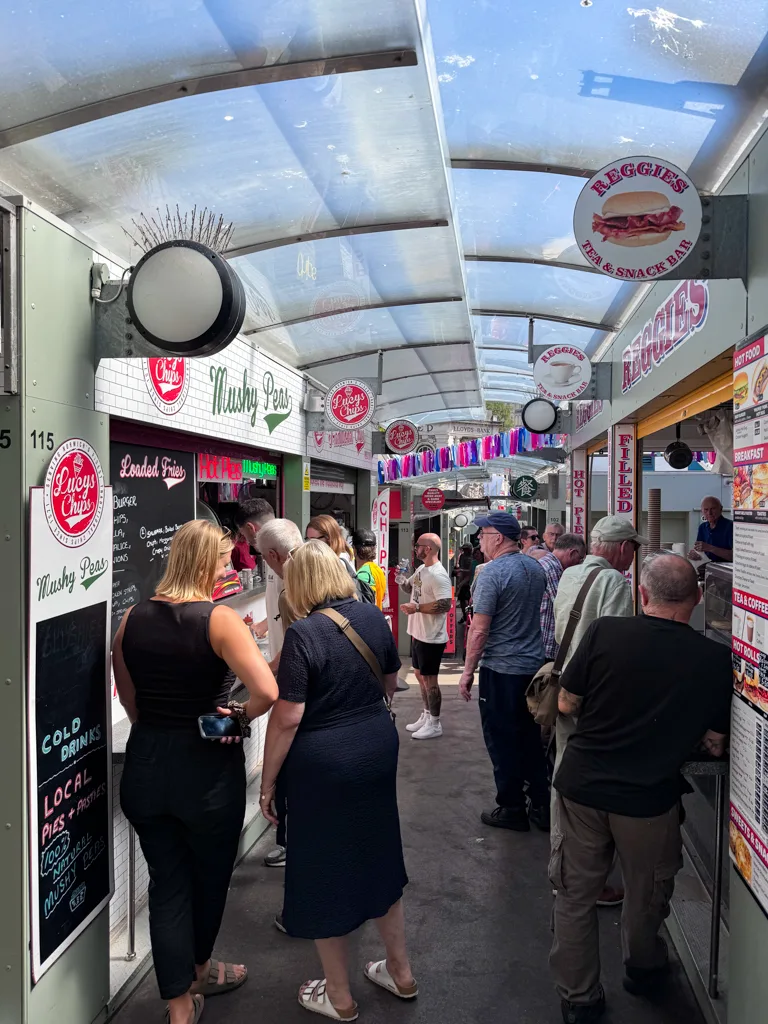
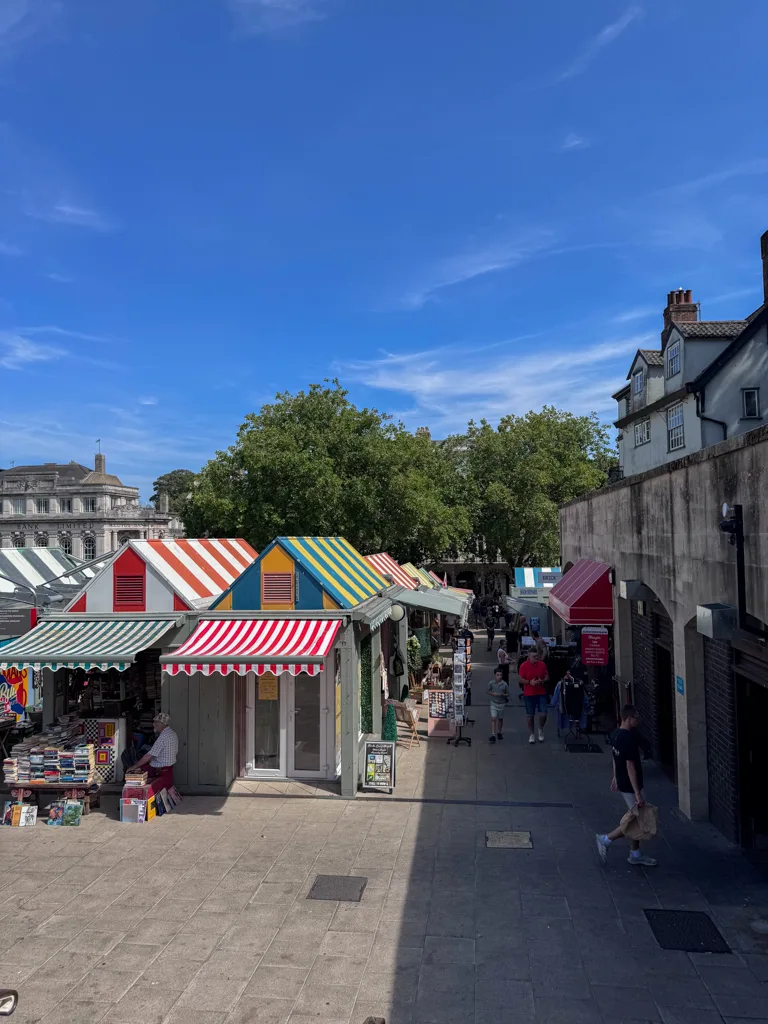
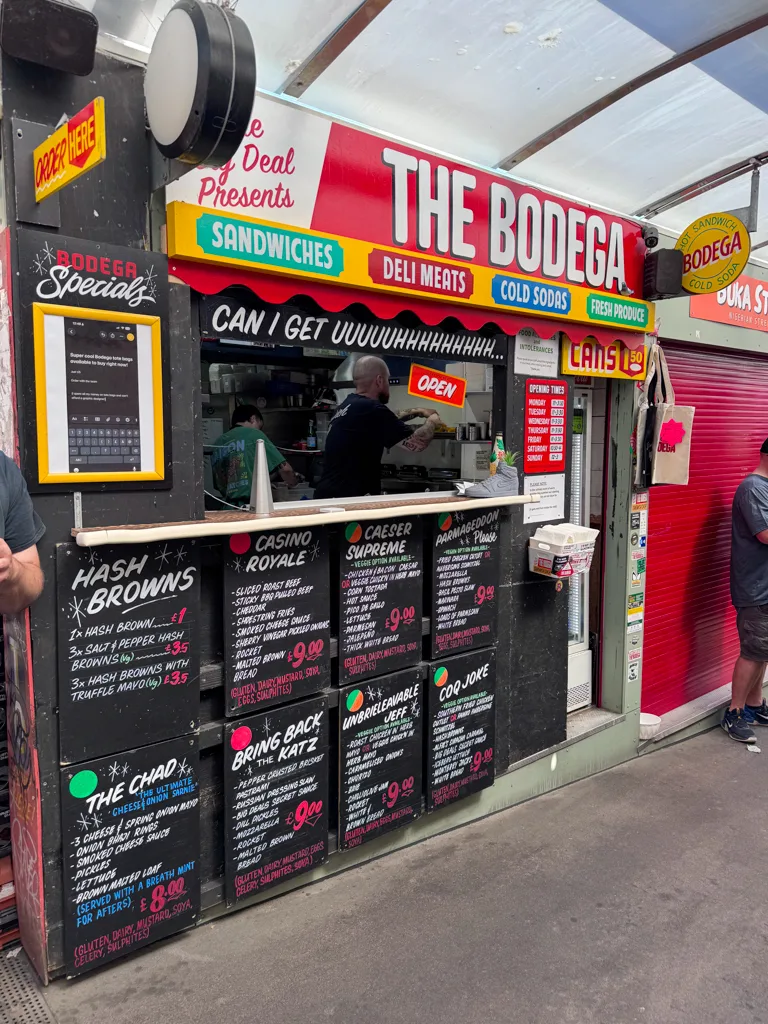
For lunch, we headed to The Bodega, a sandwich stall serving some seriously inventive combinations. We couldn’t decide between two of their vegetarian sandwiches, so naturally, we ordered both to share.
The first was the Unbrielievable Jeff, a gloriously over-the-top combination of veggie chick’m in herb mayo, caramelised onions, veggie chorizo, brie, chilli olive jam and rocket. The second, the Coq Joke, featured panko aubergine schnitzel, hash browns, Alfie’s sriracha caramel, Big Deal’s secret sauce, iceberg lettuce and Monterey Jack cheese.
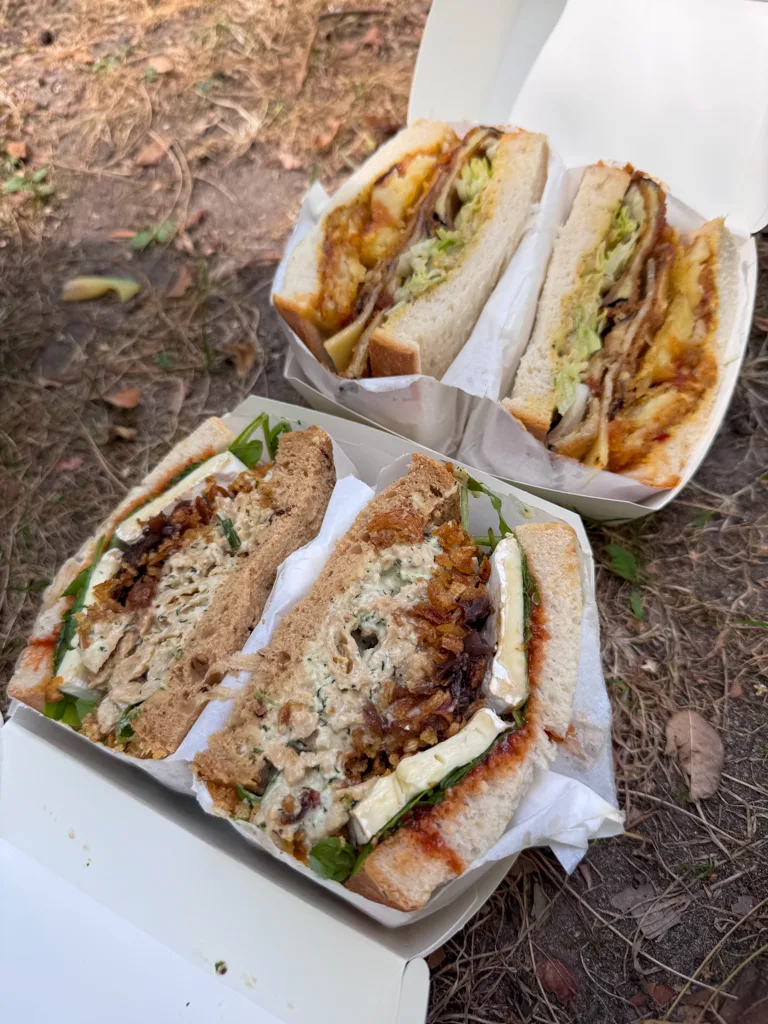
With our enormous sandwiches in hand, we headed to nearby Chapelfield Gardens for a picnic in the sunshine. It was a relaxed and delicious start to the weekend, and we were already rather impressed with Norwich’s food scene.
Discovering Historic Norwich
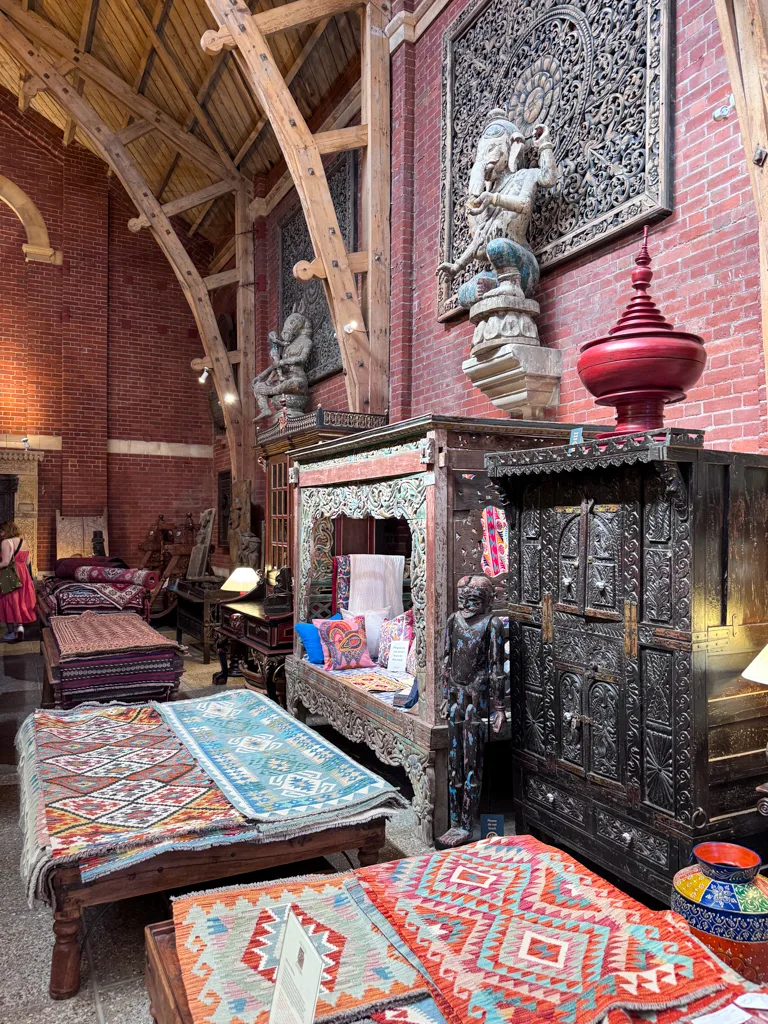
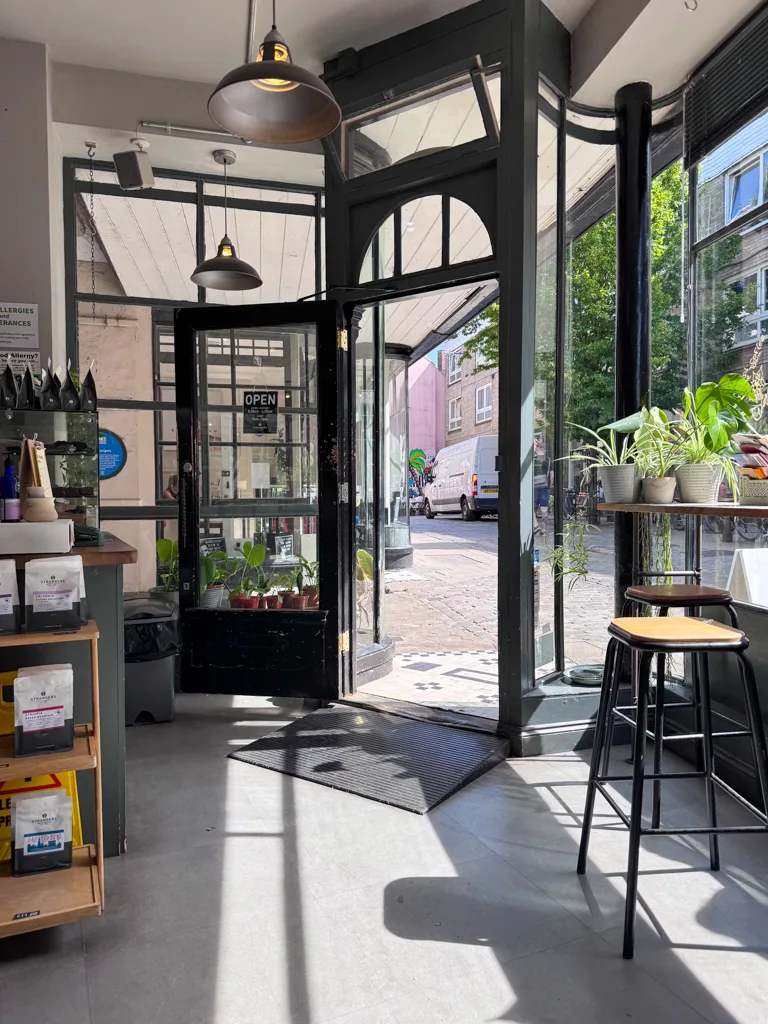
After lunch, we continued exploring, stopping at Country & Eastern, an independent shop filled with an eclectic collection of Asian antiques, furniture and decorative objects. We then took a coffee break at Strangers Coffee before heading to one of Norwich’s most fascinating historic buildings.
Strangers’ Hall
Tucked away in the city centre, Strangers’ Hall is a beautifully preserved medieval merchant’s house with a history stretching back to the 14th century. Over the centuries, it was home to several wealthy merchants and mayors of Norwich, each leaving their mark on the building.
Its unusual name comes from the Strangers, Protestant refugees from the Low Countries who settled in Norwich during the 16th century to escape religious persecution. Many were skilled weavers whose expertise helped revitalise the city’s important textile industry. Their arrival became a significant chapter in Norwich’s history, contributing to its prosperity and cultural identity.
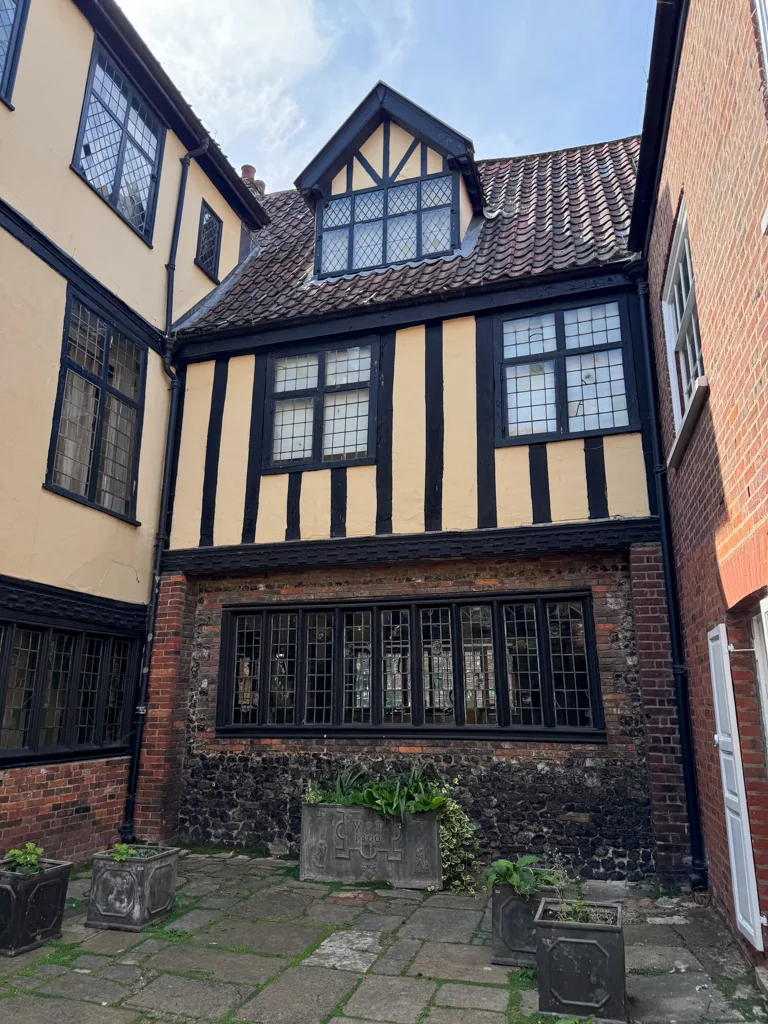
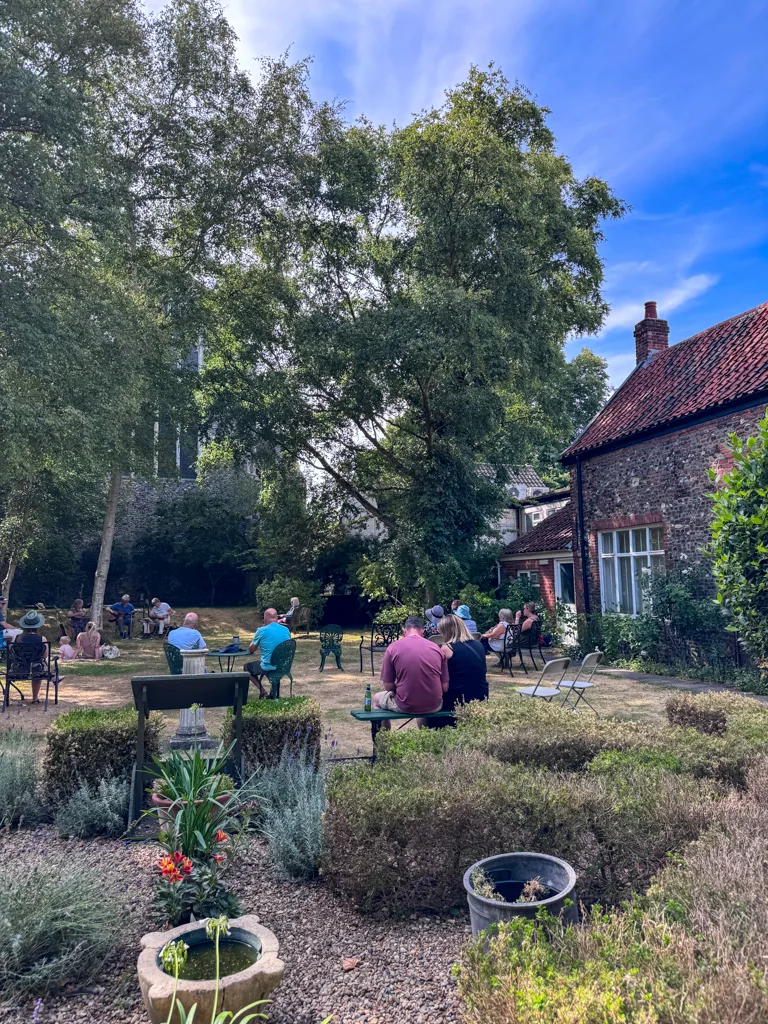
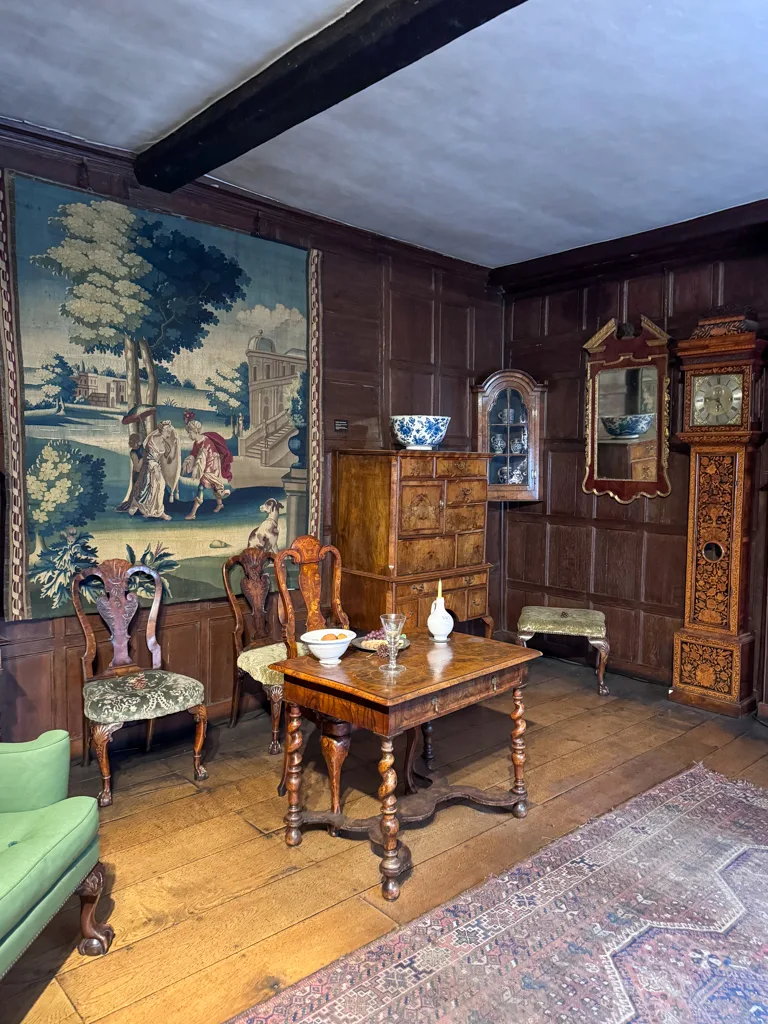
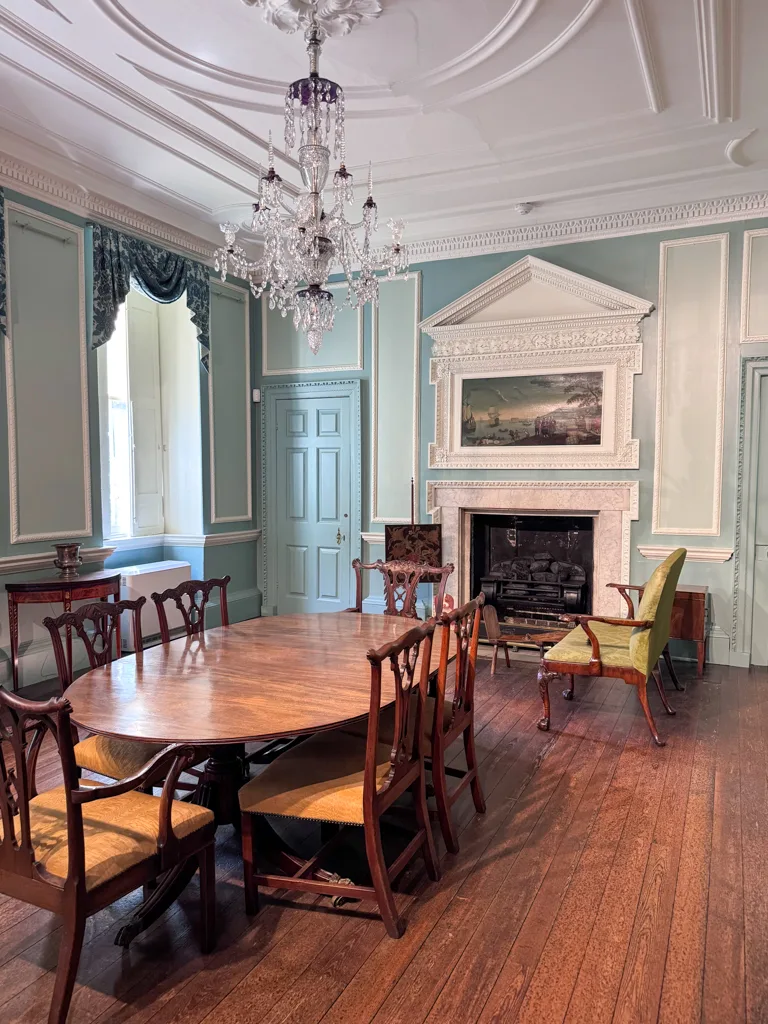
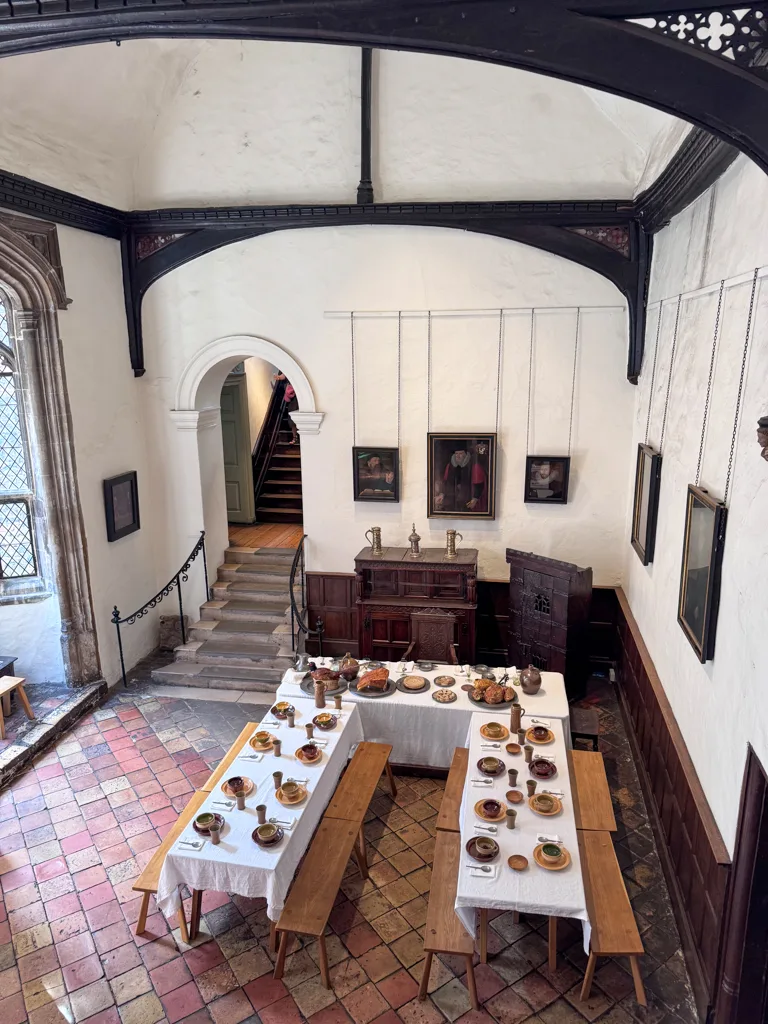
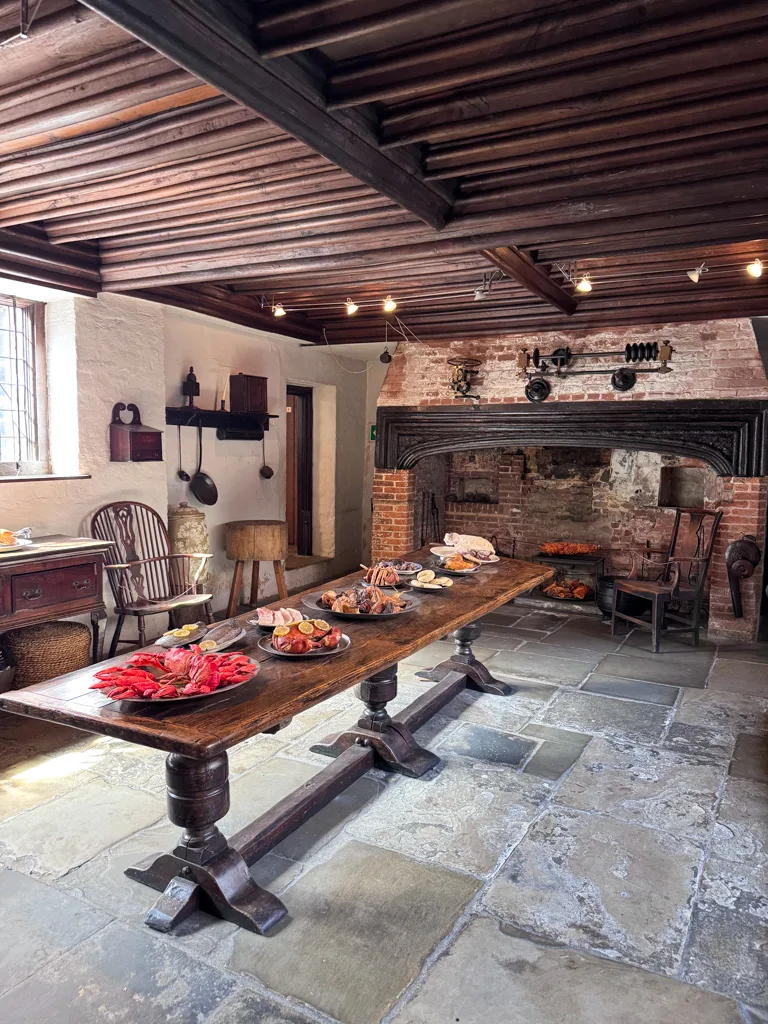
Today, the house operates as a museum, with rooms furnished to represent different periods of domestic life, from the Tudor and Stuart eras through to Georgian and Victorian times. Rather than presenting a single moment in history, the building reveals how successive generations lived and how their homes changed around them.
Wandering through its interconnected rooms, with their timber beams, period furniture and historic interiors, felt like stepping back through several centuries. I particularly enjoyed the sense of discovery as we moved from one room to another, never quite knowing what would be around the next corner.
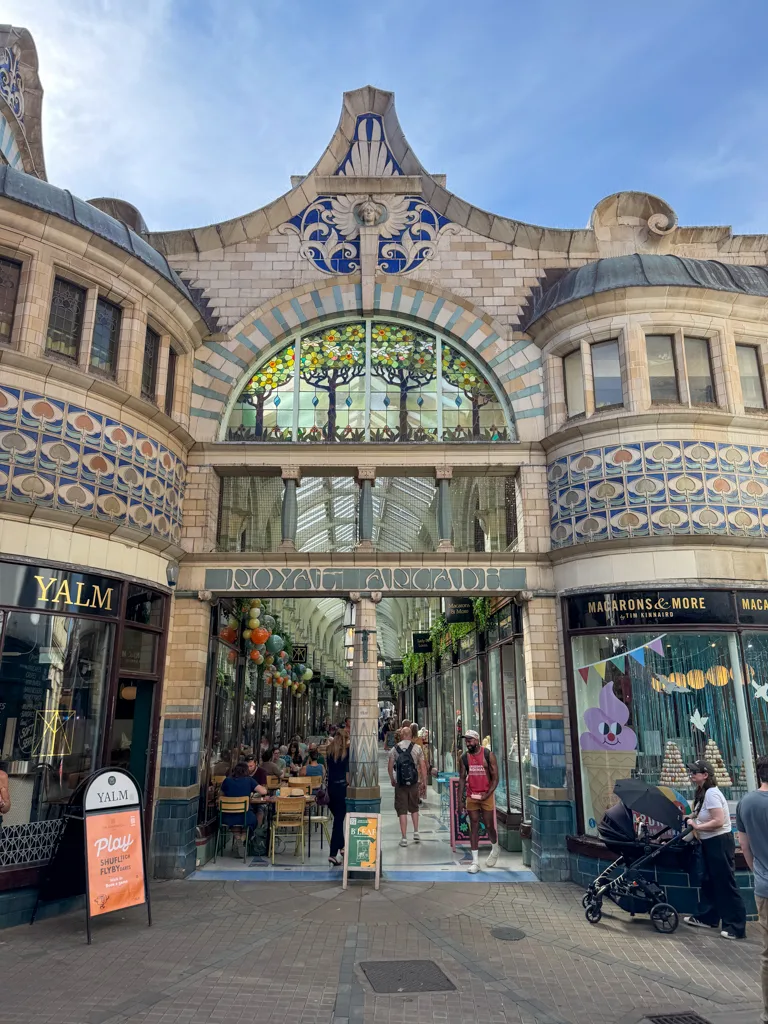
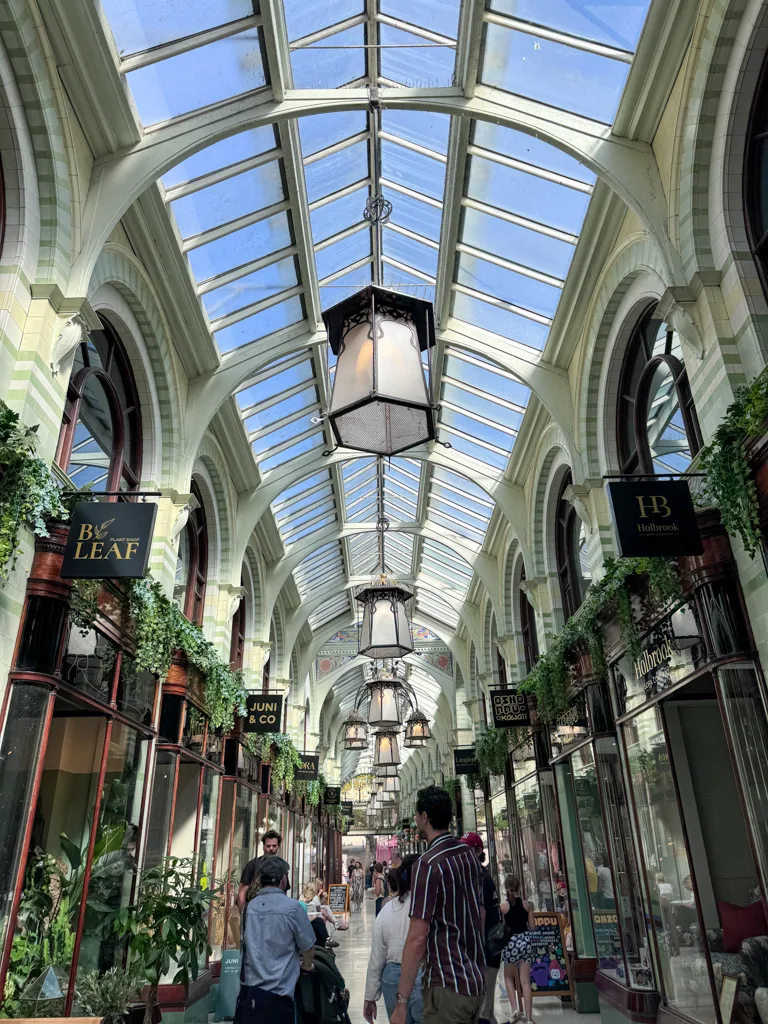
Afterwards, we continued through the city, eventually coming across the beautiful Royal Arcade. Built at the end of the 19th century, the arcade is a wonderful example of Art Nouveau design, with its colourful tiles, decorative details and elegant, sculptural architecture. I couldn’t help but stop to admire the colours and intricate details. It’s one of those unexpected places that makes wandering around a new city so rewarding.
Norwich Castle
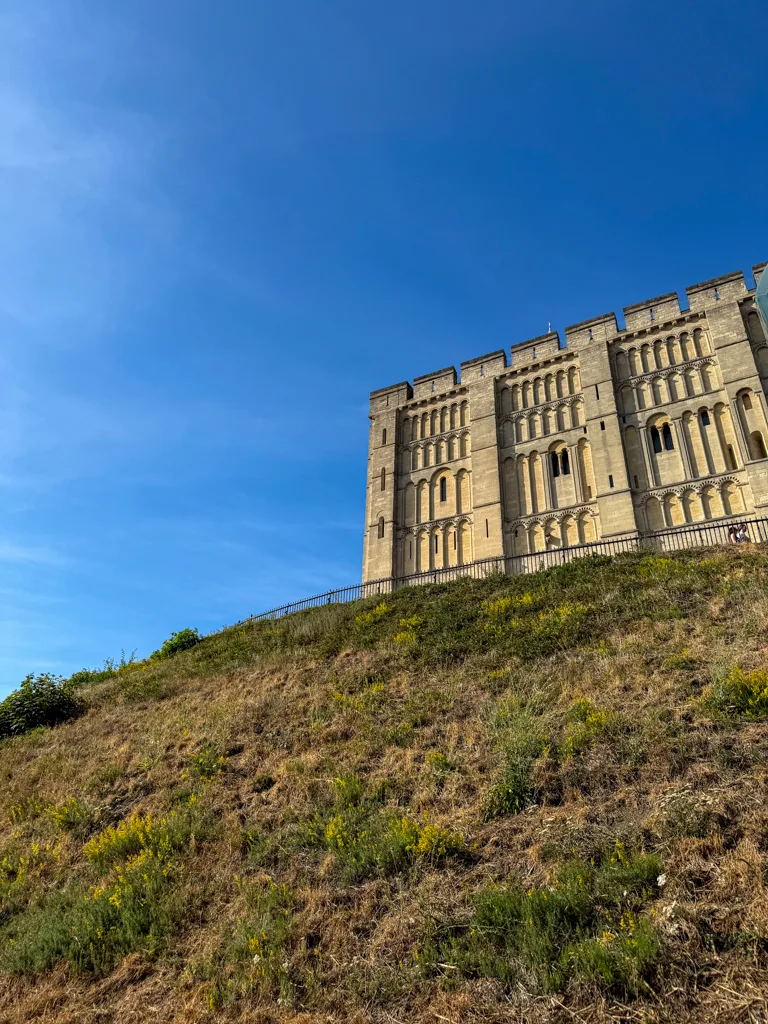
Our next stop was Norwich Castle, an imposing Norman fortress standing high above the city. The castle’s origins date back to the years following the Norman Conquest of England in 1066, when William the Conqueror established a fortification here to consolidate Norman control over East Anglia. The original timber defences were eventually replaced by the magnificent stone keep, begun under William II and completed during the reign of Henry I in the early 12th century.
Unlike many castles built primarily for military defence, Norwich Castle was also conceived as a royal palace, an imposing symbol of Norman wealth and authority. Its enormous stone walls and elevated position would have made quite an impression on the medieval city below.
Over the following centuries, the castle underwent several transformations. By the later Middle Ages, it had become a prison, a role it retained for hundreds of years before eventually opening as a museum in 1894.
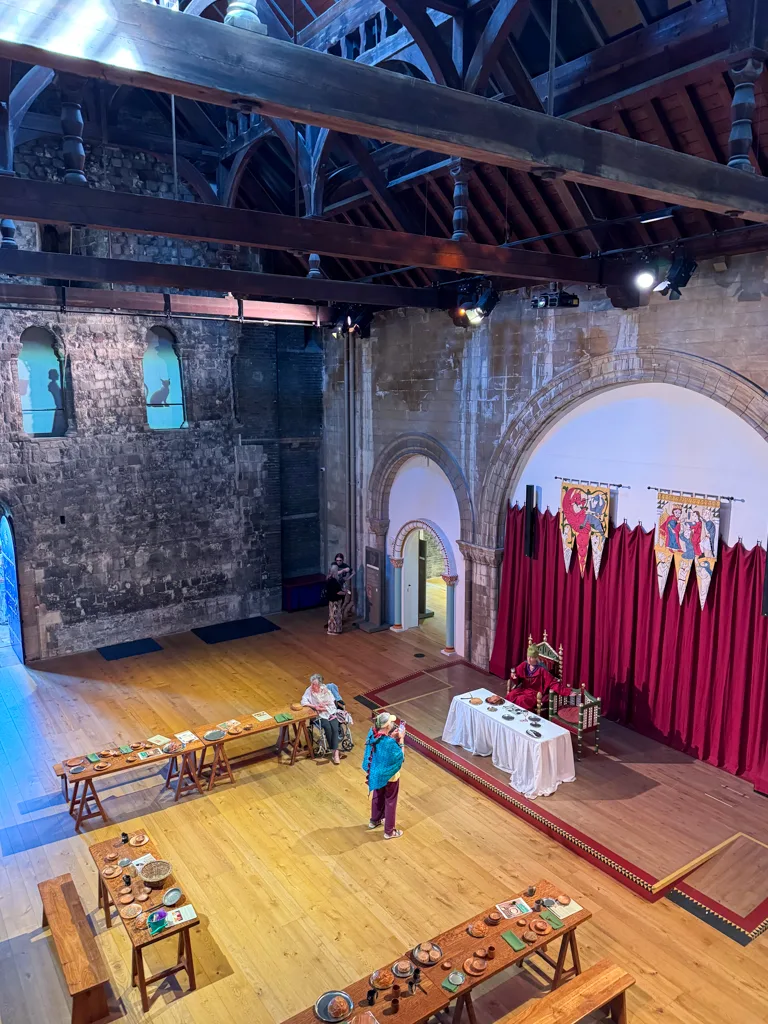
One of the most exciting developments in recent years has been the restoration of the Norman keep, completed in 2025. The project reinstated its original medieval floors and recreated the room layout, helping visitors understand how the royal palace would have looked and functioned some 900 years ago.
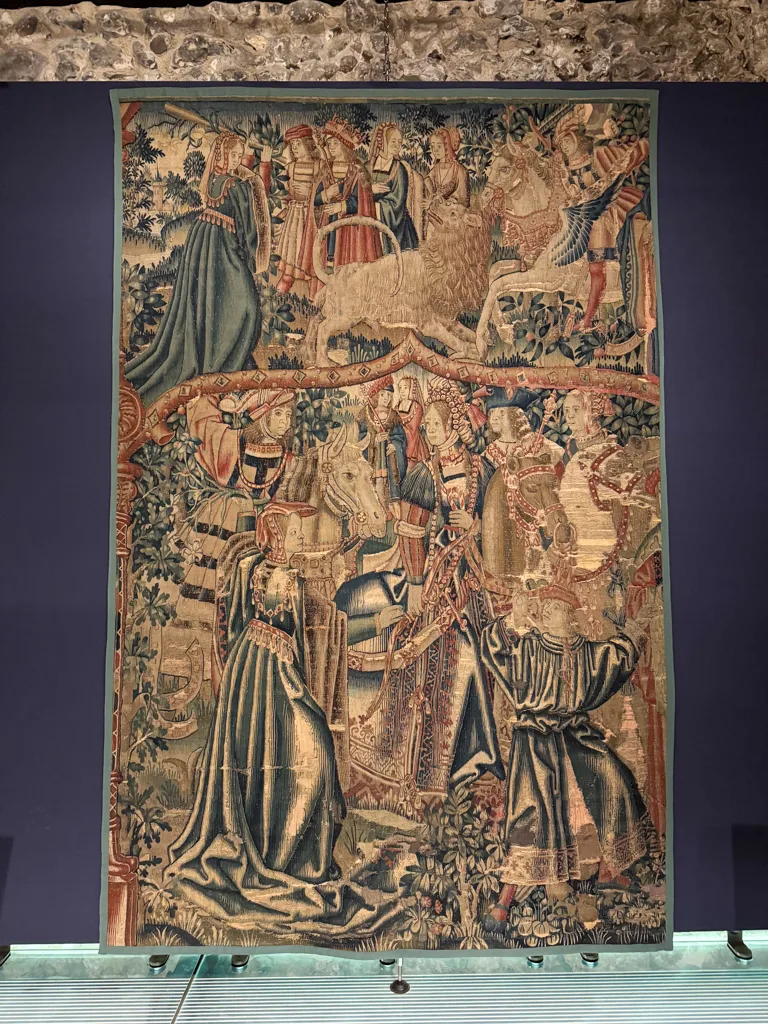
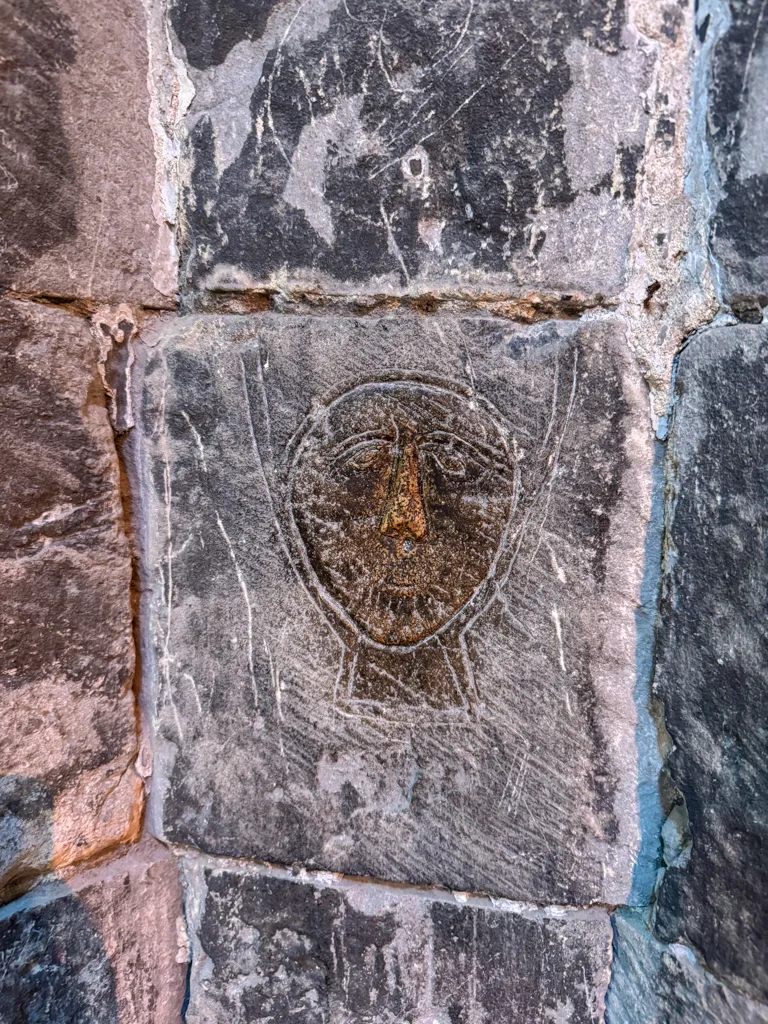
We enjoyed exploring the restored interiors and imagining what life might have been like within those enormous stone walls. However, one of my favourite details was something rather more modest: the centuries-old graffiti carved directly into the stone.
These markings, including religious figures and other images, were left behind during the castle’s long history. I found them absolutely fascinating. There’s something special about seeing these small, personal traces of people who lived hundreds of years ago. While the architecture tells the grand story of kings, power and conquest, the graffiti offers a much more intimate connection to the past.
Norwich Cathedral and Elm Hill
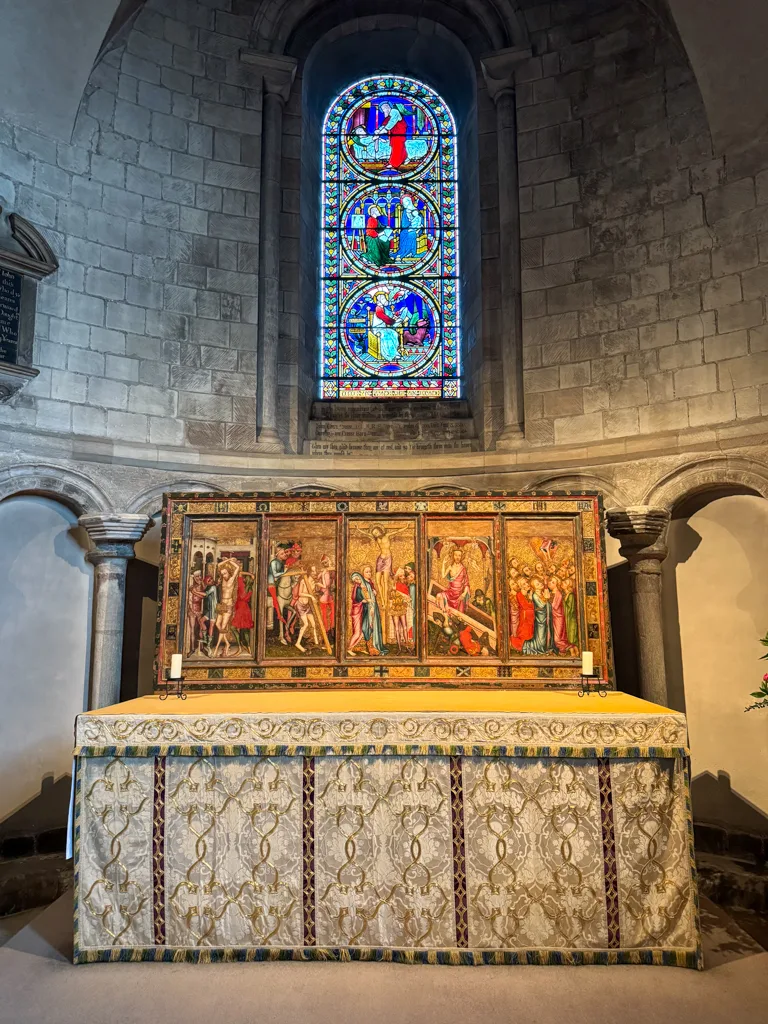
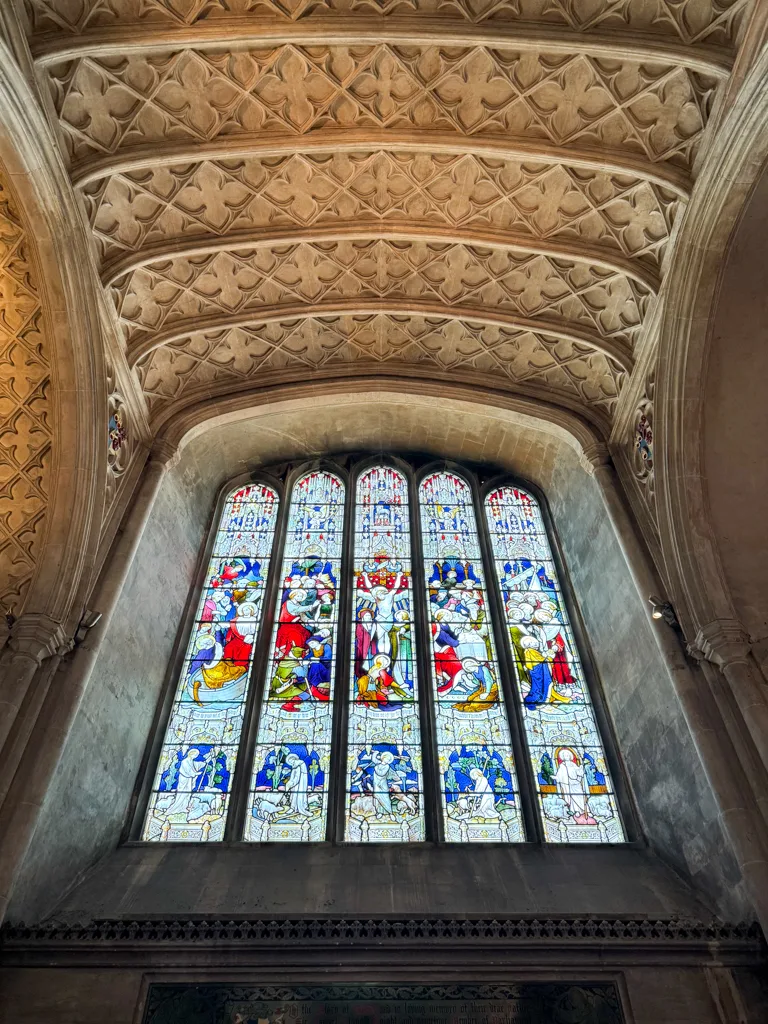
From the castle, we made our way to Norwich Cathedral, another of the city’s great Norman landmarks. Founded in 1096 by Herbert de Losinga, the first Bishop of Norwich, the cathedral began life as part of a Benedictine monastery. Construction continued throughout the 12th century, and remarkably, much of its original Norman architecture survives today.
The cathedral is considered one of England’s finest examples of Romanesque architecture, with its enormous stone columns, rounded arches and soaring interior. Its magnificent spire, rising 96 metres above the city, is the second tallest cathedral spire in England, surpassed only by Salisbury.
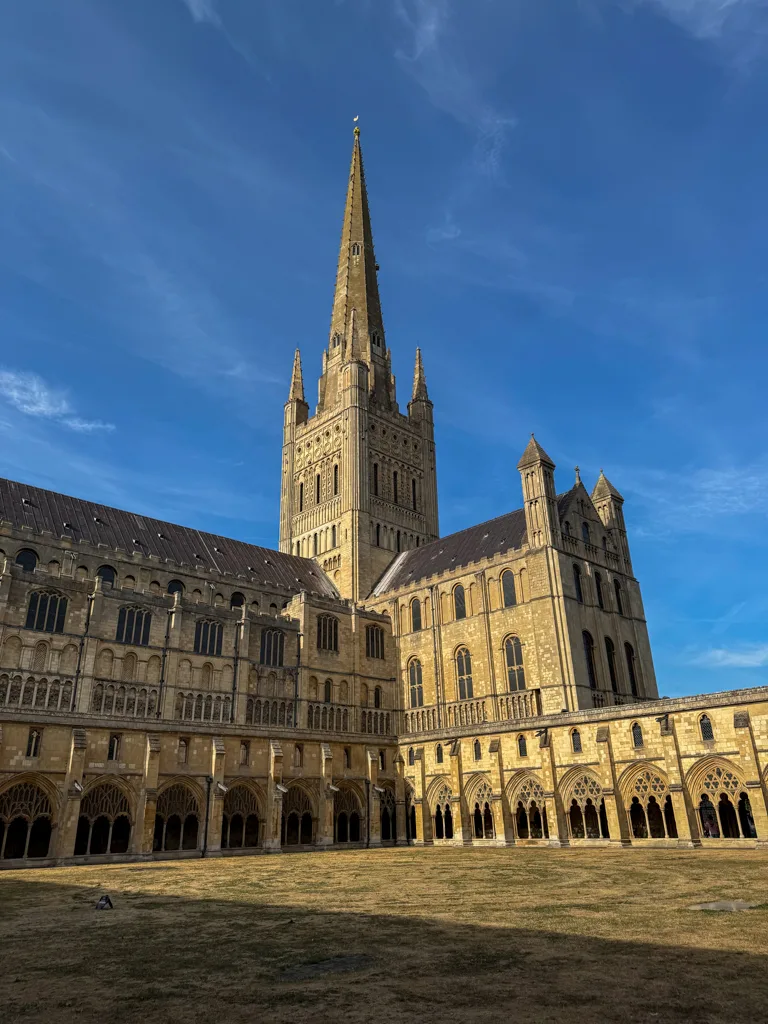
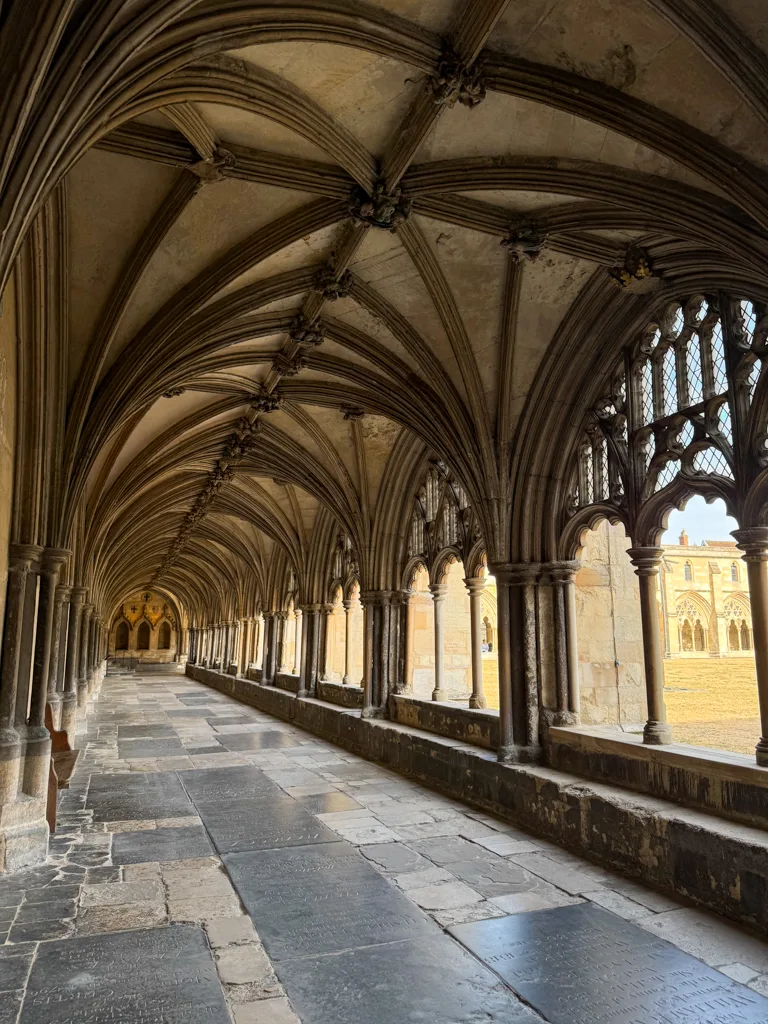
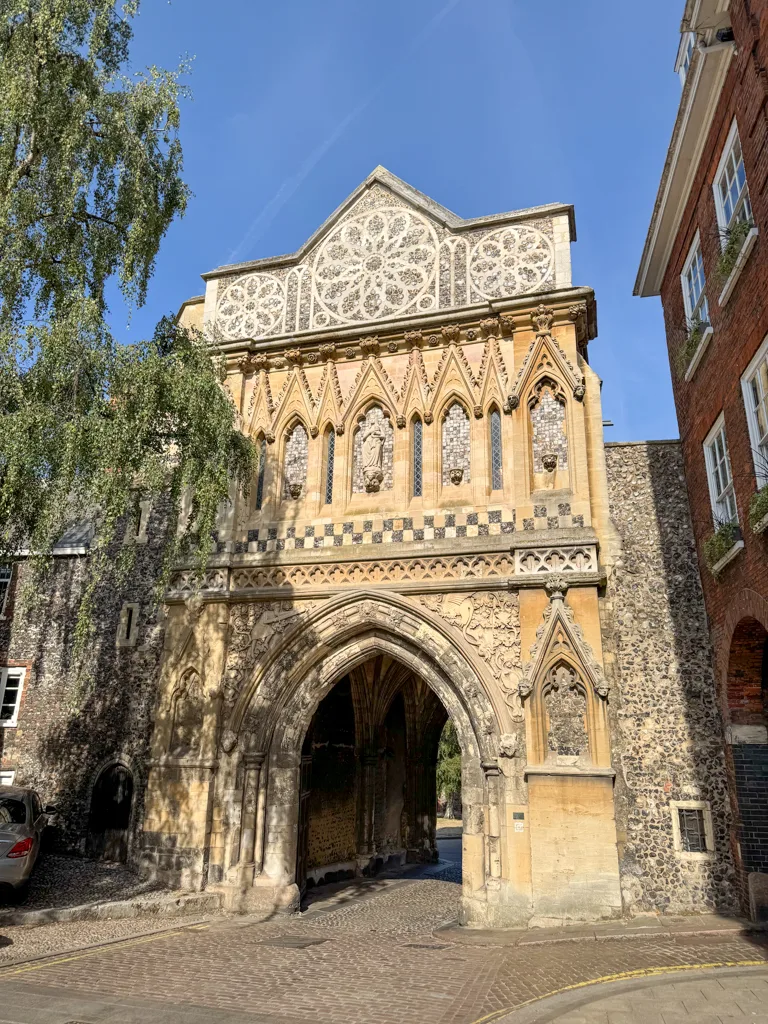
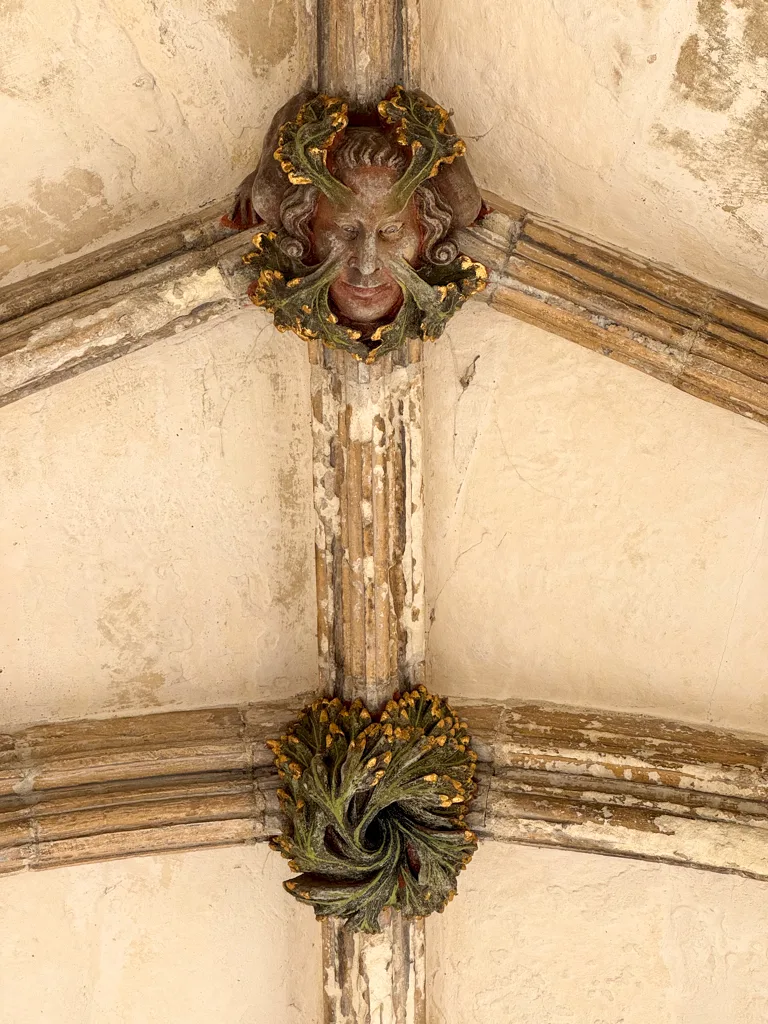
Although the cathedral’s origins are Norman, the building has evolved over the centuries. Its current spire dates to the 15th century, replacing earlier versions damaged by storms and fire. The cathedral is also famous for its medieval roof bosses, the intricately carved stones decorating the vaulted ceilings, and its magnificent cloisters, the largest surviving monastic cloister in England.
We spent some time exploring the cathedral and admiring its architecture. There’s something quite extraordinary about standing inside a building that has been at the heart of a city for more than 900 years.
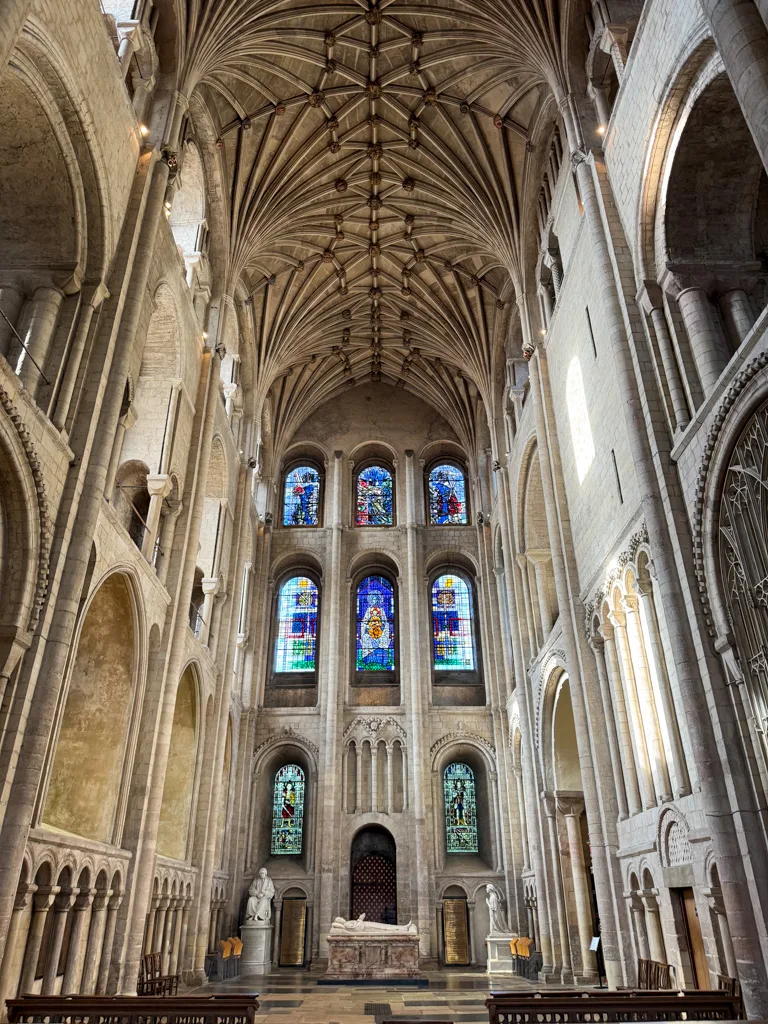
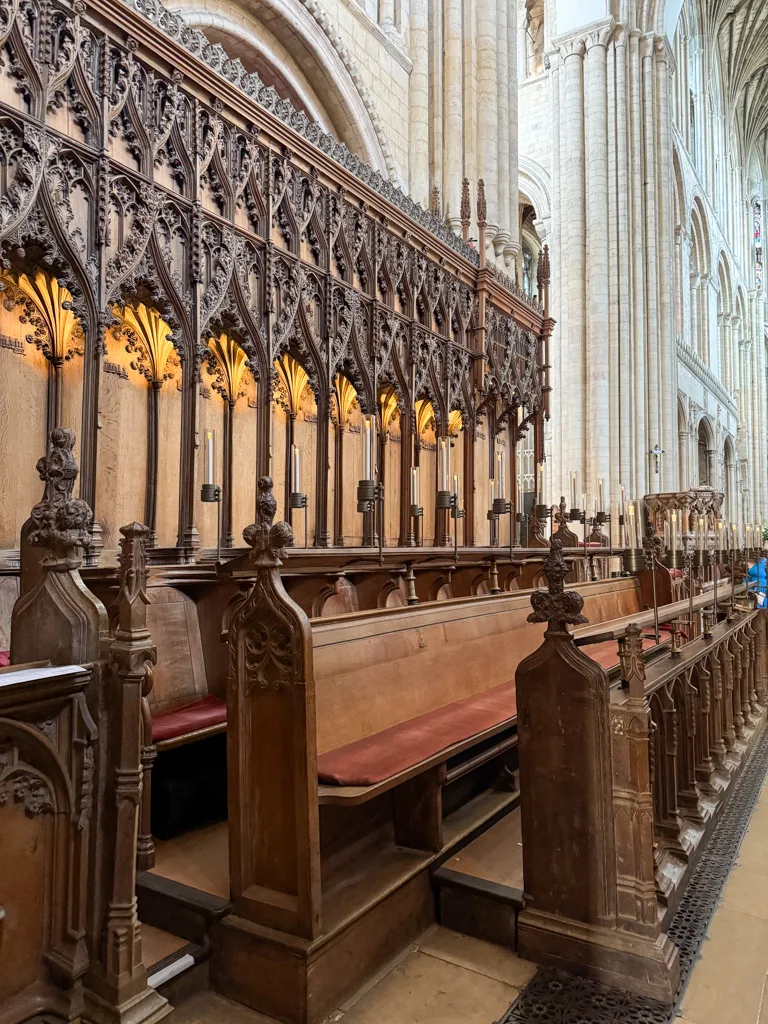
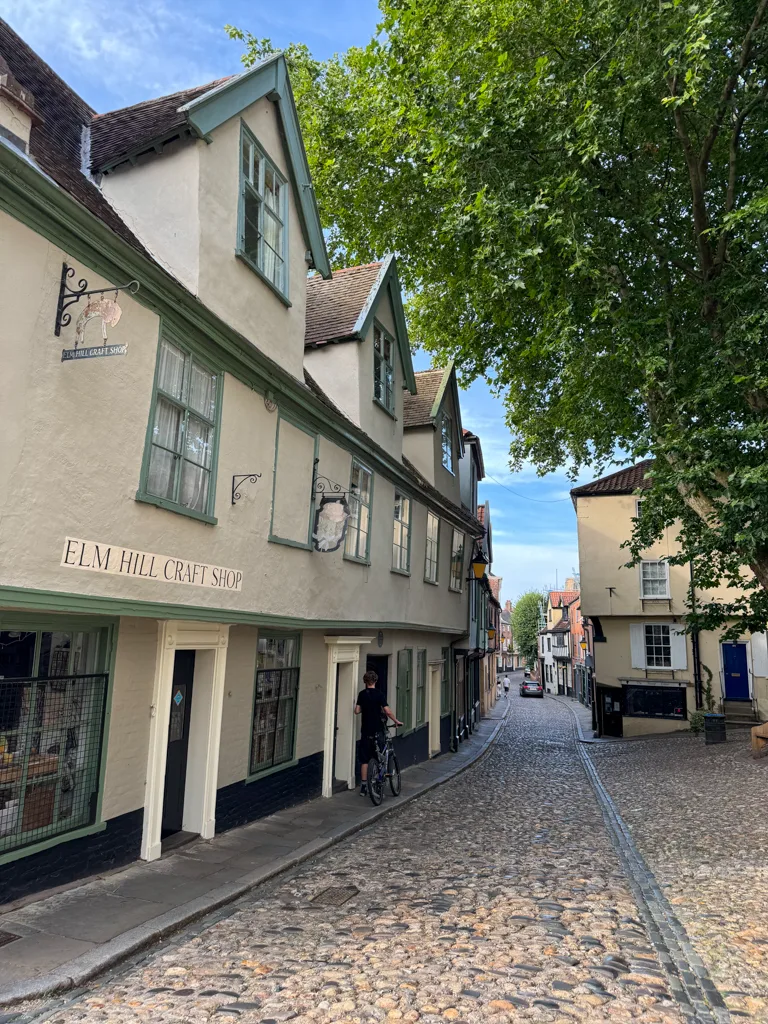
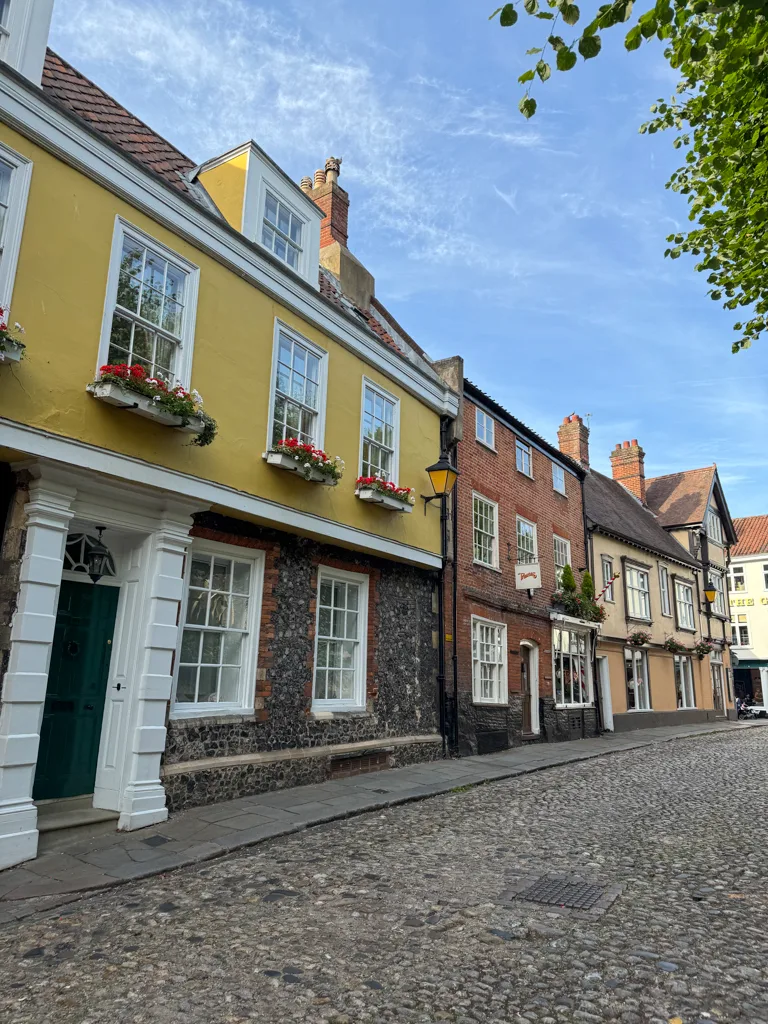
Afterwards, we wandered through the nearby Elm Hill, one of Norwich’s most picturesque streets. With its cobblestones, crooked timber-framed buildings and historic façades, it feels almost like a film set. Many of the buildings date from the Tudor period, following a devastating fire in 1507 that destroyed much of the earlier medieval street.
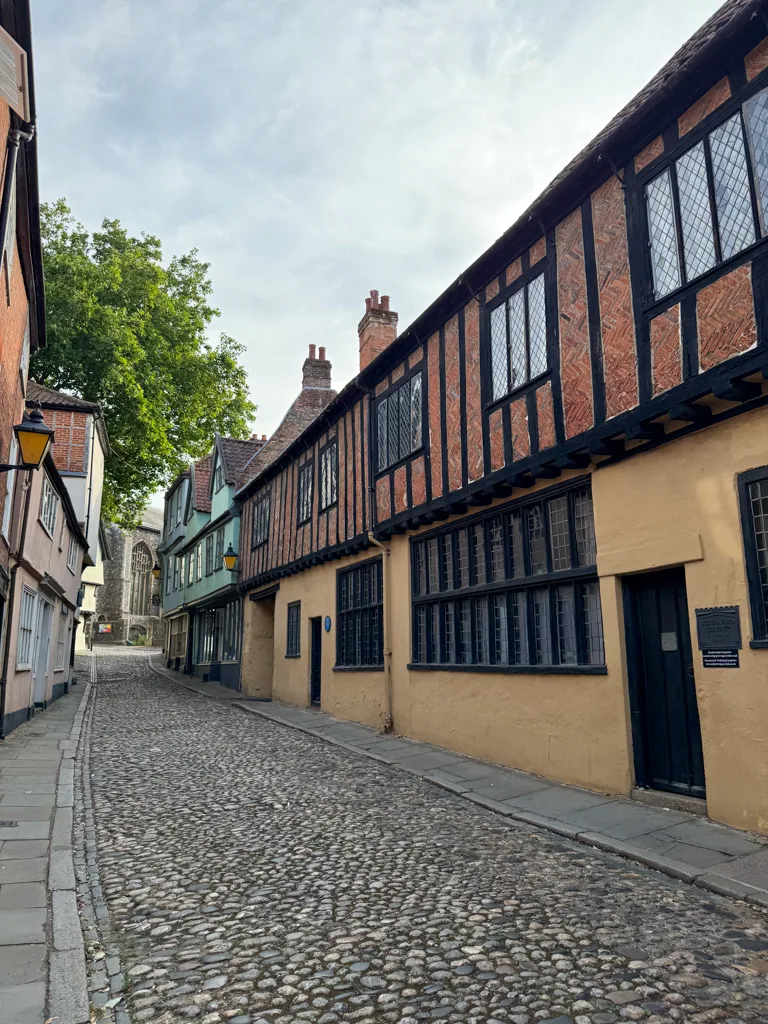
It was a beautiful place for a final wander before heading back to our hotel.
A Charming Stay at 38 St Giles
For our anniversary weekend, we booked 38 St Giles, a boutique hotel in the heart of Norwich.
The hotel was absolutely gorgeous, and I particularly loved our room. Full of character and thoughtful details, it felt wonderfully cosy and inviting, exactly the sort of place you hope to find for a romantic weekend away.
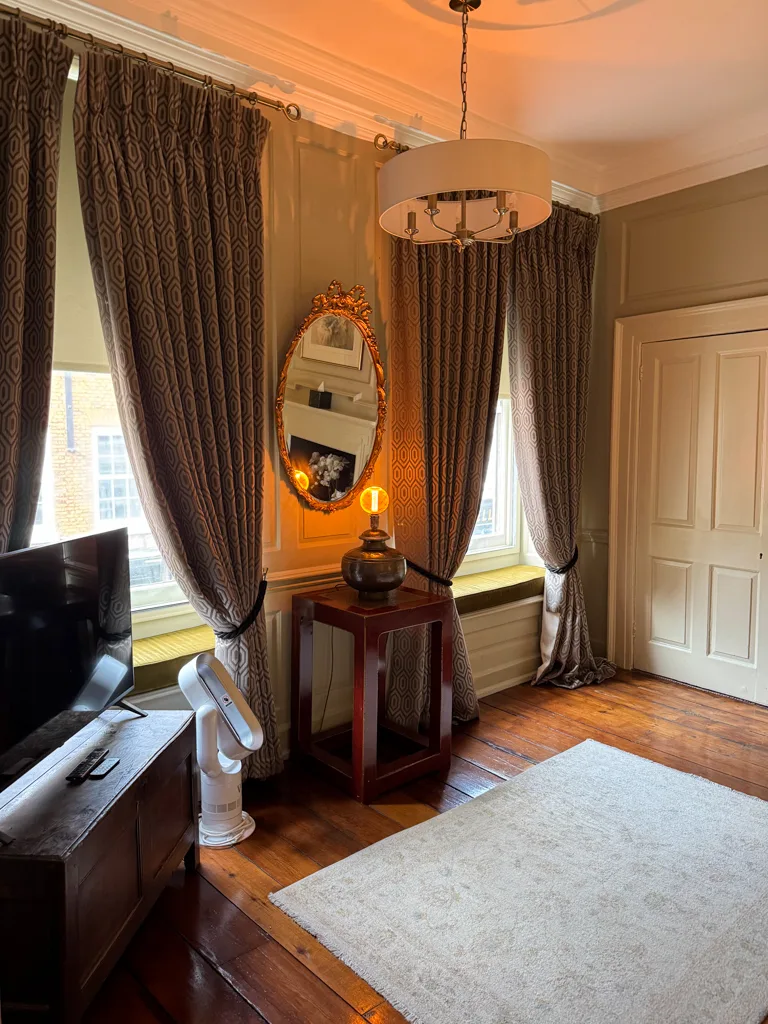
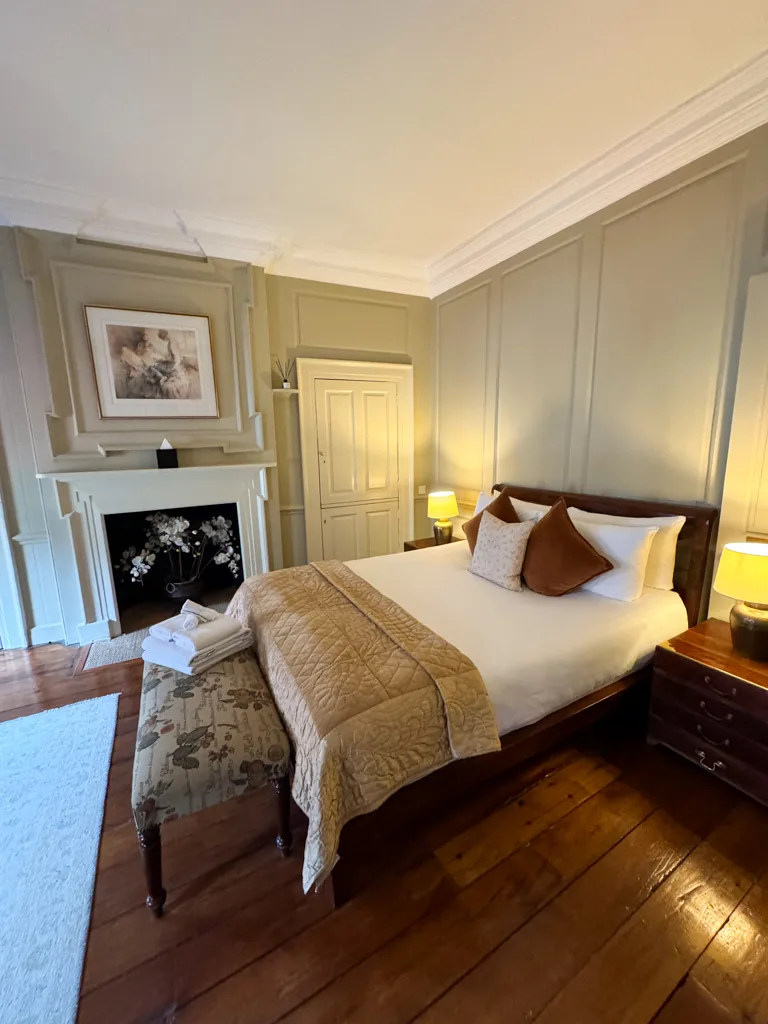
After spending most of the day on our feet, we were more than happy to return, check in properly and enjoy a little downtime before getting ready for dinner.
An Unexpected Anniversary Dinner at Pip’s
We’d booked a table at Pip’s, a restaurant known for its refined, seasonal small plates with a creative twist. It sounded like exactly the kind of place we’d enjoy for an anniversary dinner. What we hadn’t realised was that, for August, Pip’s was running a special burger menu! Admittedly, burgers weren’t quite the anniversary dinner we’d originally imagined, but we decided to embrace the change of plans. And I’m very glad we did.
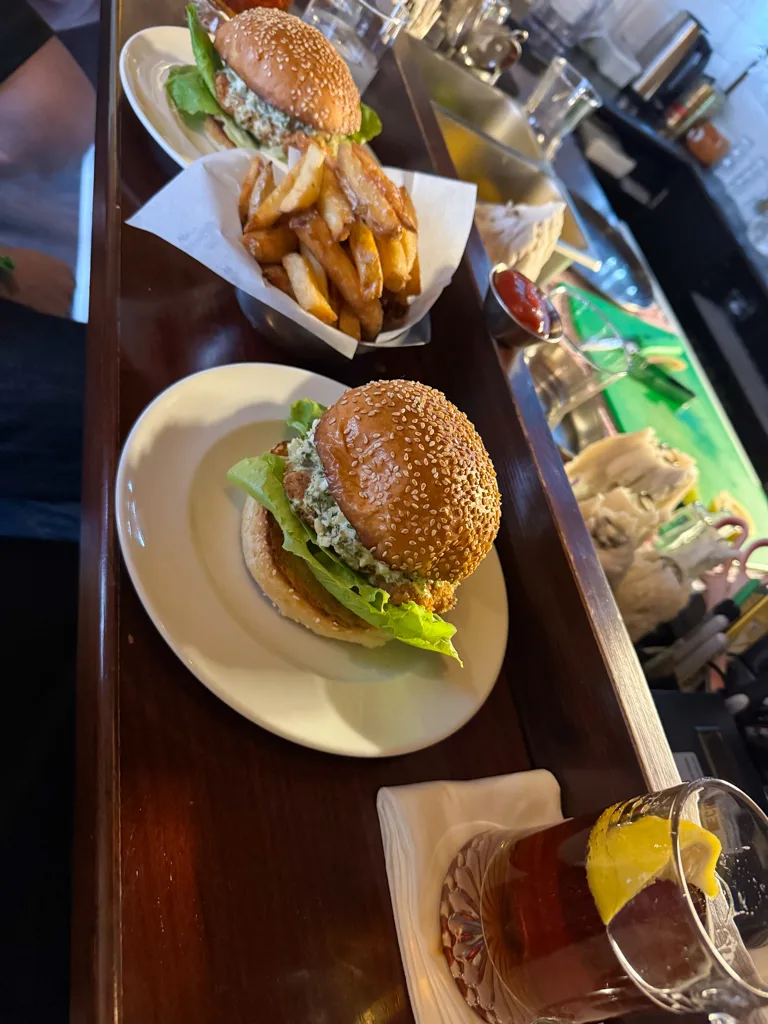
Luckily for us, there was a pescatarian option, so we both ordered the Fish Filet, a sandwich filled with fried haddock, lettuce and tartare sauce, accompanied by fries. It was absolutely delicious, and any initial disappointment about the menu change quickly disappeared. We were seated at the bar, next to a couple of guys who seemed determined to work their way through the entire menu. Between them, they tried the cheeseburger, the green chile cheeseburger, the Fish Filet, and fries. They were hilarious and incredibly friendly, and we ended up having a really enjoyable evening chatting with them.
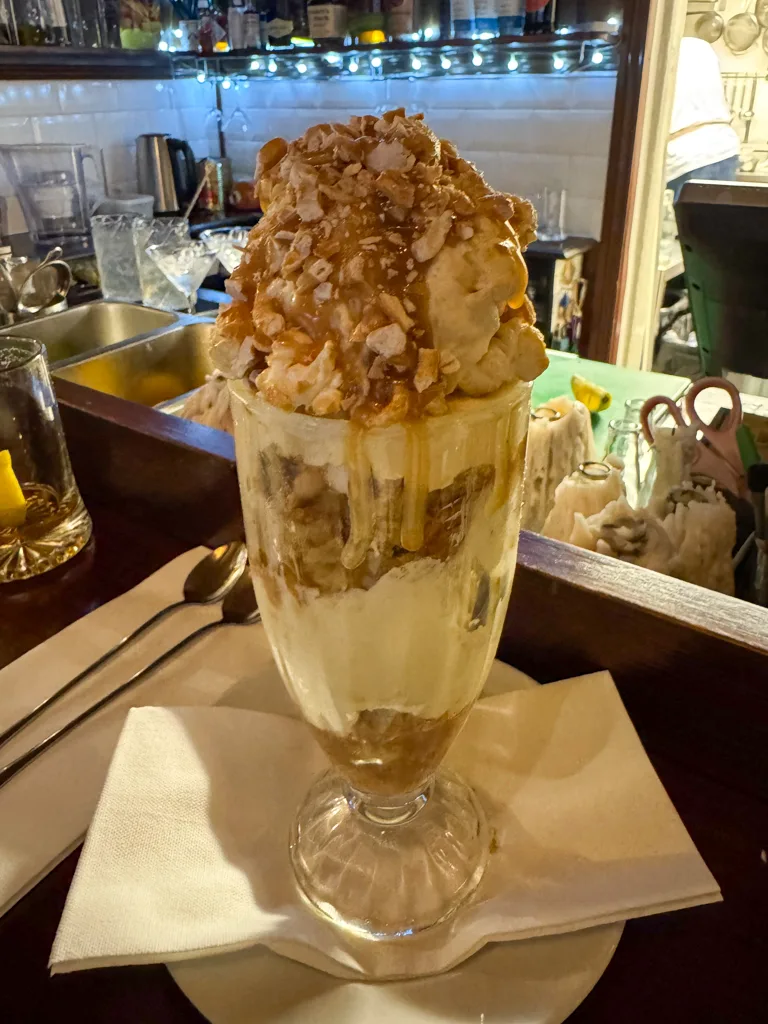
For dessert, we shared what might be one of the most unusual sundaes I’ve ever encountered: the Creamed Corn Sundae, featuring buttered corn ice cream, corn cake, bourbon hard sauce and salted caramel popcorn. It sounded completely ridiculous, which naturally meant we had to try it. And somehow, it worked!
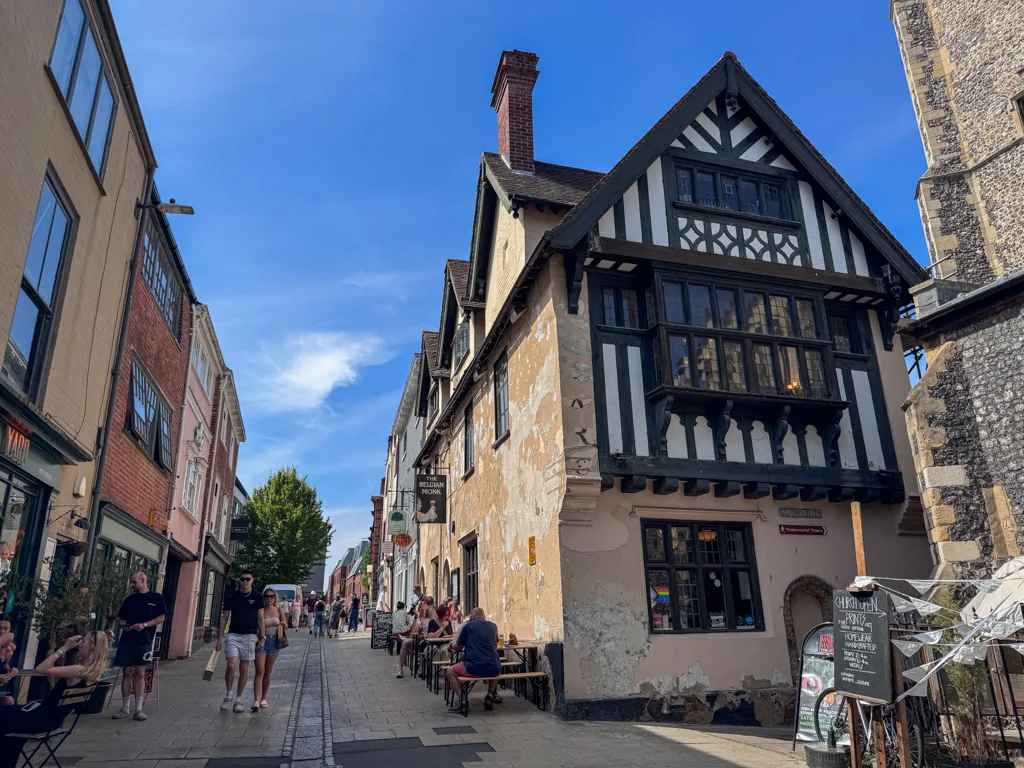
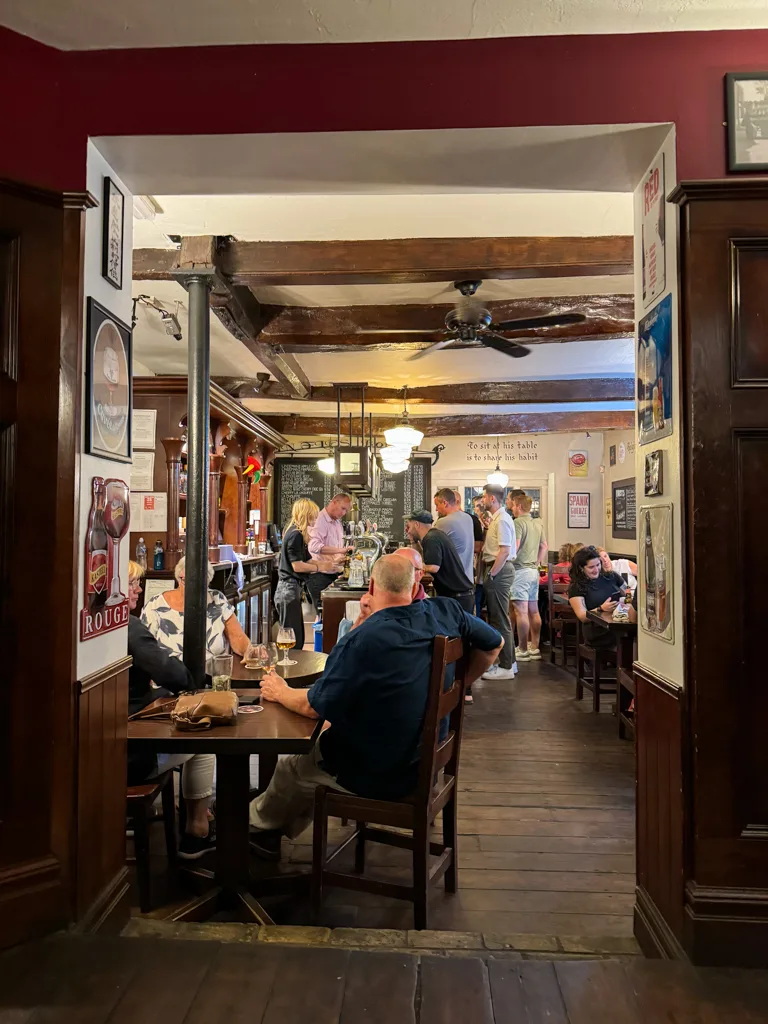
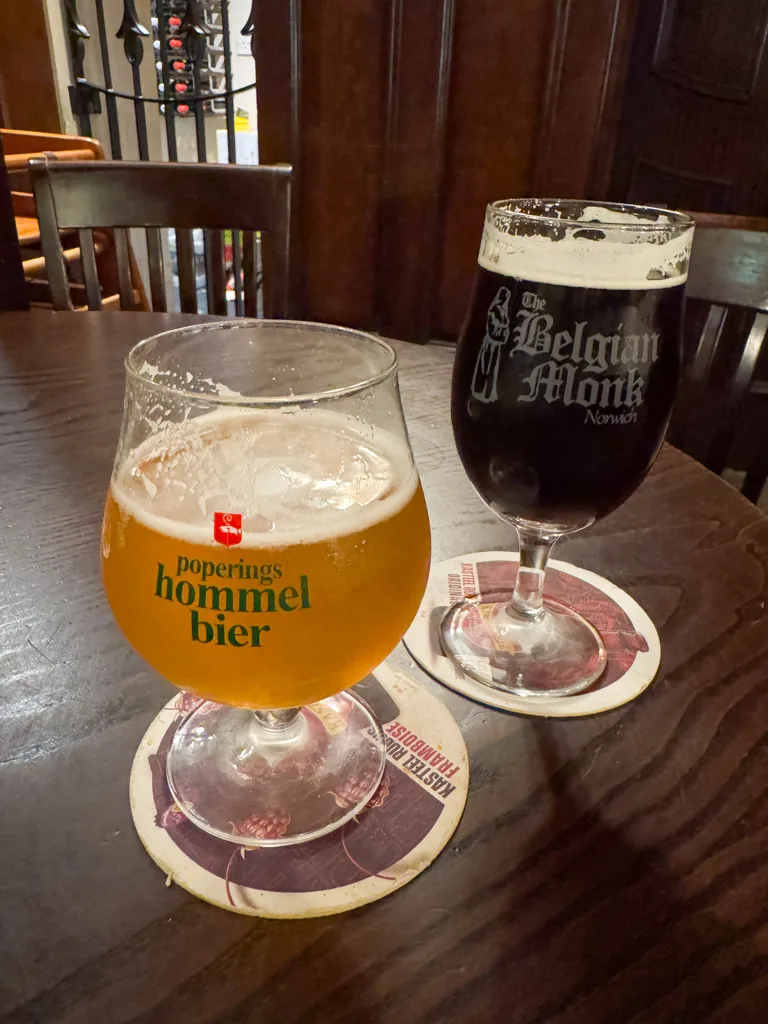
Our anniversary dinner turned out to be rather different from what we’d planned, but it was memorable, delicious and full of unexpected fun. We finished the evening back in central Norwich with a drink at The Belgian Monk, rounding off a fantastic first day in the city.
Sunday Morning: Pastries, Coffee and Sunshine
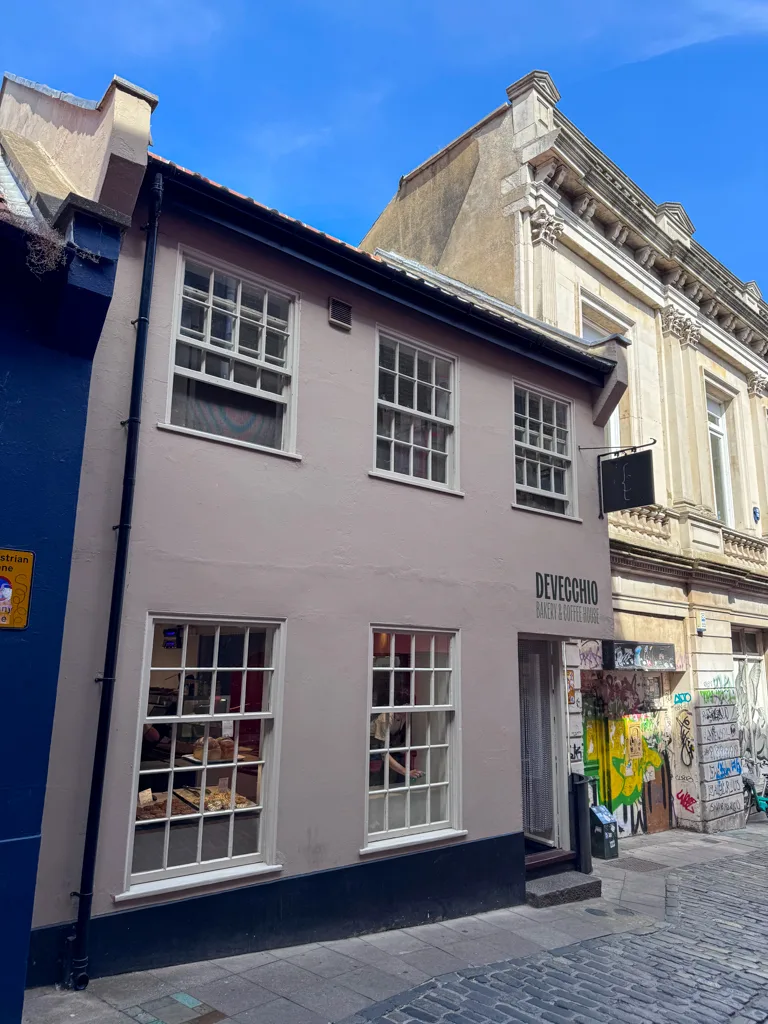
After a leisurely morning enjoying our beautiful room at 38 St Giles, we headed to Devecchio to pick up some pastries before returning to Strangers Coffee, which we’d enjoyed the previous day.
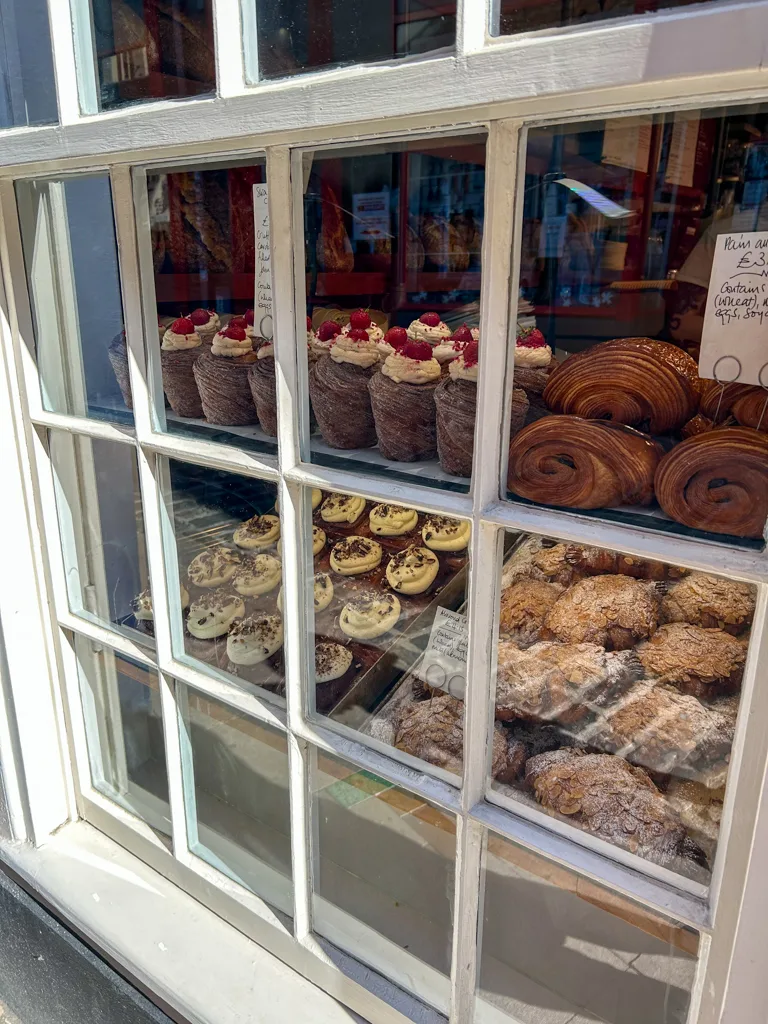
We found a spot outside in the sunshine and settled in with our pastries and coffees. It was a simple but perfect way to start Sunday, soaking up the atmosphere before heading out for another day of exploring.
Art and Architecture at the Sainsbury Centre
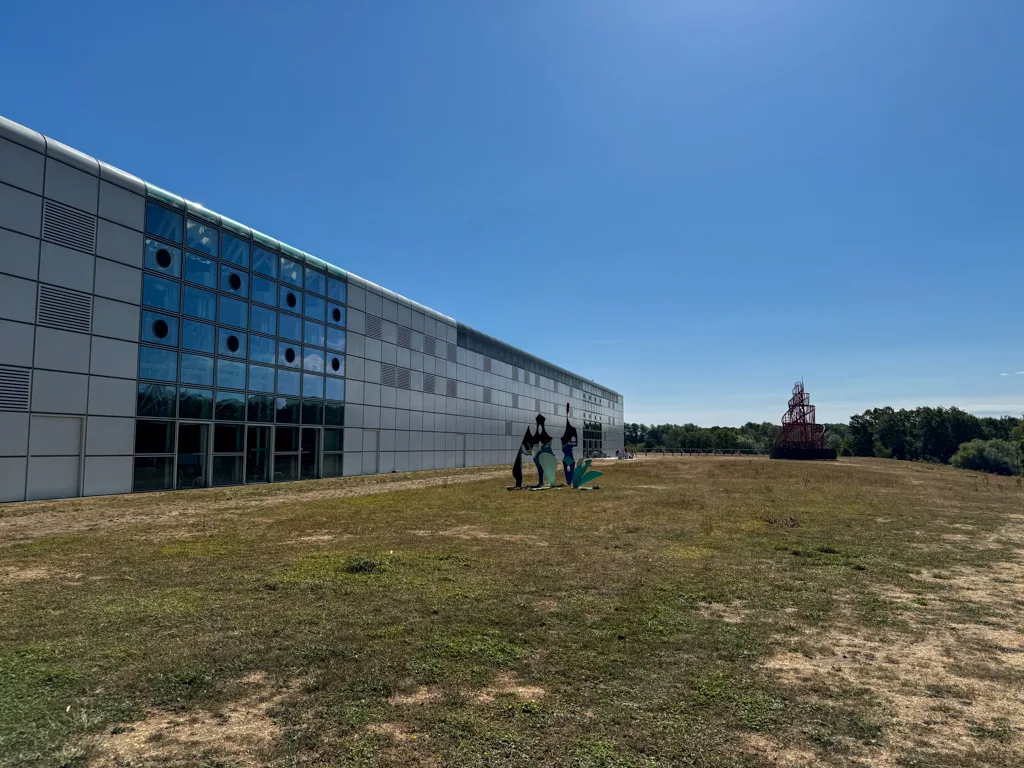
After breakfast, we hopped on a bus to the University of East Anglia to visit the Sainsbury Centre, an art museum housed in a striking building designed by Norman Foster.
The museum was established following the donation of Sir Robert and Lady Lisa Sainsbury’s remarkable art collection to the university in 1973. They commissioned the then relatively young Norman Foster to design a building to house it, and when the Sainsbury Centre opened in 1978, it represented a rather radical departure from traditional museum architecture.
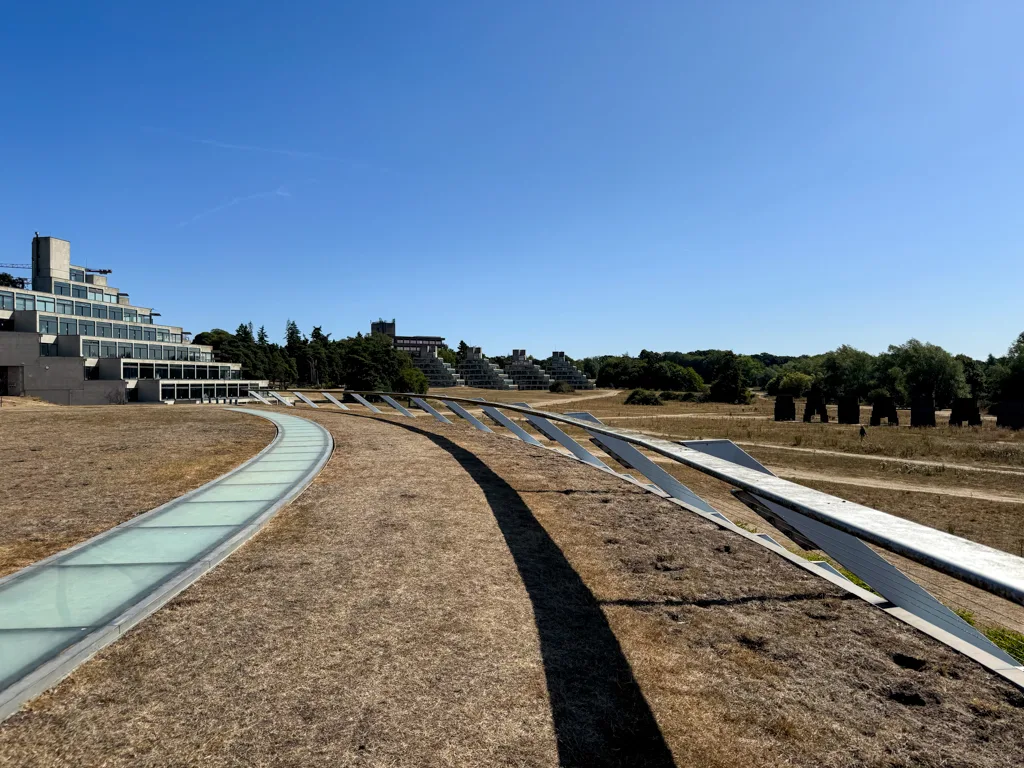
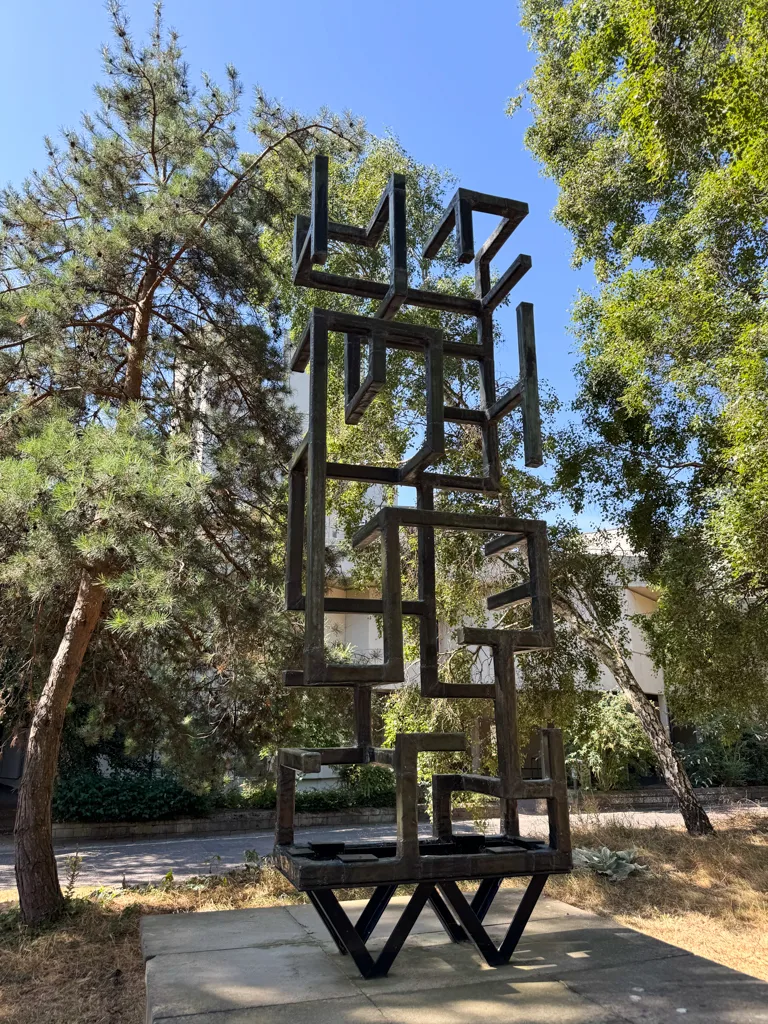
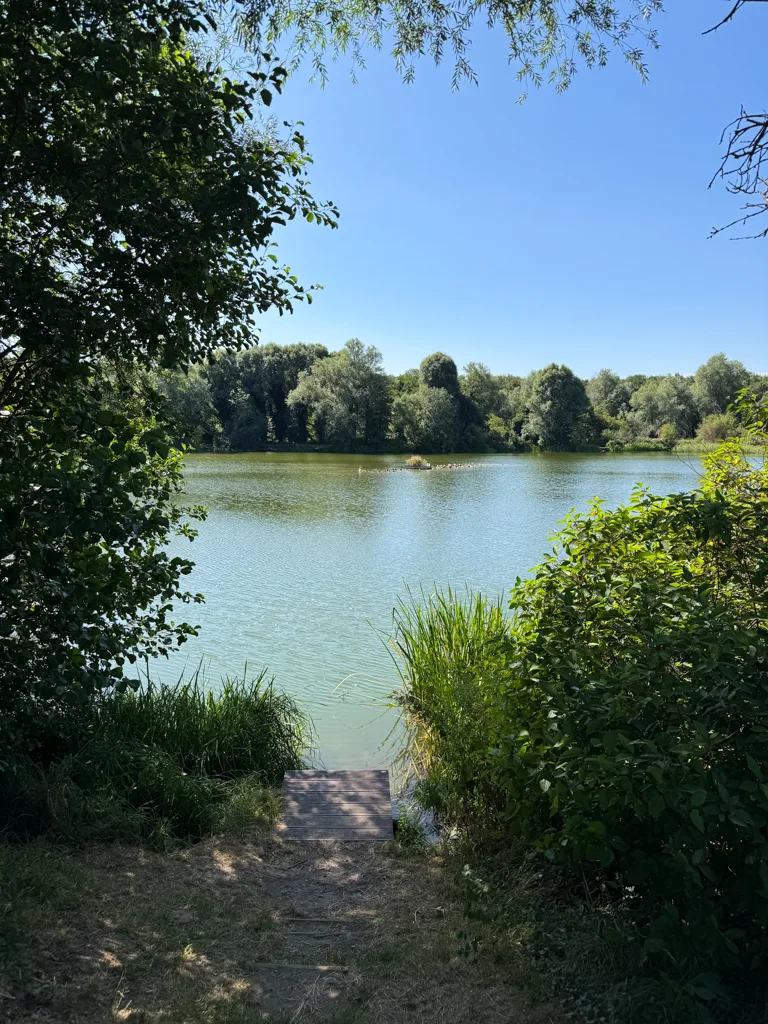
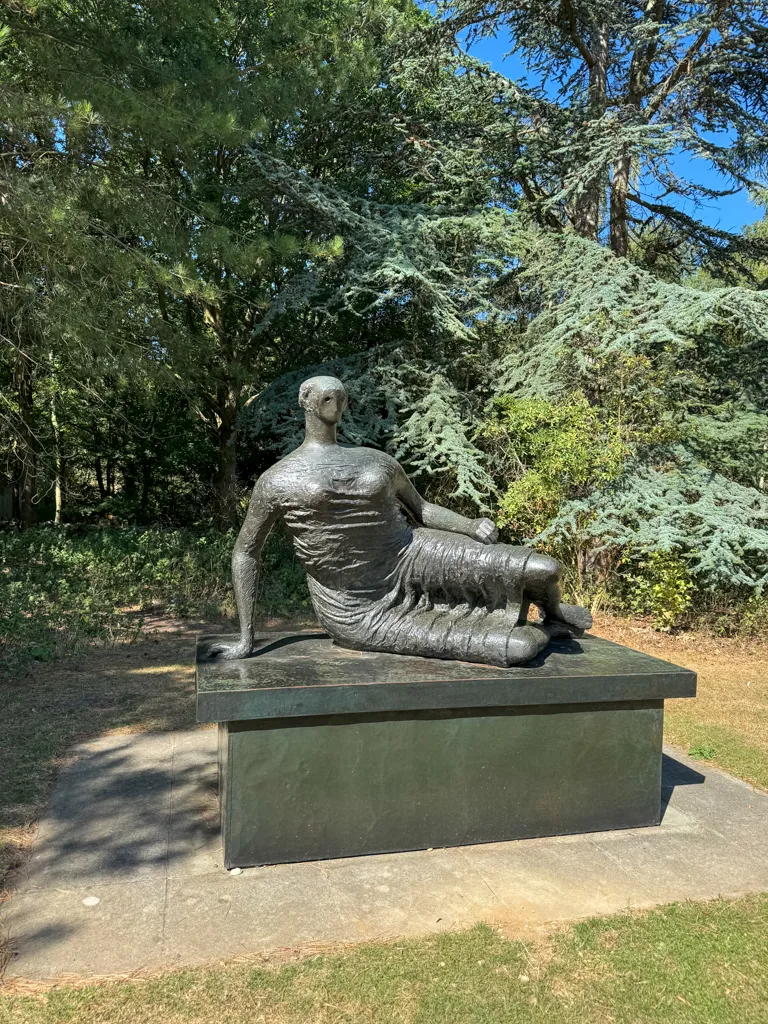
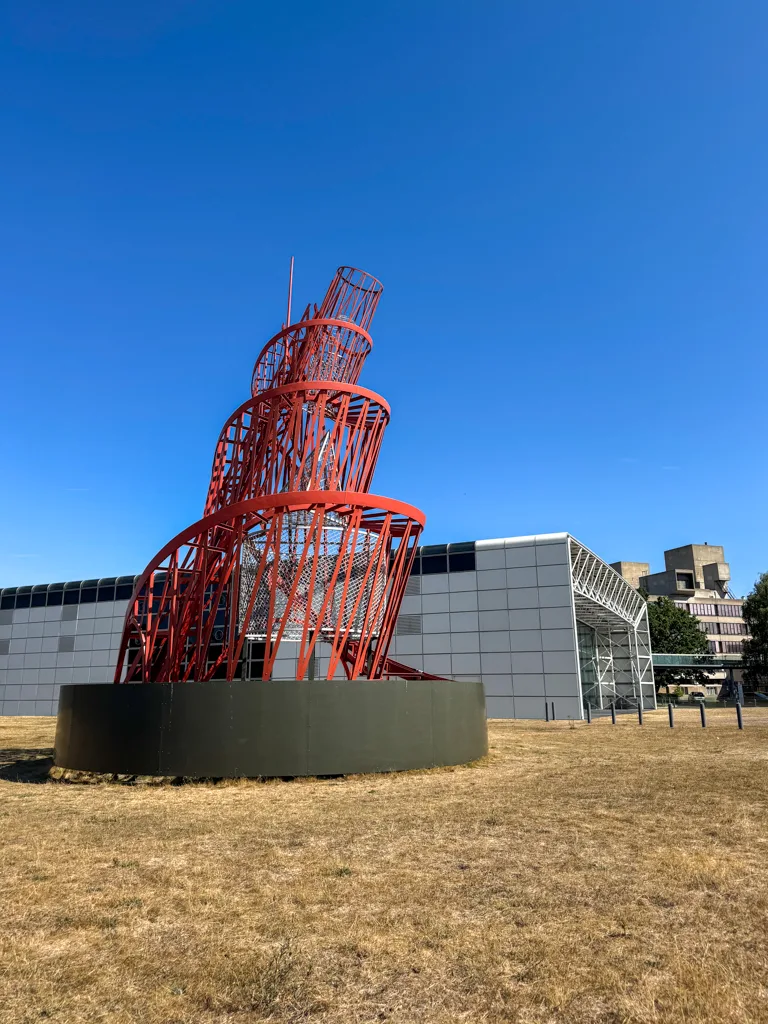
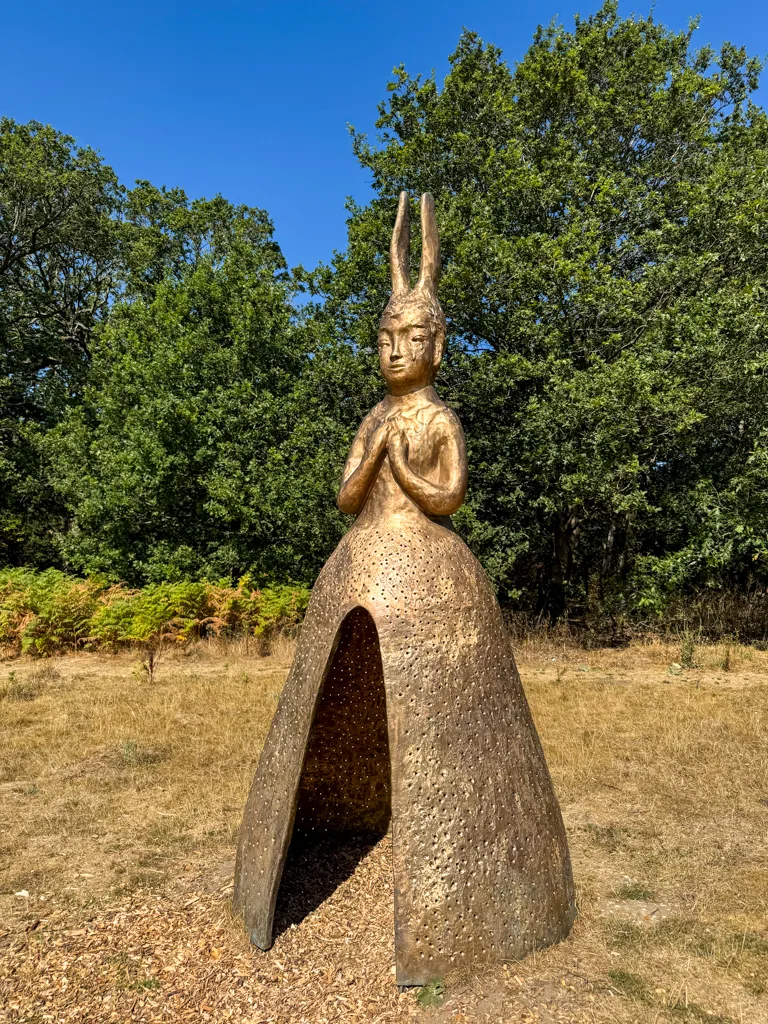
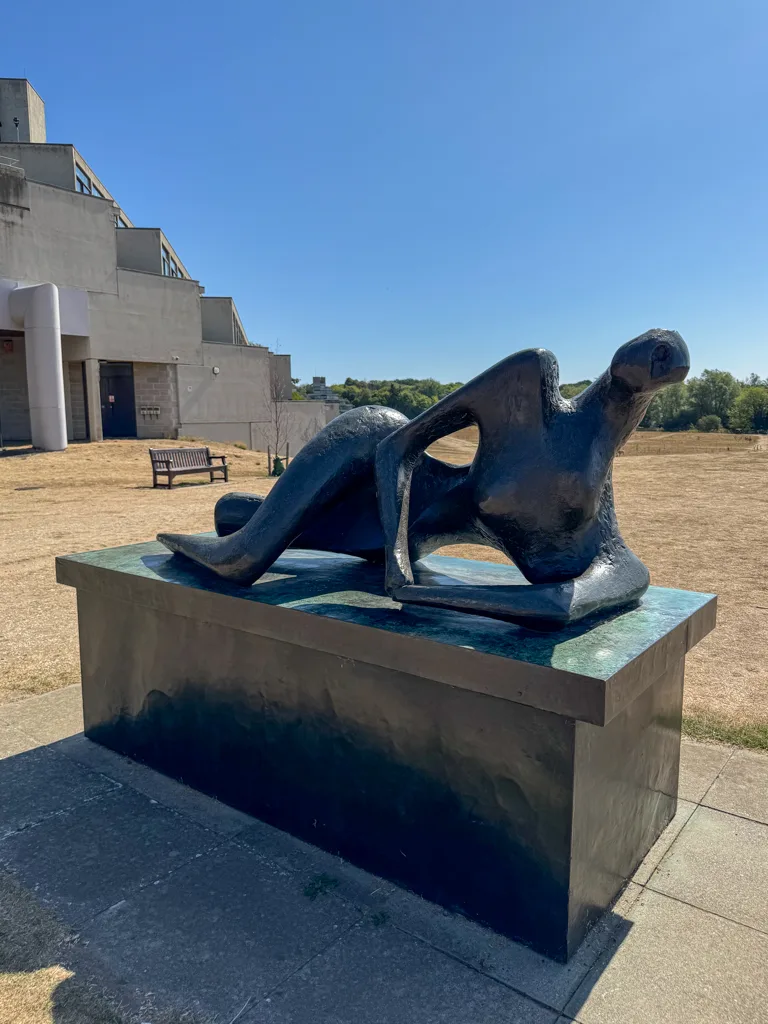
We started our visit outside, exploring the Sculpture Park spread across the university grounds. The park features works by internationally renowned artists, including Henry Moore, Elisabeth Frink and Antony Gormley, set among lawns, trees and the university’s distinctive modernist buildings.
It was great fun wandering between the sculptures, discovering artworks in unexpected places and admiring the surrounding architecture. I particularly enjoyed the contrast between the sculptural forms, the geometric university buildings and the greenery.
After stopping for a drink, we headed inside to explore the permanent collection.
The Sainsbury Centre brings together an extraordinary range of objects, from ancient artefacts and works of art from around the world to pieces by major European modern artists. Rather than being organised strictly by geography or period, the collection encourages visitors to discover connections between different cultures and artistic traditions.
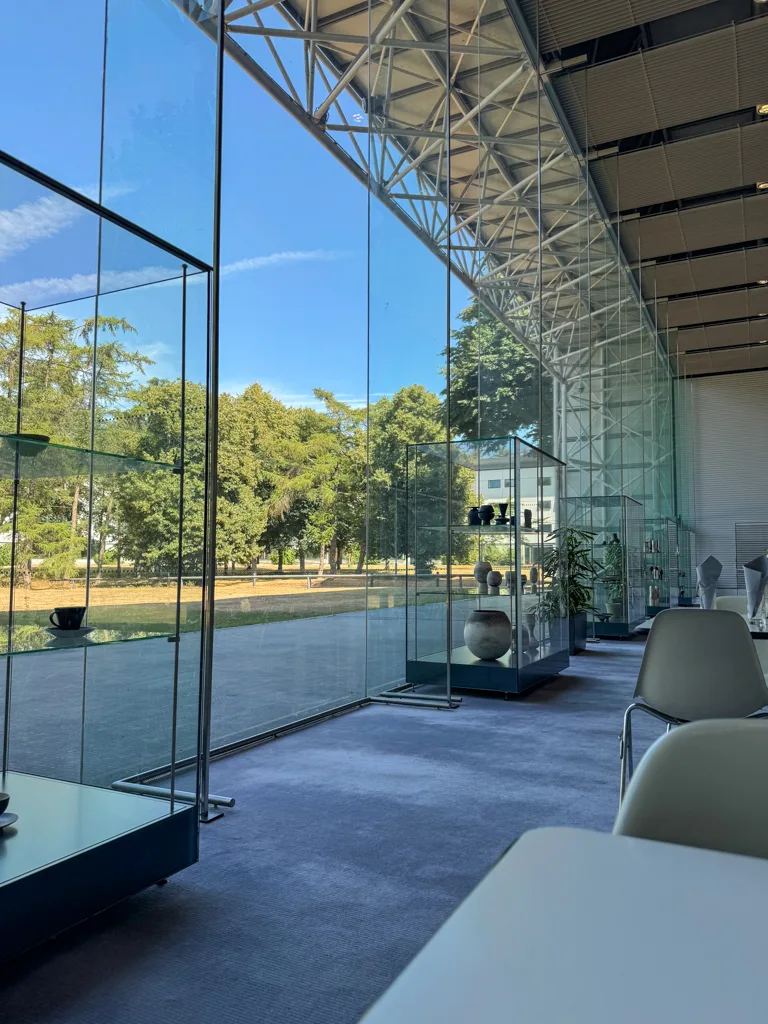
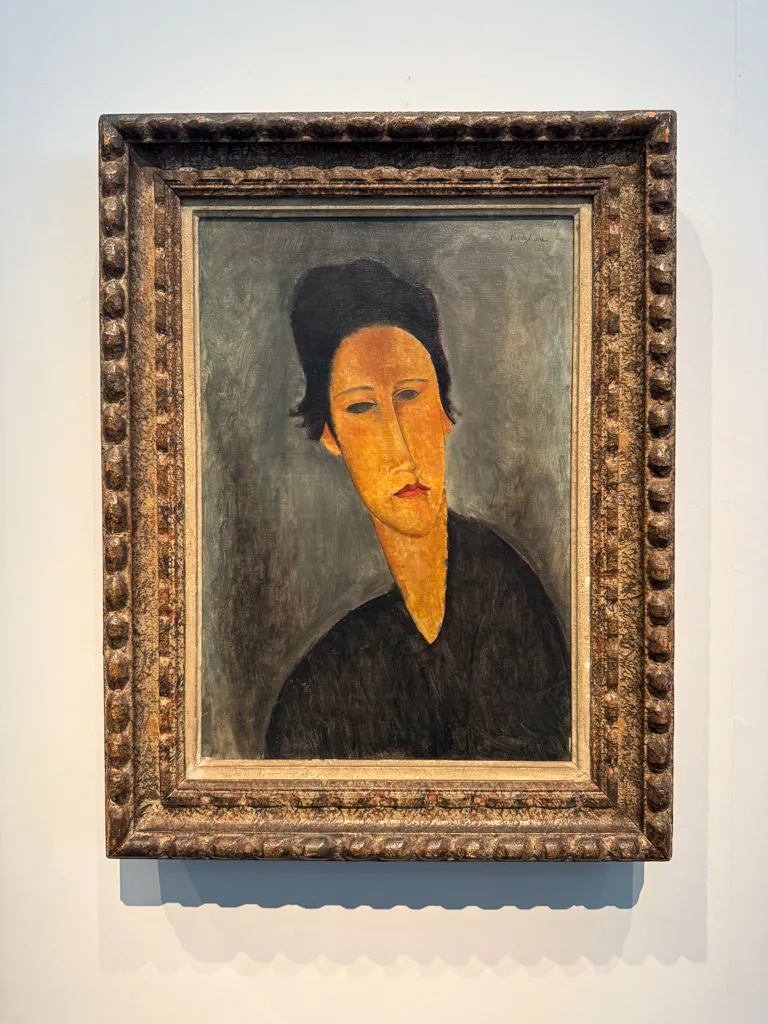
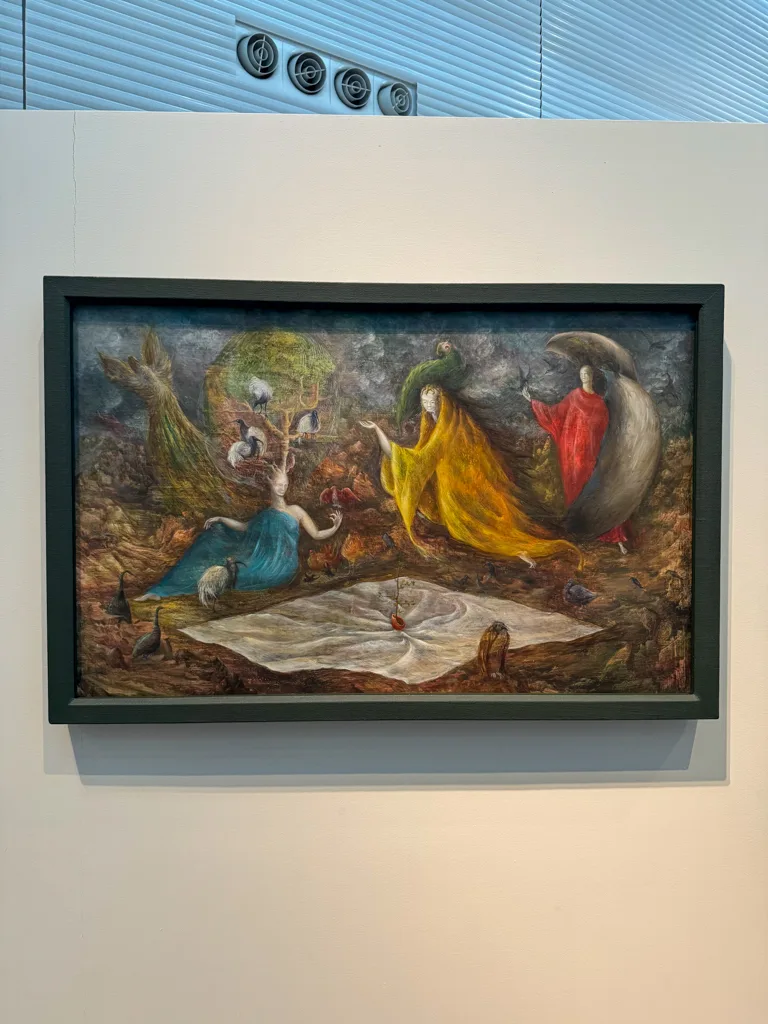
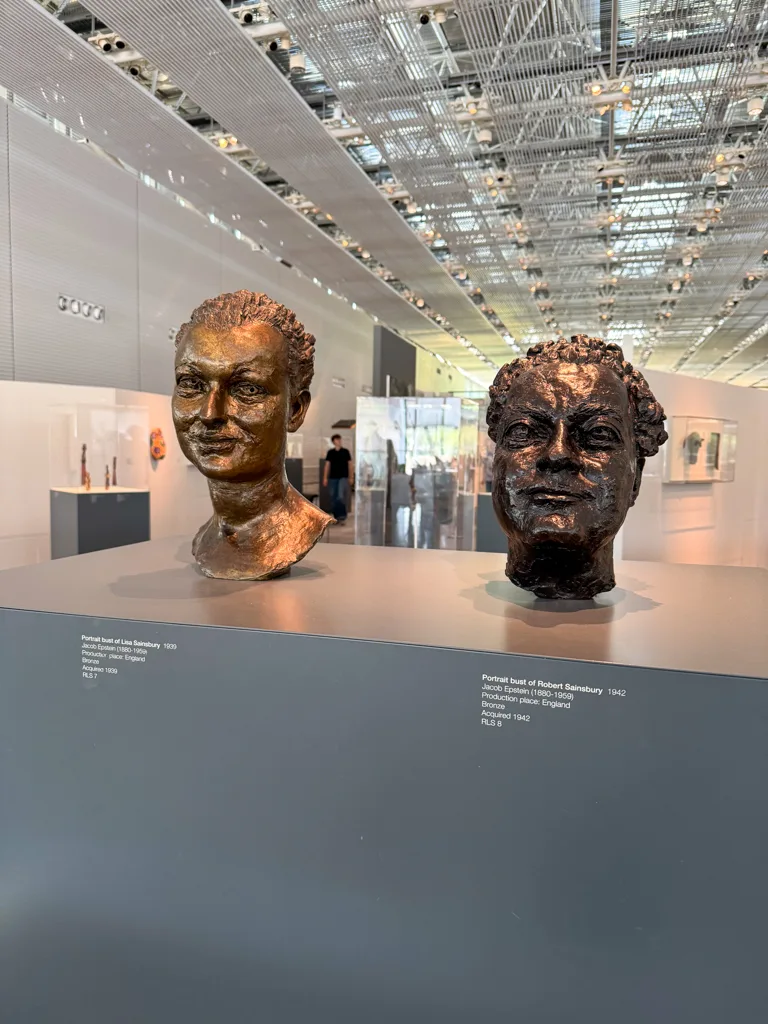
The building itself is equally interesting. Its vast, open interior and industrial materials create a completely different atmosphere from the historic museums we’d explored the previous day. Art and architecture feel closely connected here, and the building becomes part of the experience rather than simply a backdrop.
It was an enjoyable change of pace and a reminder that Norwich has much more to offer than its medieval heritage.
Pizza at Norwich Market and a Riverside Walk
By lunchtime, we were ready to head back into the city, so we caught the bus into central Norwich and made our way to the market once again.
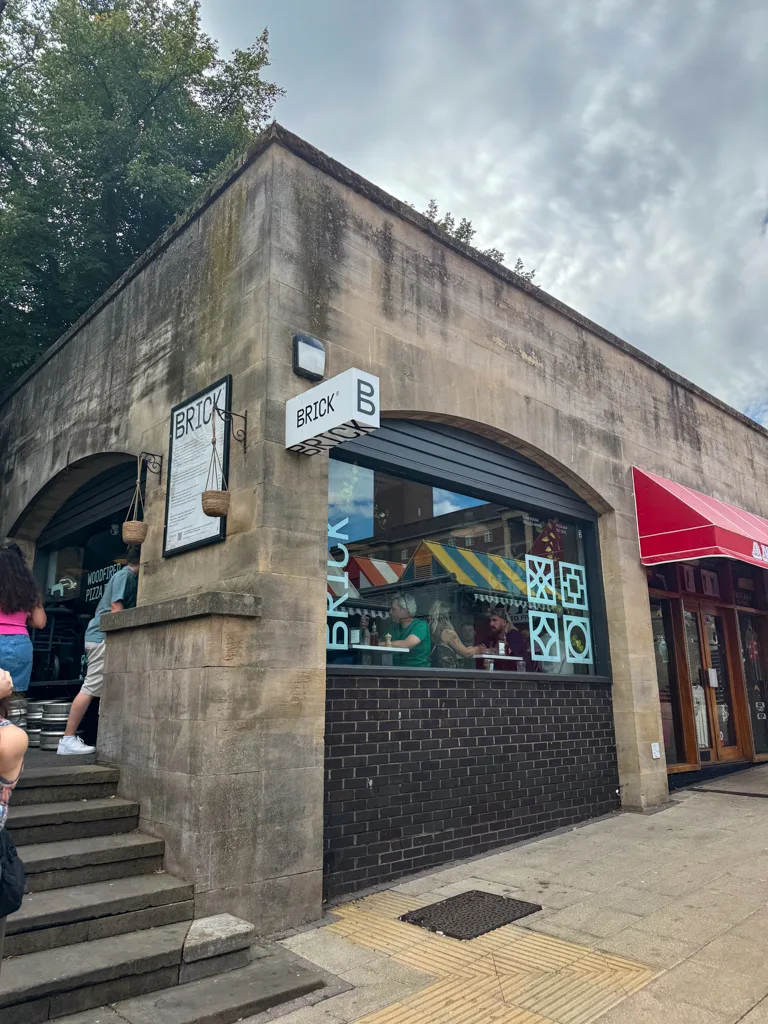
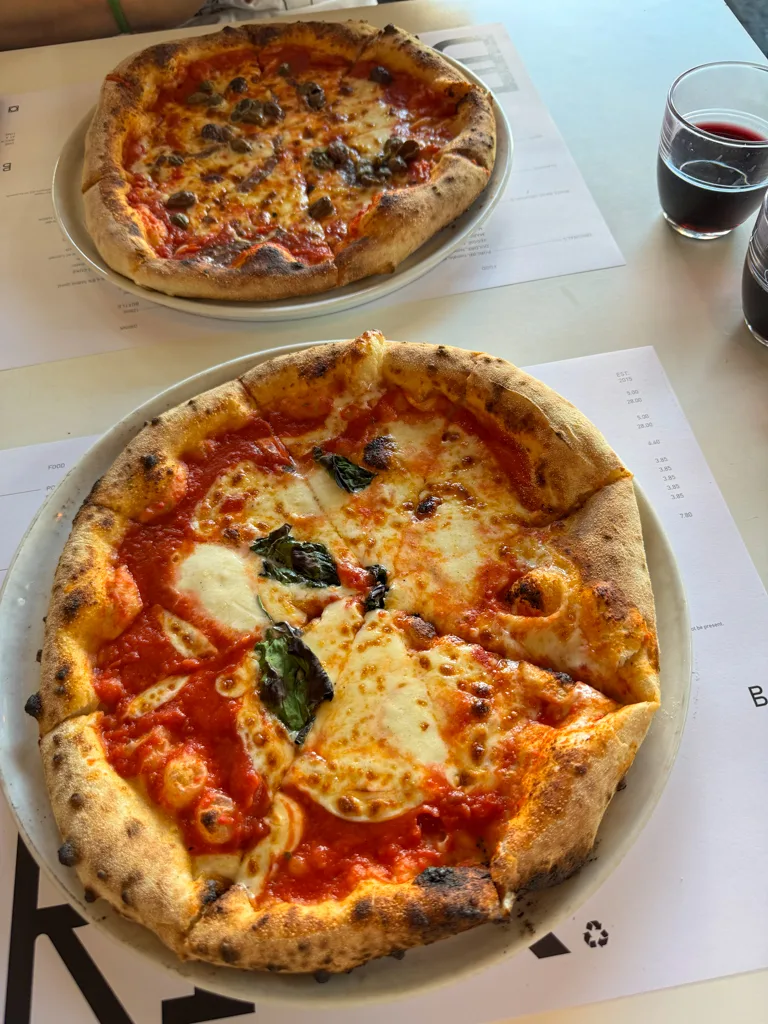
This time, we opted for pizza from Brick, another of Norwich’s independent food spots. With freshly made pizzas and a lively market atmosphere, it was an excellent choice for our final lunch in the city.
Afterwards, we continued our sightseeing with a visit to Dragon Hall, a remarkable medieval trading hall tucked away on King Street.
Built around 1427 by wealthy Norwich merchant Robert Toppes, Dragon Hall was designed as a grand commercial complex where goods could be displayed, stored and traded. During the Middle Ages, Norwich was one of England’s wealthiest cities, thanks in large part to its flourishing wool and textile industries and its trade connections with continental Europe.
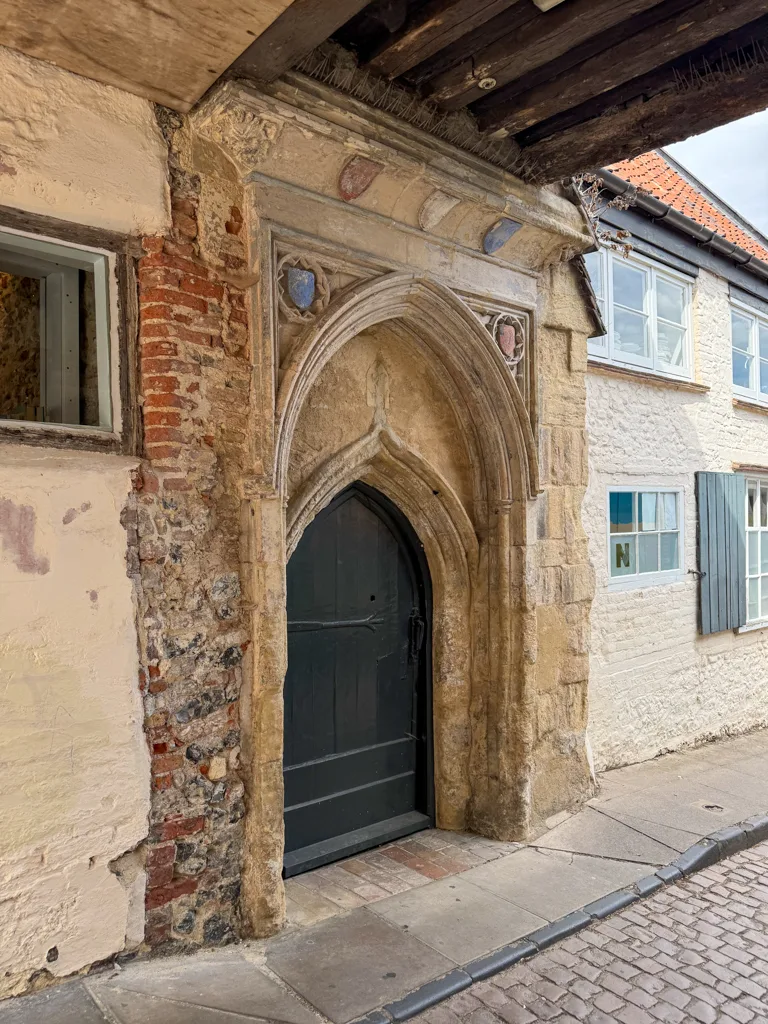
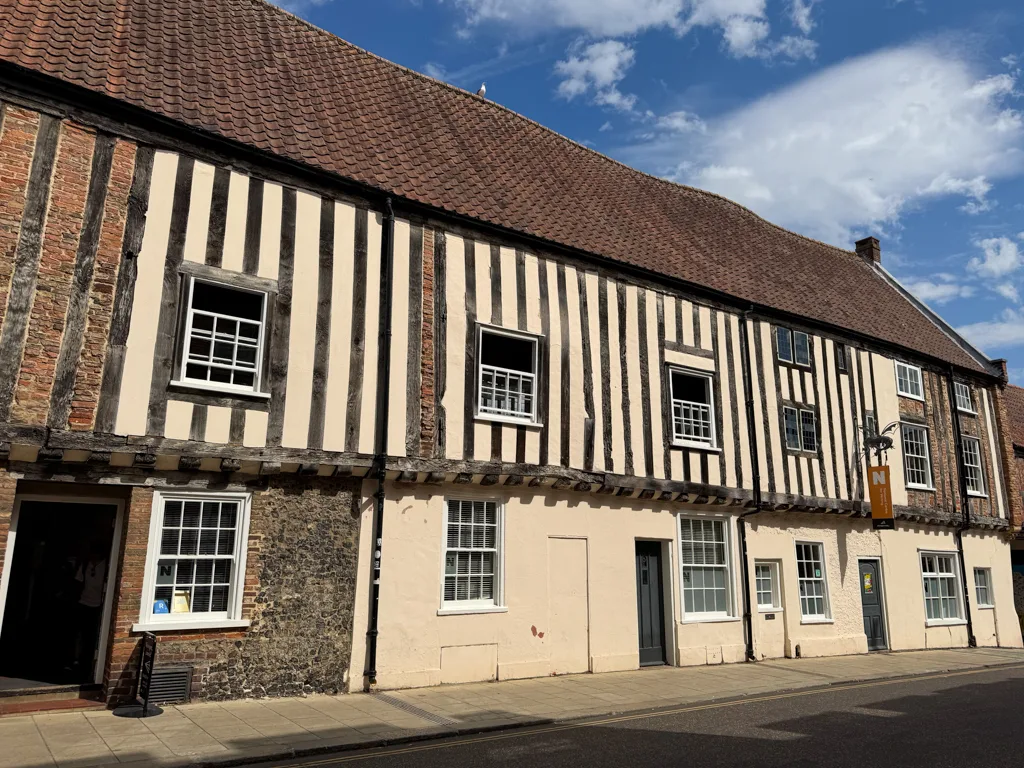
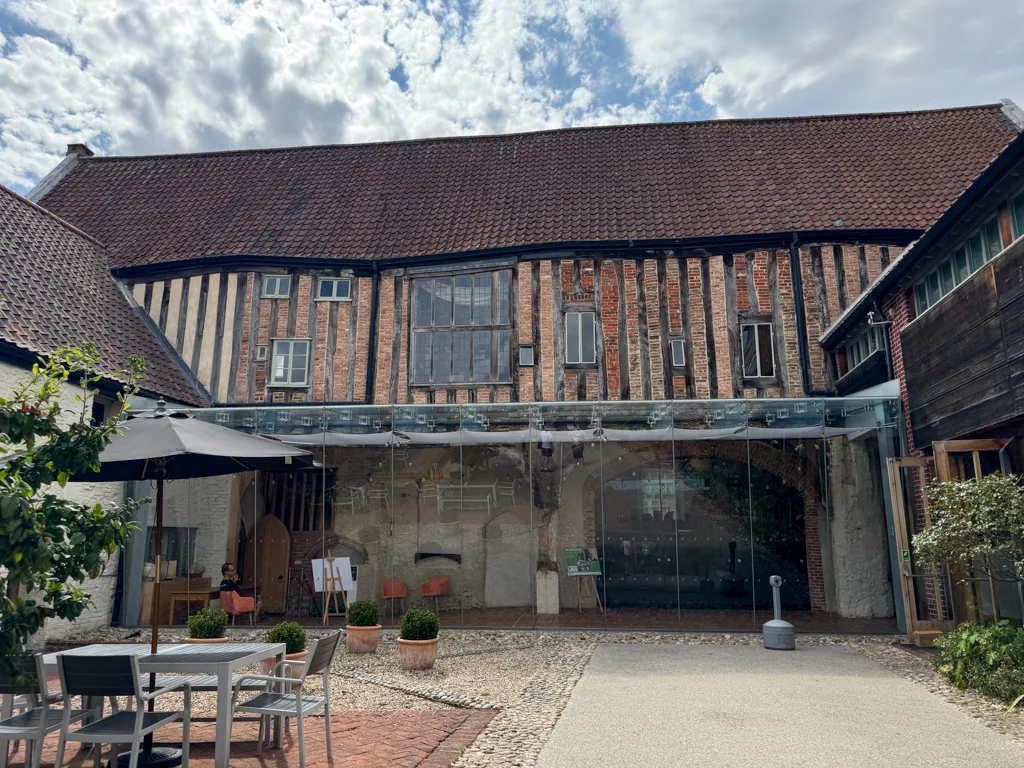
The building’s magnificent timber-framed trading hall, with its elaborate roof and carved dragon decorations, offers a fascinating glimpse into that prosperous period. Today, Dragon Hall is home to the National Centre for Writing, giving this historic merchant building an entirely new cultural purpose.
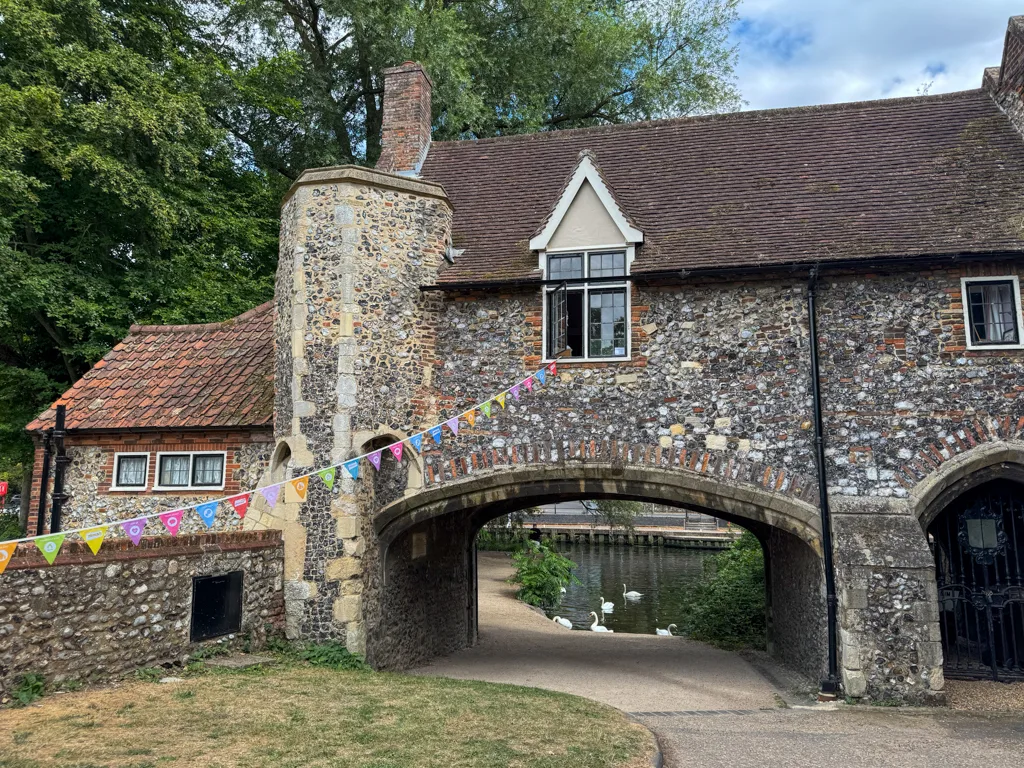
With a little time remaining before our train, we decided to explore the city from a different perspective, following the River Wensum. Our walk took us past Pull’s Ferry, one of Norwich’s most recognisable riverside landmarks. Its picturesque flint building and medieval watergate mark an important part of the city’s history, as stone brought by river was once unloaded here for the construction of Norwich Cathedral.
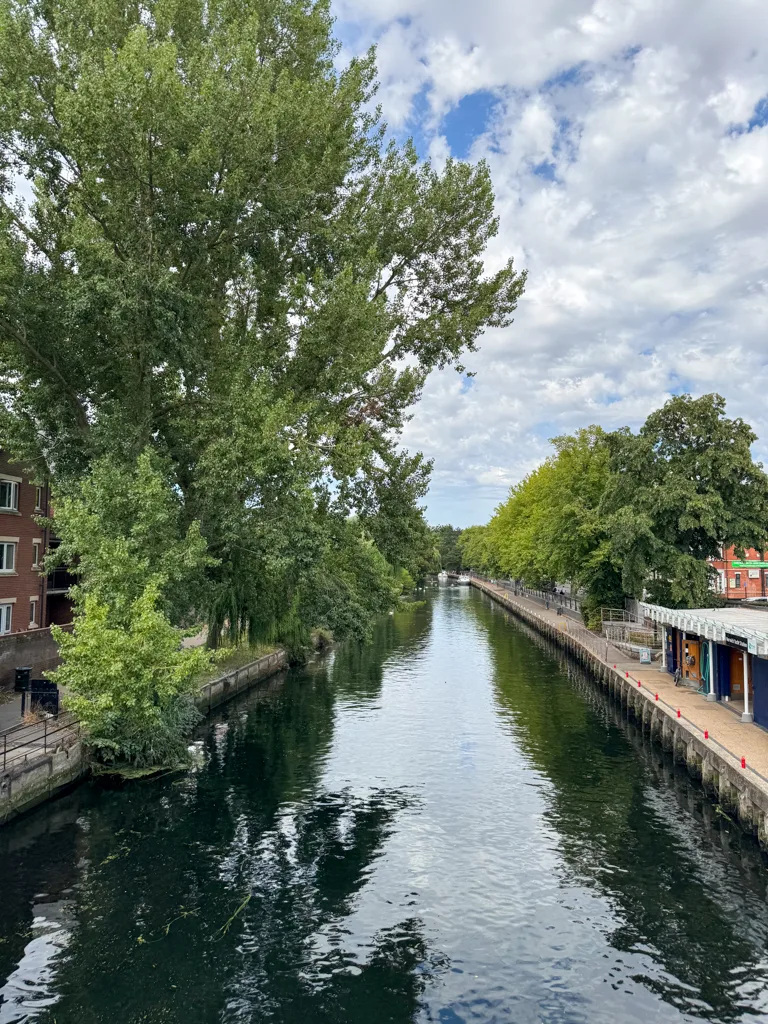
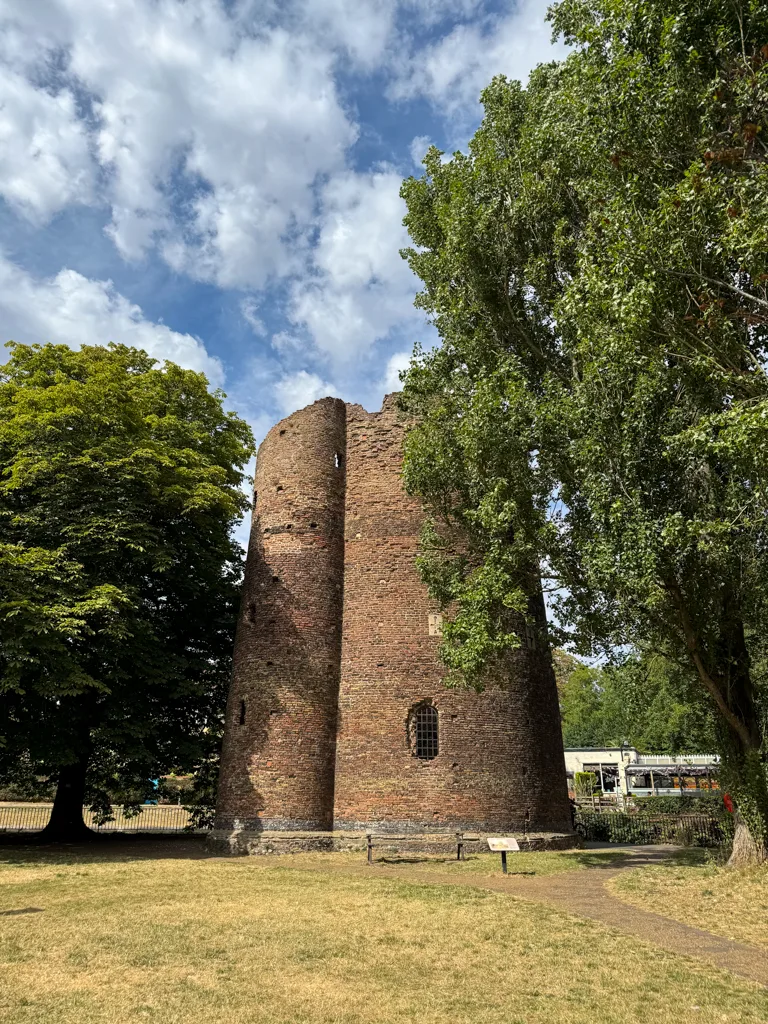
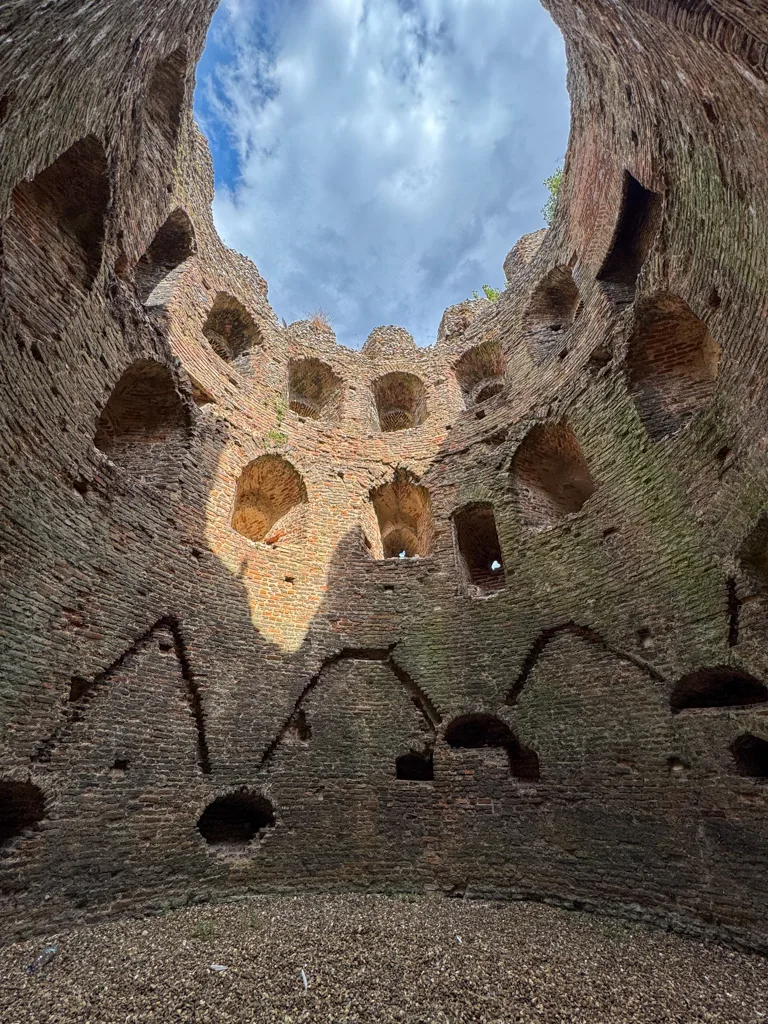
We continued along the river towards Cow Tower, a distinctive circular medieval defensive tower built in the late 14th century as part of Norwich’s fortifications. Standing beside the water, the city’s weathered stone walls are another reminder of its long and fascinating past.
From there, we made our way back through the Cathedral Quarter, enjoying one final wander through Norwich’s historic streets. It was a peaceful way to finish our weekend, with the river, old buildings and greenery offering a different perspective on the city we’d spent the previous day exploring.
Finally, we returned to 38 St Giles to collect our bags, hopped into a taxi to the station and made our way back to London.
Final Thoughts on Norwich
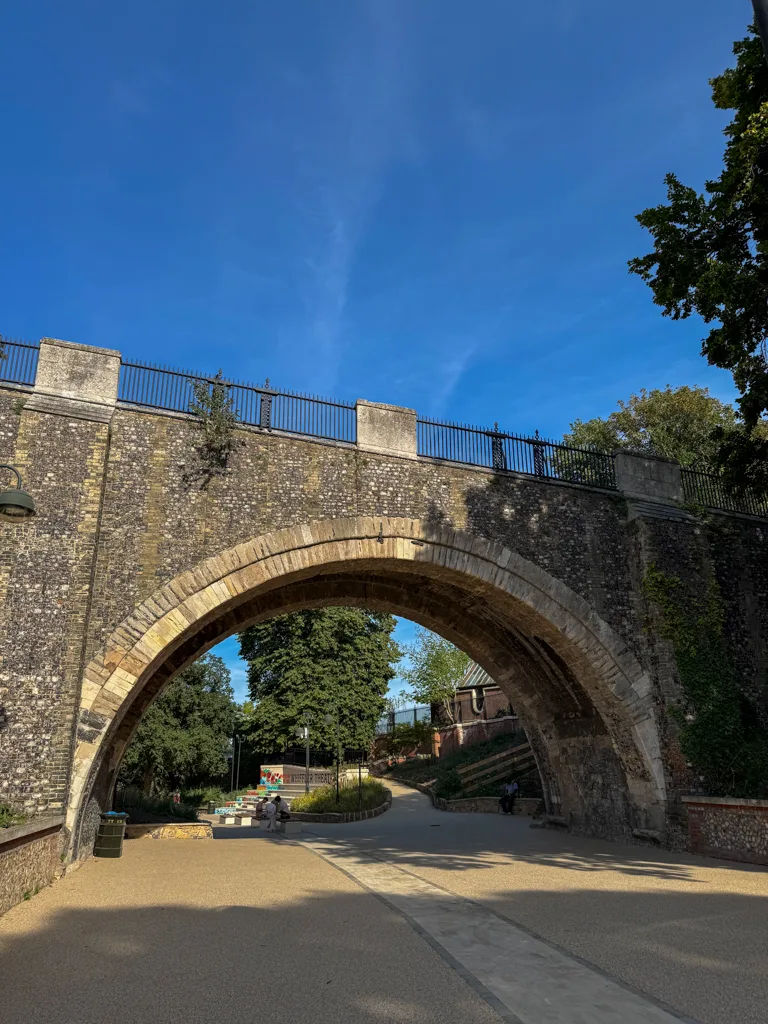
I really enjoyed our weekend in Norwich. It’s a city with so much to offer, from its remarkable medieval architecture and fascinating history to its independent shops, excellent food and contemporary arts scene.
What I particularly loved was how much character the city has managed to retain. There are so many independent businesses, beautiful historic streets and interesting places to discover, and the city feels full of personality without being overwhelmingly busy.
Despite fitting quite a lot into two days, we never felt particularly rushed. Norwich is wonderfully walkable, and there was always something interesting to discover around the next corner.
It proved to be an excellent choice for our anniversary tradition. After all, one of the things I love most about living in London is having so much of the UK within easy reach, with each new destination offering something different.
Another little corner of this beautiful country explored, and another year together celebrated doing something we both love.


No Comments