
This is probably needless to say, but wow Paris has so many incredible museums! The big three include the Louvre, the Pompidou, and Musée d’Orsay. The latter houses the largest collection of impressionist and post-impressionist masterpieces in the world–such favourites as Monet, Manet, Degas, Renoir, Cézanne, Seurat, Sisley, Gauguin, and Van Gogh. My heart began to swell and I immediately knew I would be overwhelmed by all this wonderful art. As Victor and I approached the museum our swelling hearts sighed as we inevitably saw a line snake around metal posts and ropes. Just as a warning for my fellow travellers, Musée d’Orsay is famous not only for its art but also the longest lines in all of Paris! Nonetheless, Victor and I were only in Paris for a long weekend so we really wanted to take advantage of this opportunity. The wait ended up being about an hour. But what’s time when you’re having fun, right?
The Building
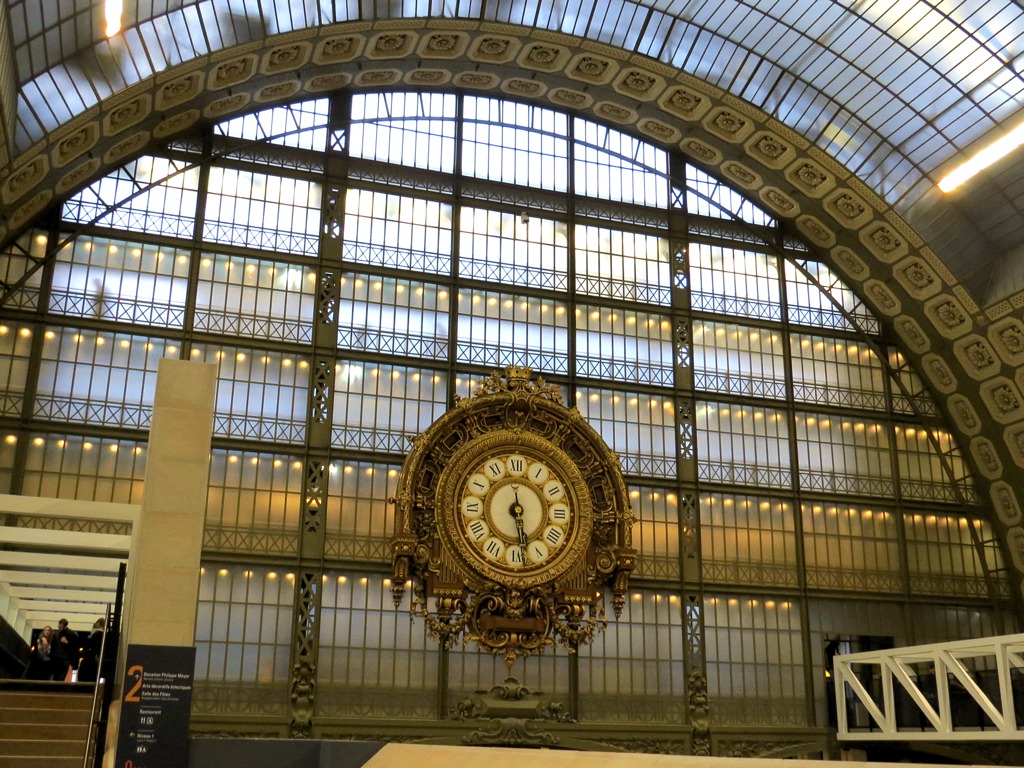
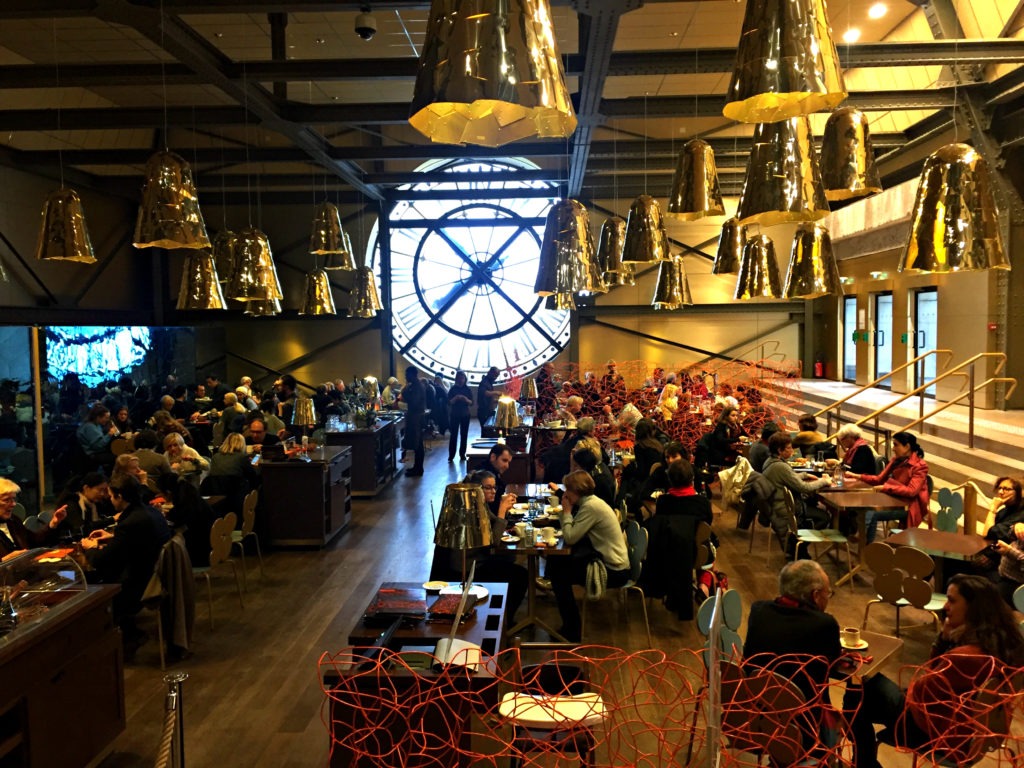
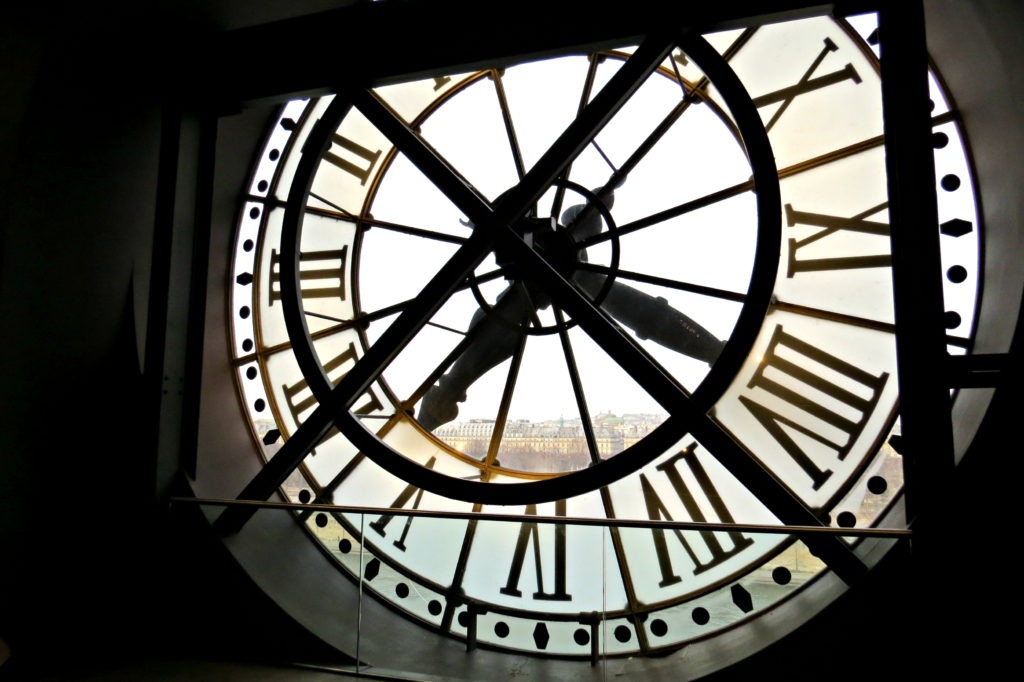
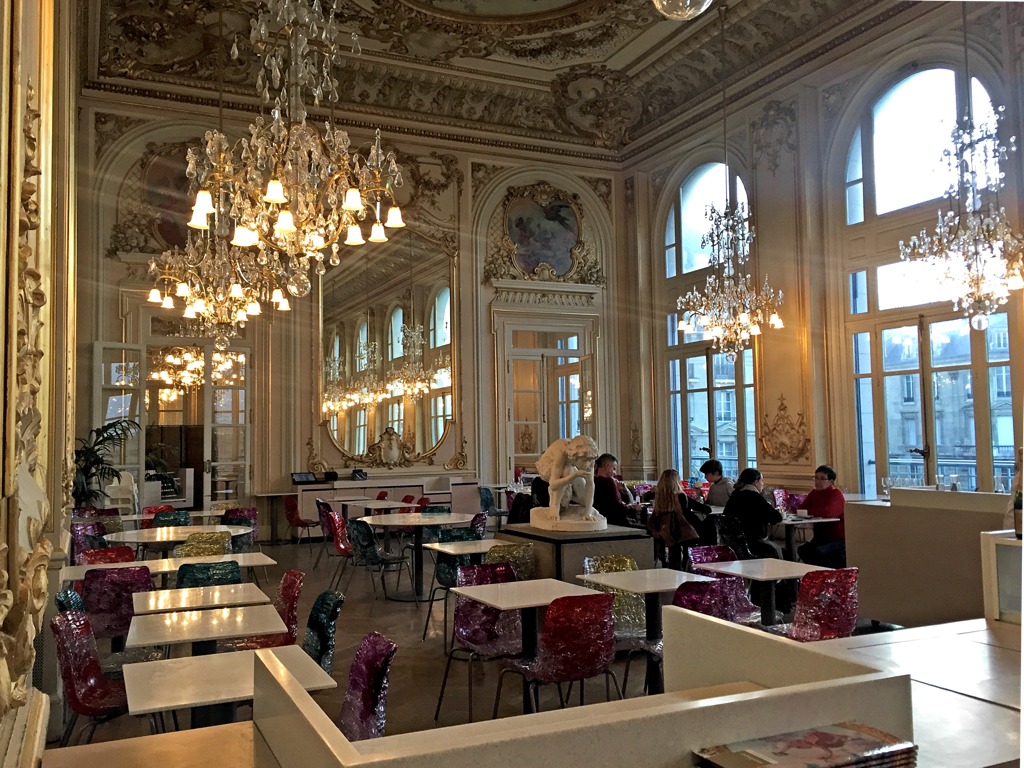
Once inside, grabbing a map, we headed straight for the top floor. This magical floor is home to the impressionist and post-impressionist collection. Before you enter the gallery, you run into a bustling, modern café, with a big, giant clock. It is indeed one of two clocks that adorn the façade of the museum. If the museum starts feeling like a train station, then you’re on the right track! The terminus was completed in 1900 in time for the Exposition Universelle, the world’s fair. It was impressive at the time because it was the first electrified urban rail terminal in the world! The building eventually became unsuitable for trains and after several decades of various other uses, the museum opened in 1986. And so then, the real magic begins.
Monet
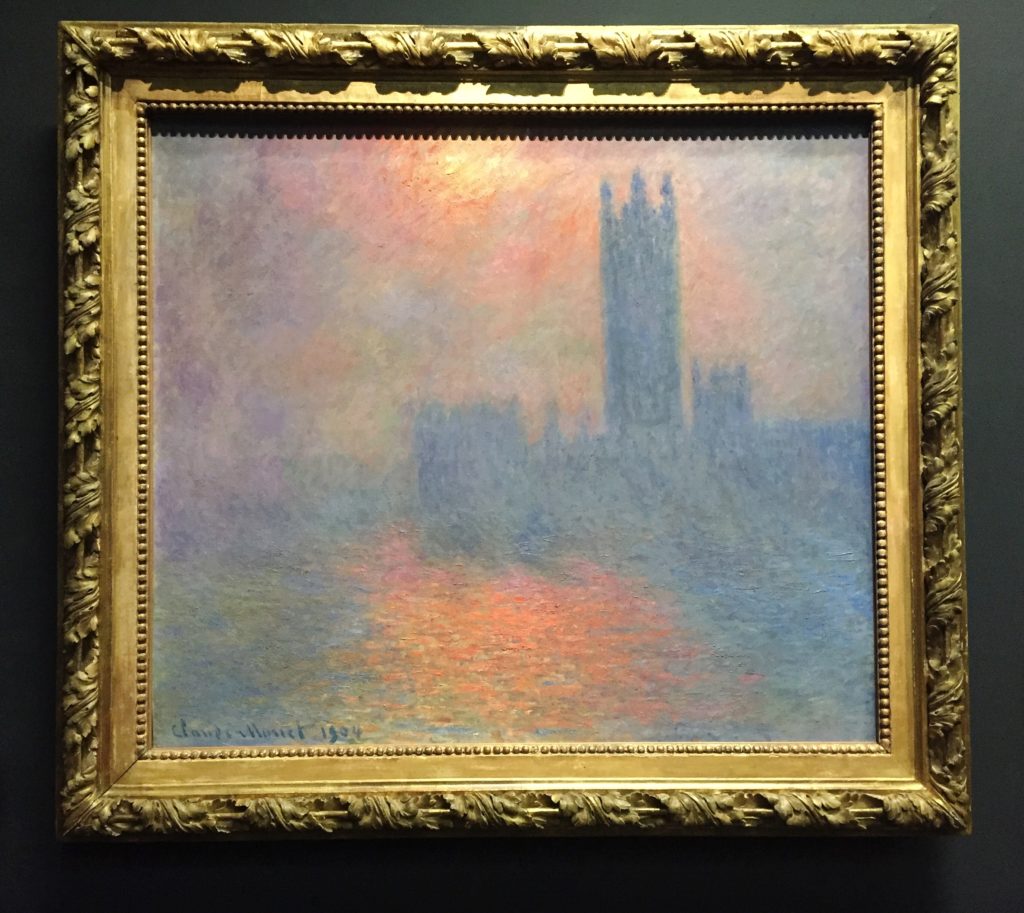
You simply can’t visit France without some sort of immersive Monet experience. The most intense of these is at the Orangerie museum, but the d’Orsay has so many works by Monet. One thing d’Orsay taught me about Monet was that he was a man of series. I started to become suspicious when I kept seeing his Water Lilies paintings all over the place. Victor’s favourite series is the Houses of Parliament — ironic that we moved to London, no? There is a beautiful one at d’Orsay. It has particular strains of orange and red and the fog is pretty dense. This is definitely one of the prettiest works in the collection.
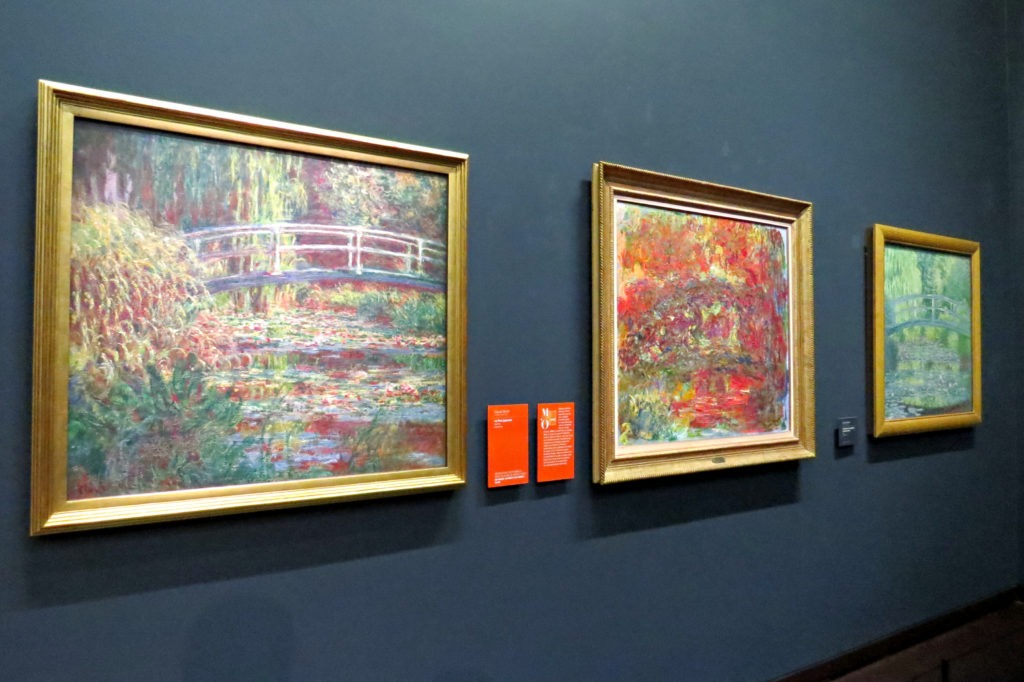
 His most famous series is no doubt the Water Lilies because it is his larger collection — 250 paintings! His Japanese bridge series with water lilies is also quite popular.
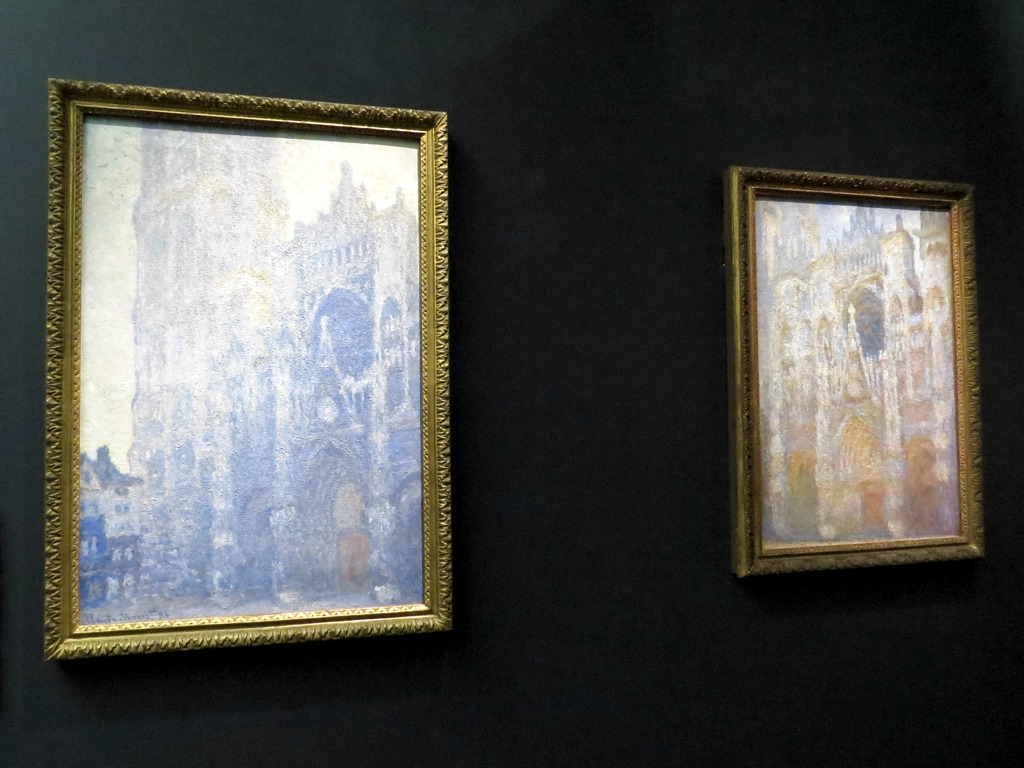
 Monet painted 26 views of the Rouen Cathedral. Monet rented spaces across the street from the cathedral, where he set up temporary studios for this very purpose.
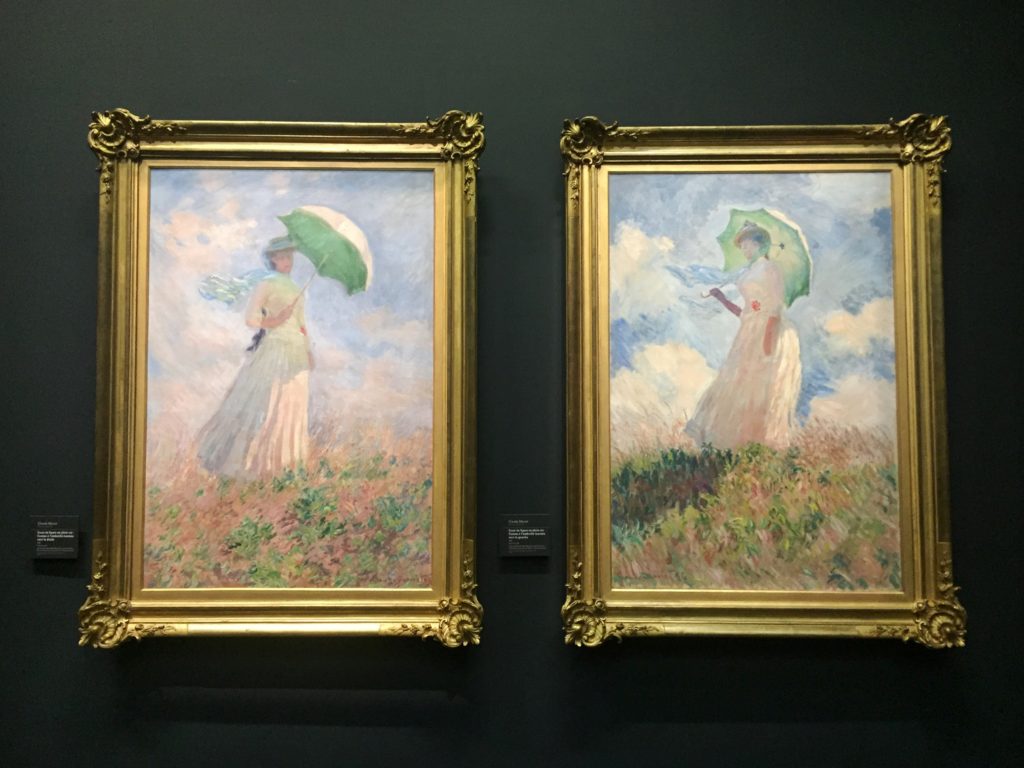
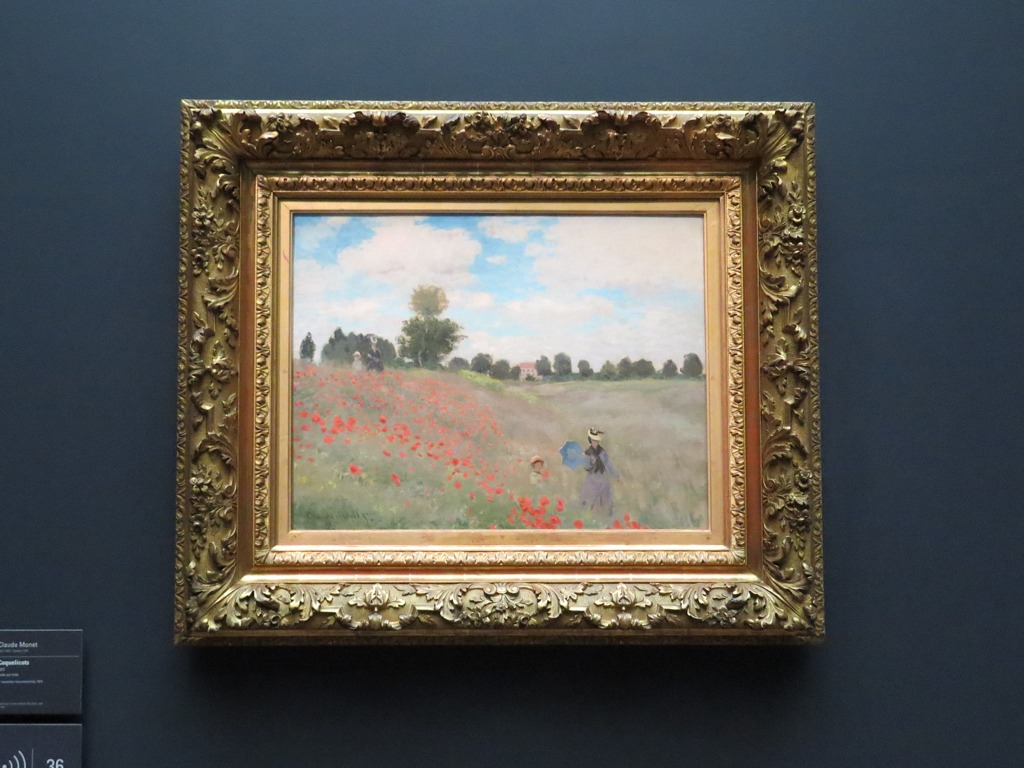
 One of Monet’s paintings is called Woman with a Parasol. Ten years later after that painting, Monet returned to a similar subject, painting a pair of scenes featuring his second wife’s daughter Suzanne Monet in 1886 with a parasol in a meadow at Giverny. They look beautiful juxtaposed on the wall.
Other Artists
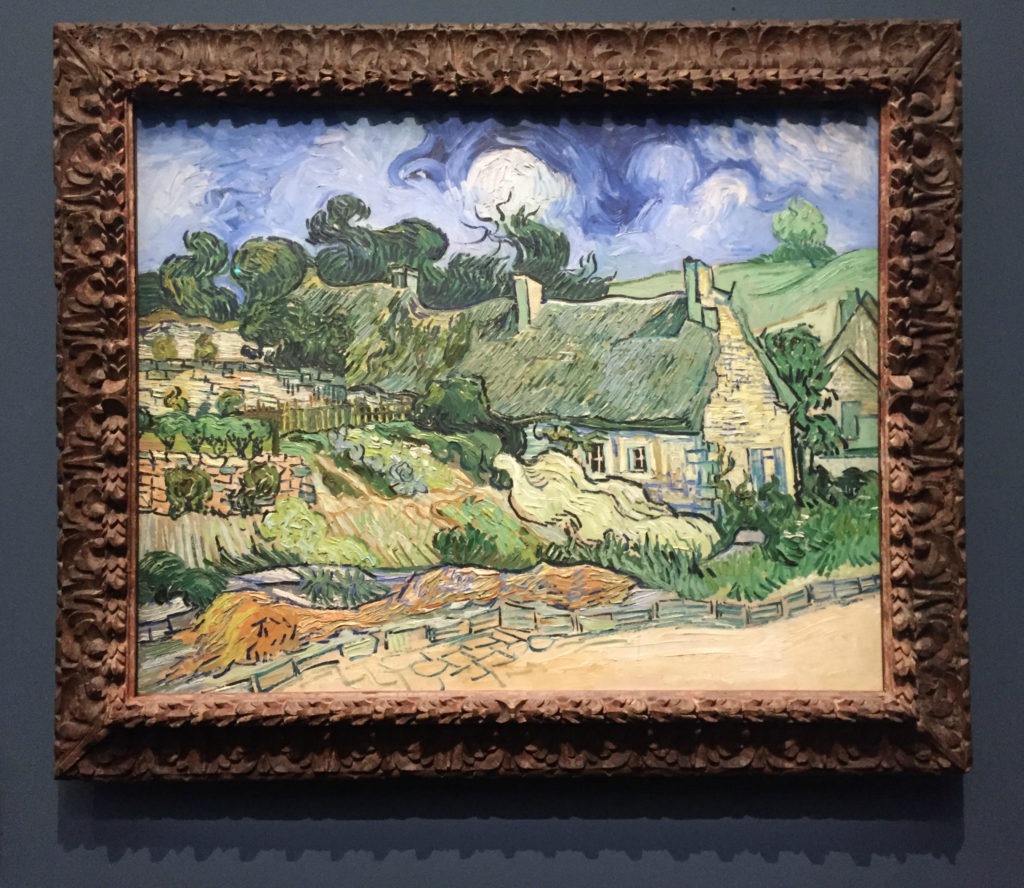
Van Gogh also makes his appearance at d’Orsay with Chaumes de Cordeville à Auvers-sur-Oise which was painted in 1890.
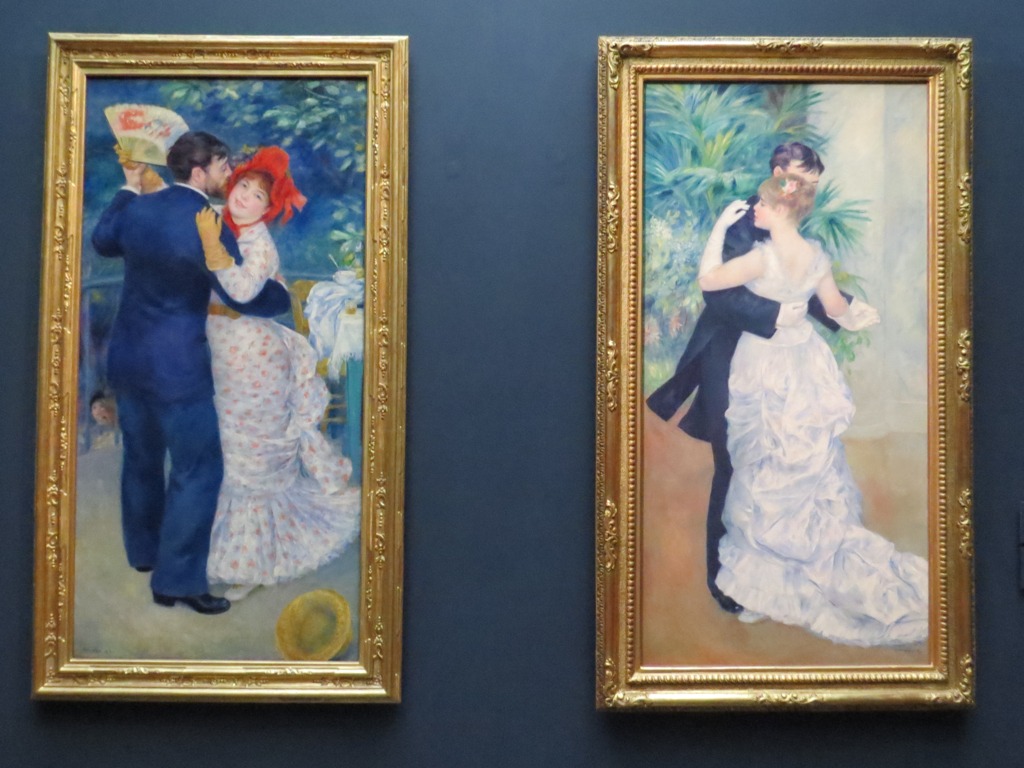
 Of course there are many other great works of art. Renoir has several beautiful works. Two of which were designed to be a pair, Danse à la ville [City Dance] and Danse à la campagne [Country Dance].
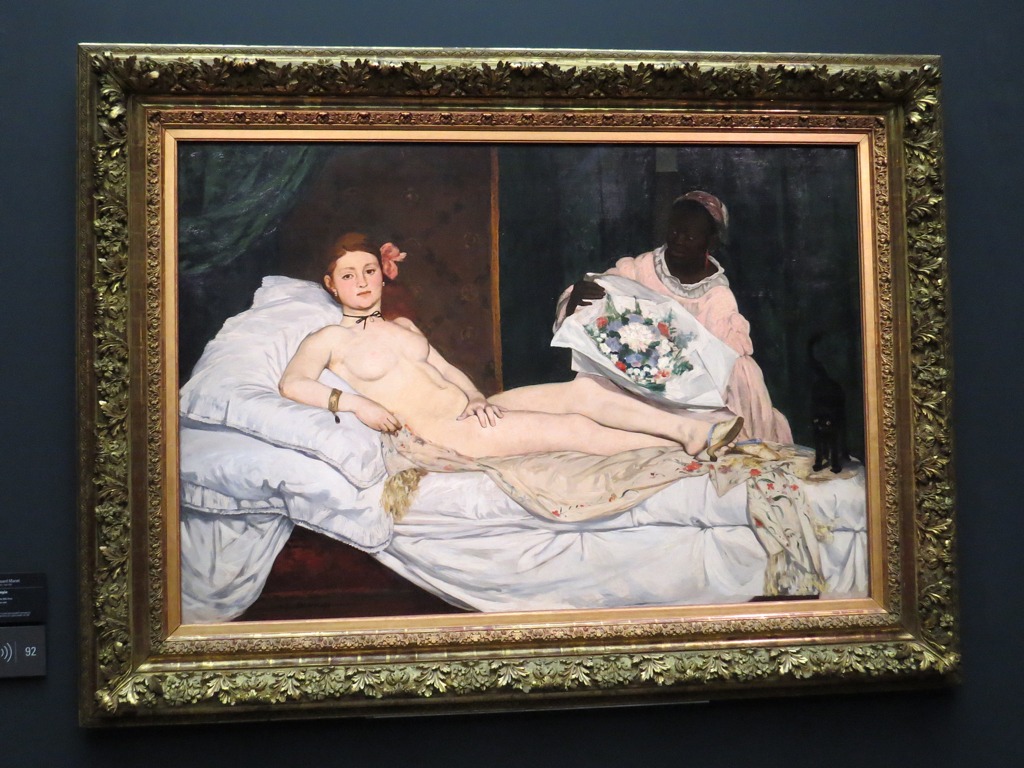
 Manet’s Olympia graces the wall. This painting has always fascinated me. Back in 1865, when Manet produced this painting, observers were shocked. They were not shocked at Olympia’s nudity, nor the maid, but they were shocked because Olympia had signs of being a prostitute. Several details point to this fact, like the flower in her hair, the black ribbon around her neck, and the intricate shawl she sits on. Even if you do not know this painting, I’m sure it looks familiar. Many painters have painted naked women in this exact pose. Think Titian’s Venus of Urbino or Francisco de Goya’s La maja desnuda.
 Musée d’Orsay is definitely not a museum to miss! This is just a sample of everything it has to offer.The Louvre is obviously the museum that everyone flocks to, but the d’Orsay is not exactly a secret either. Get there early or during the dead afternoon hours and enjoy all this beautiful artwork. And just as a tip, everyone gets free admission on the first Sunday of the month. And, might I add, the cafe at the d’Orsay is simply gorgeous so make you sure stop by after a day of exploring art.
Next up on my latest trip to Paris is a trip down memory lane in the heart of the city.

No Comments